




- Subjects >
- Science >
- Key stage 2 >
- Year 5 >
Unit outcomes
Pupils who are secure will be able to:
- Describe the life cycle of a plant, including the reproductive stage.
- Describe the life cycle of a mammal.
- Describe the life cycle of a bird and compare it with that of a mammal.
- Describe the life cycle of an amphibian.
- Describe the life cycle of an insect and compare it with that of an amphibian.
- Describe asexual reproduction in plants.
When working scientifically, pupils who are secure will be able to:
- Observe and compare equivalent parts in different flowers.
- Research the life cycles of different mammals.
- Pose questions to compare the life cycles of different birds.
- Suggest how one temperature may affect egg hatching.
- Use data to describe a relationship and make predictions.
- Represent root growth over time on a line graph.
Please note that Kapow Primary Science lessons are designed to be 1 hour and 30 minutes long to reflect the requirements of a core subject.
Suggested prior learning
Living things: Classification and changing habitats
Get started
Lessons
Lesson 1: Life cycles and reproduction in plants
Lesson 2: Life cycle of a mammal
Lesson 3: Life cycle of a bird
Lesson 4: Life cycle of an amphibian
Lesson 5: Life cycle of an insect
Lesson 6: Asexual reproduction in plants
Key skills
Posing questions
- Raising

This content is for subscribers only. Join for access today.
Key knowledge
To know:
- A
This content is for subscribers only. Join for access today.
Key vocabulary
adolescence
asexual reproduction
This content is for subscribers only. Join for access today.
Equipment list
Equipment needed across all lessons in this unit.
This list does not include equipment which is usually readily available in the classroom (e.g pencils, A4 paper etc)
 Download
Full equipment list for the subject
Quantities marked × will update. Items without quantities are unaffected
-
Fresh mint plants
×8 -
Different types of flower
3 - Sticky notes ×30
- Calculators ×8
-
30 cm rulers
×15 - Paper towels ×30
-
A selection of pencils (including red pencils)
×8 - Chalk ×30
- Dice ×15
- Magnifying glasses ×30
-
Plastic water bottle
×8 -
Access to water
×1 -
A sensitive scale
×1 - Stopwatches ×8
- Tablets ×15
-
A large space (e.g. a playground, field or hall)
×1 - Equipment to represent nests (e.g. school jumpers, cardboard, PE hoops). ×8
- Equipment to represent eggs (e.g. balls, balloons, pencil cases). ×8
- Equipment to represent food (e.g. short lengths of string, pencils, plastic insect toys or sweets). ×8
This content is for subscribers only. Join for access today.
Related content
Unit resources


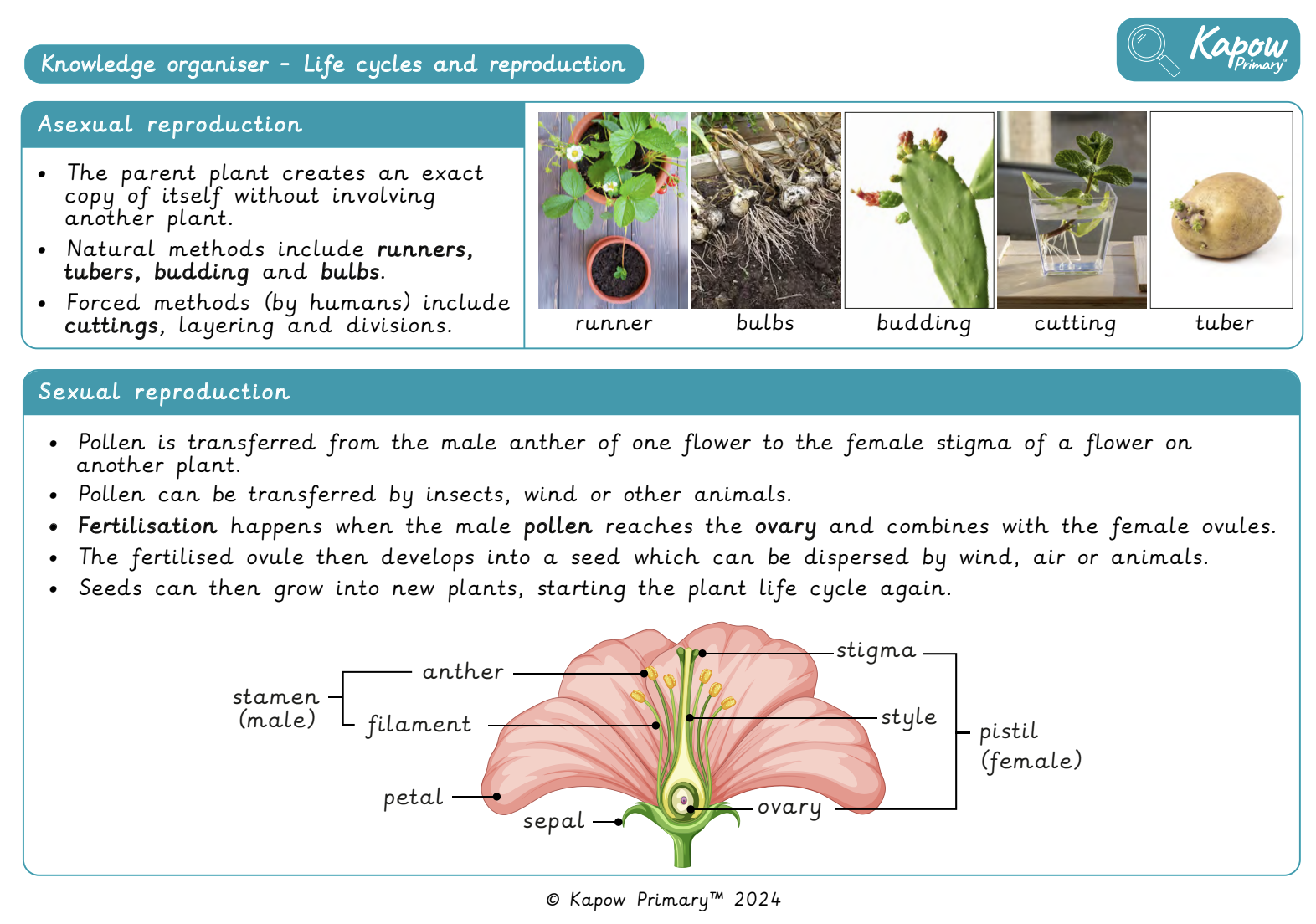
Knowledge organiser – Science Y5: Living things: Life cycles and reproduction
Aimed at pupils, a single page providing key facts and definitions from the unit ‘Life cycles and reproduction’.
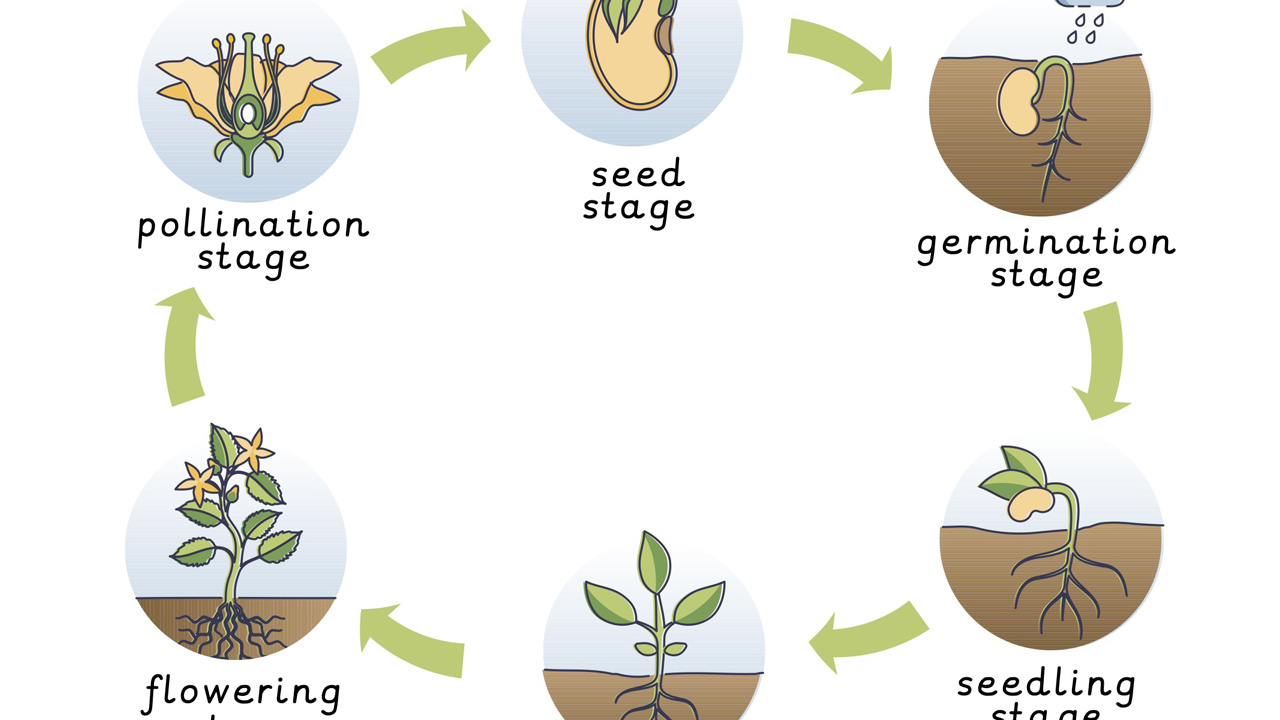
Posters – Science Y5: Living things: Life cycles and reproduction
A collection of six posters showing the life cycle of an amphibian, bird, insect, mammal and plant.
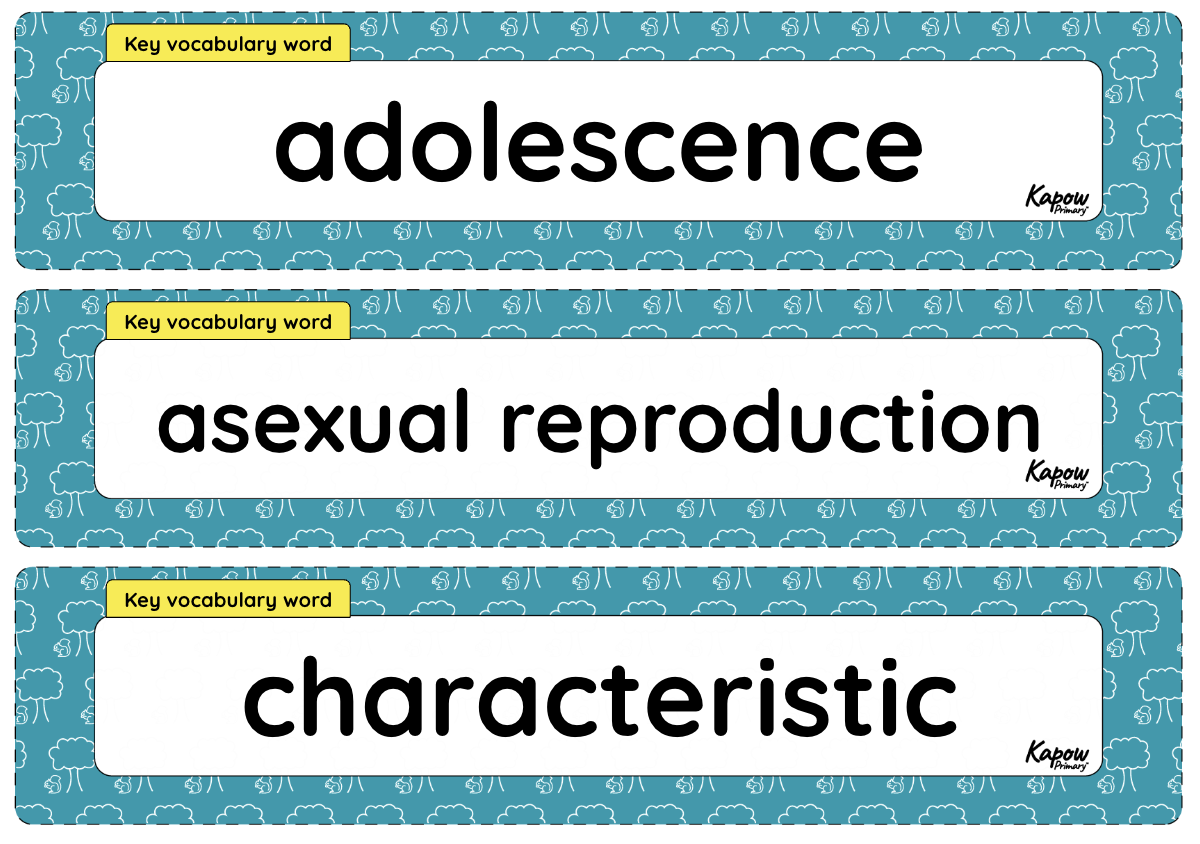
Vocabulary display – Science Y5: Living things: Life cycles and reproduction
A display version of the vocabulary from the unit 'Life cycles and reproduction'.
Subject resources
This content is for subscribers only. Join for access today.
Cross-curricular opportunities
English: Reading – comprehension.
Maths: Measurement.
British values: Mutual respect.
Build on the learning
Living things: Classifying big and small
Get started
