




- Subjects >
- Music >
- Key stage 1 >
- Year 2 >
Please note
This unit helps the children learn how events, actions and feelings within stories can be represented by pitch, dynamics and tempo. This unit replaces the Year 2 unit Orchestral instruments (Theme: Traditional Western stories), which is permanently available in our archive but is no longer updated in line with curriculum or website developments.
For the most up-to-date information about our music scheme, please refer to the document Music: Long-term plan.
Unit outcomes
Pupils who are secure will be able to:
- Identify sections of the music where the tempo changes.
- Correctly describe sections of music as fast or slow.
- Point out moments in the music where the dynamics change.
- Accurately describe dynamic changes as soft or loud.
- Give specific examples of how the music corresponds to actions in the story.
- Provide clear and specific examples of how music supports the story.
- Justify tempo and dynamic choices made to represent a character, event or feeling.
- Suggest appropriate musical dynamics and tempo changes for different scenes of the story.
- Work as part of a group to rehearse a performance.
- Perform confidently using appropriate instrumental sounds.
- Play their part at appropriate tempo and dynamics.
Suggested prior learning

Lessons
Lesson 1: Listening for dynamics and tempo
Lesson 2: Sound effects and dynamics
Lesson 3: Creating a soundscape
Lesson 4: Using sound to represent events
Lesson 5: Musical story performance
Key skills
Listening and evaluating
- Listening with

This content is for subscribers only. Join for access today.
Key knowledge
- To recognise and name
This content is for subscribers only. Join for access today.
Key vocabulary
faster
feeling
This content is for subscribers only. Join for access today.
Equipment list
Equipment needed across all lessons in this unit.
This list does not include equipment which is usually readily available in the classroom (e.g pencils, A4 paper etc)
 Download
Full equipment list for the subject
Quantities marked × will update. Items without quantities are unaffected
-
Tuned and untuned percussion instruments
×30 -
A recording device
×1
This content is for subscribers only. Join for access today.
Related content
Unit resources


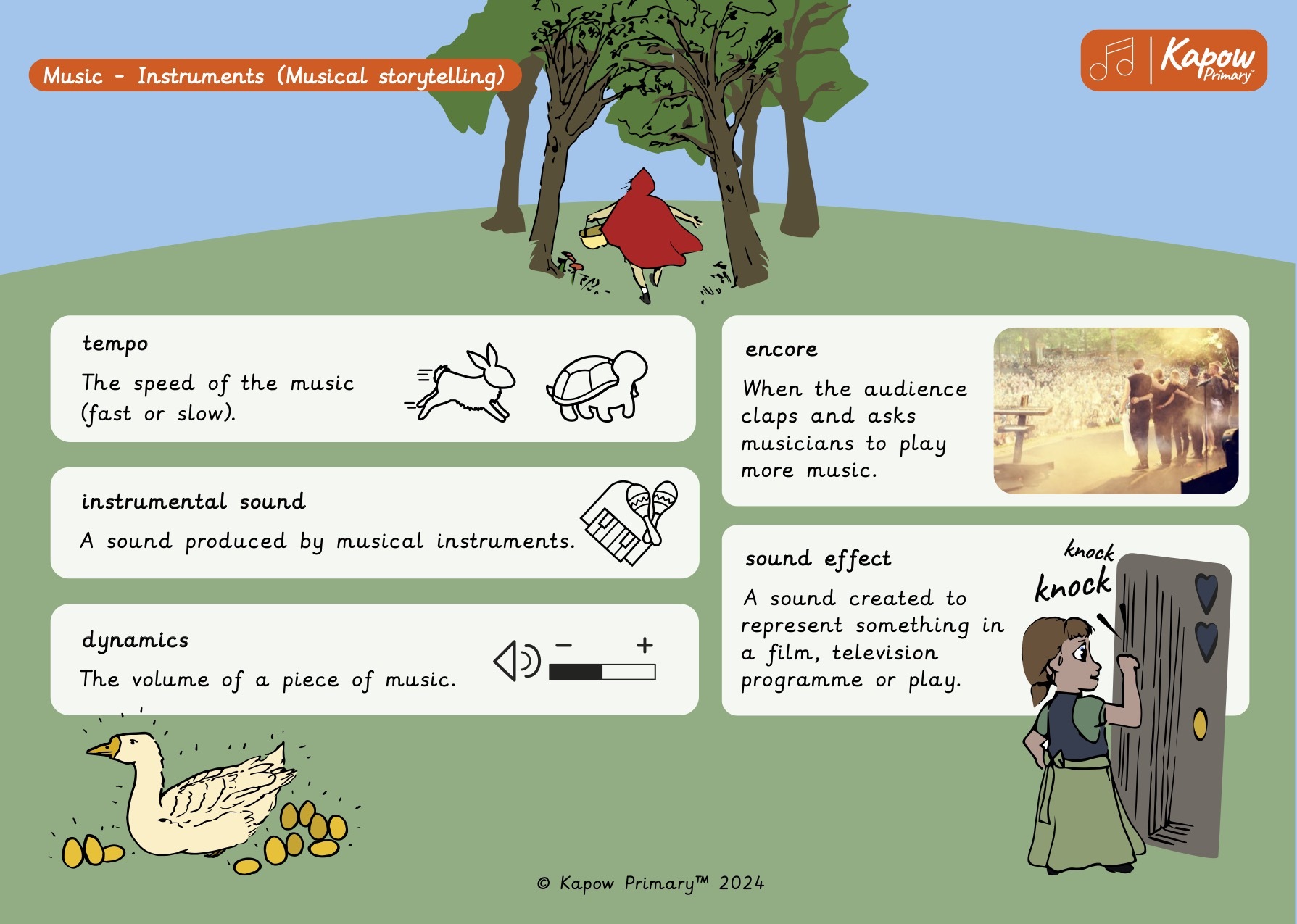
Knowledge organiser – Music Y2: Instruments
Aimed at pupils, a single page which gives key facts and definitions from the unit Instruments.
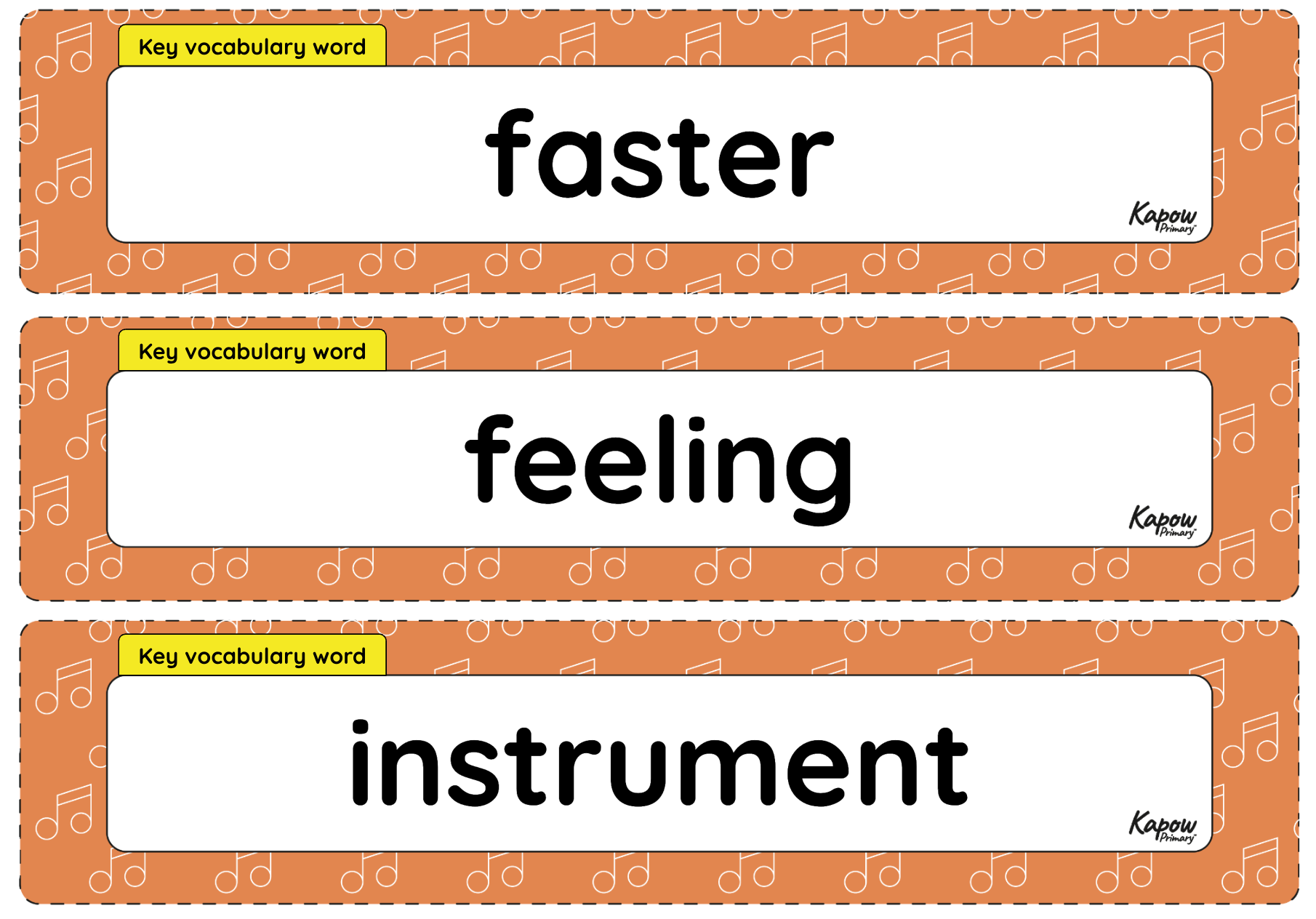
Vocabulary display: Instruments – Y2
A display version of the vocabulary from the unit Instruments.
Subject resources
This content is for subscribers only. Join for access today.
Cross-curricular opportunities
English
Reading – comprehension.
