




Unit outcomes
Pupils who are secure will be able to:
- Use scientific vocabulary to describe private body parts and explain why this is important.
- Ask questions safely and respectfully.
- Explain conception and name the body parts involved.
- Order the stages of pregnancy and describe how a foetus develops.
- Recall different ways babies can be born.
- Explain how families are formed.
- Describe babies’ needs and how caring for a baby affects daily life.
- Explain what consent means and recognise when it is or is not given.
- Recall the legal age of consent in the UK.
Suggested prior learning
Growing up: How can I manage the changes to my body and emotions as I grow up?
Get started
Please note
This unit is non-statutory. This means schools can choose not to teach it and parents can opt to withdraw their children from the learning. For more information, see RSE & PSHE curriculum information.
Teacher video: How do people become parents? Unit overview

Lessons
Lesson 1: Which words can we use to describe our private body parts?
Lesson 2: How are babies made?
Lesson 3: What happens in pregnancy and how are babies born?
Lesson 4: How are families formed?
Lesson 5: How does life change after having a baby?
Lesson 6: What is consent?
Key skills
Key skills
- Using correct scientific vocabulary

This content is for subscribers only. Join for access today.
Key knowledge
To know:
- Reproduction
This content is for subscribers only. Join for access today.
Key vocabulary
conception
consent
This content is for subscribers only. Join for access today.
Equipment list
Equipment needed across all lessons in this unit.
This list does not include equipment which is usually readily available in the classroom (e.g pencils, A4 paper etc)
 Download
Full equipment list for the subject
Quantities marked × will update. Items without quantities are unaffected
- Scissors right- and left-handed options recommended. ×30
- Glue sticks ×30
- A raspberry, lemon, banana, corn on the cob, aubergine and pumpkin. ×1
- Sticky notes
- Coloured pens ×30
- Sugar paper ×15
- Wonder box ×1
This content is for subscribers only. Join for access today.
Related content
Unit resources


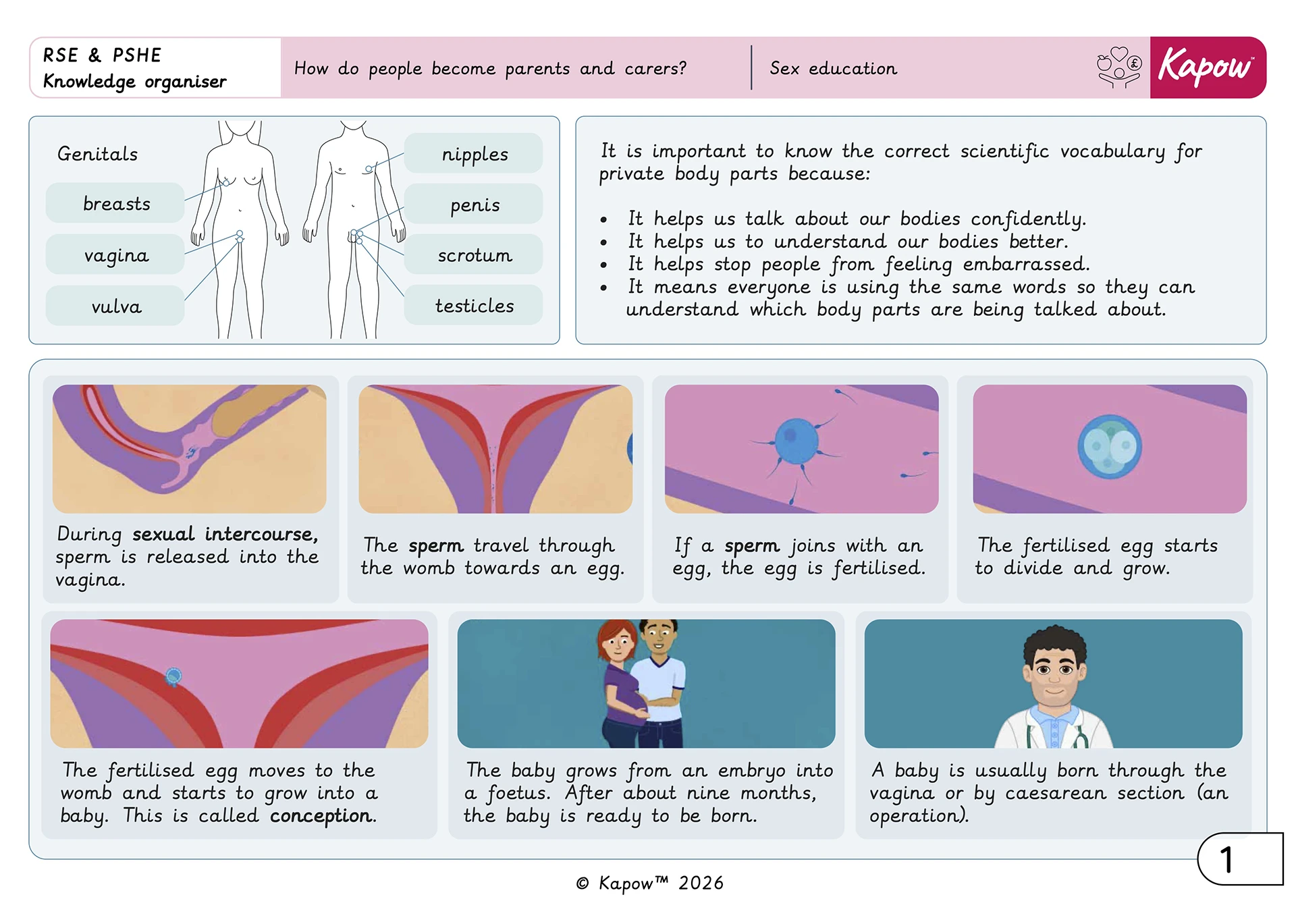
Knowledge organiser – RSE & PSHE Y6: Sex education: How do people become parents and carers?
Aimed at pupils, two pages providing key facts and definitions from the unit ‘How do people become parents and carers?.
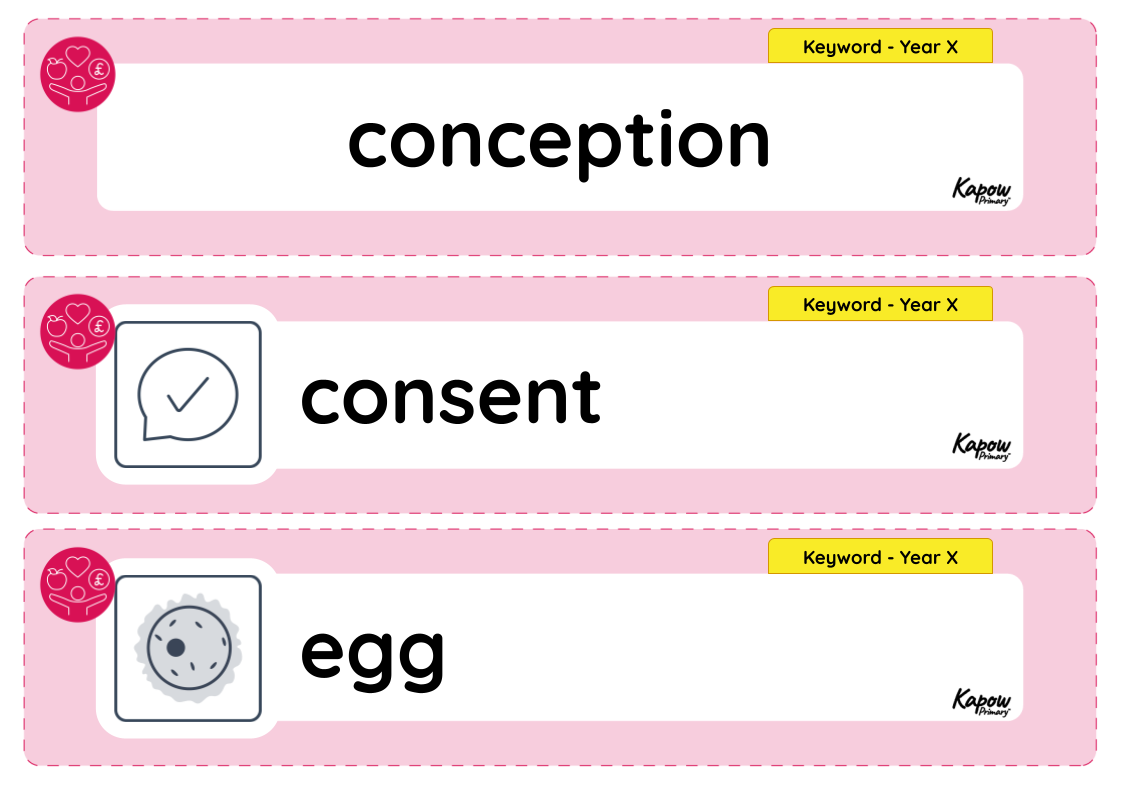
Vocabulary display – RSE & PSHE Y6: Sex education
A display version of the key vocabulary from the 'Sex education' unit.

Parent and carer information letter – RSE & PSHE UKS2: Sex education: How do people become parents and carers?
A parent and carer letter to share before teaching the unit 'Sex education: How do people become parents and carers?'.
Subject resources
This content is for subscribers only. Join for access today.
Cross-curricular opportunities
Science: Animals including humans.
British values: The rule of law; Individual liberty; Mutual respect.
