




- Subjects >
- RSE & PSHE >
- Key stage 2 >
- Year 6 >
Please note
These lessons have been refreshed to keep the content current and relevant. They will be fully reviewed and updated when the new National curriculum is published in 2027.
Unit outcomes
Pupils who are secure will be able to:
- Recognise that human rights protect everyone.
- Describe how responsibilities are linked to rights and identify the rights and responsibilities involved in a situation.
- Explain how to use freedom of expression responsibly and respect the rights of others.
- Give at least two reasons why education is a human right.
- Describe how prejudice and discrimination can affect individuals and groups of people.
- Suggest safe and respectful ways to challenge prejudice and discrimination and stand up for others.
- Explain what stereotypes are and why they can be unfair.
- Suggest positive actions to challenge unfairness and help people feel included.
- Explain how laws protect people’s rights and help keep people safe.
- Describe the main stages of a trial and the roles of the people involved.
Select eight willing volunteers before Lesson 6: How are our rights protected by the law? to take part in a mock trial. Allow time to arrange the classroom as a courtroom. This lesson may take longer than 45 minutes.
Suggested prior learning
Citizenship: What rights and responsibilities do we have?
Get started
Lessons
Lesson 1: How do rights and responsibilities work together?
Lesson 2: How can I balance my rights and responsibilities?
Lesson 3: Why should children have a right to education?
Lesson 4: Why is it important to challenge prejudice and discrimination?
Lesson 5: How can stereotypes limit people’s choices?
Lesson 6: How are our rights protected by the law?
Key skills
Key skills
- Explaining what happens when someone breaks the law.
- Explaining why prejudice and discrimination are wrong and the effect they can have on people and the community.

This content is for subscribers only. Join for access today.
Key knowledge
- Discrimination is when someone is treated unfairly or differently because of who they are, such as their race, gender, religion or disability.
- Stereotypes can be harmful because they limit what people believe they can do or become.
This content is for subscribers only. Join for access today.
Key vocabulary
bystander (Y5/6)
discrimination (Y5/6)
This content is for subscribers only. Join for access today.
Equipment list
Equipment needed across all lessons in this unit.
This list does not include equipment which is usually readily available in the classroom (e.g pencils, A4 paper etc)
 Download
Full equipment list for the subject
Quantities marked × will update. Items without quantities are unaffected
- Whiteboards and pens ×8
- Wonder box 1
- Devices with internet access ×15
-
Exercise books or lined paper
×30 -
Pens or pencils in a different colour from the original responses on the Knowledge catcher
×30
Optional
The equipment below is optional
- Flipchart 1
- Highlighters As needed
This content is for subscribers only. Join for access today.
Related content
Unit resources

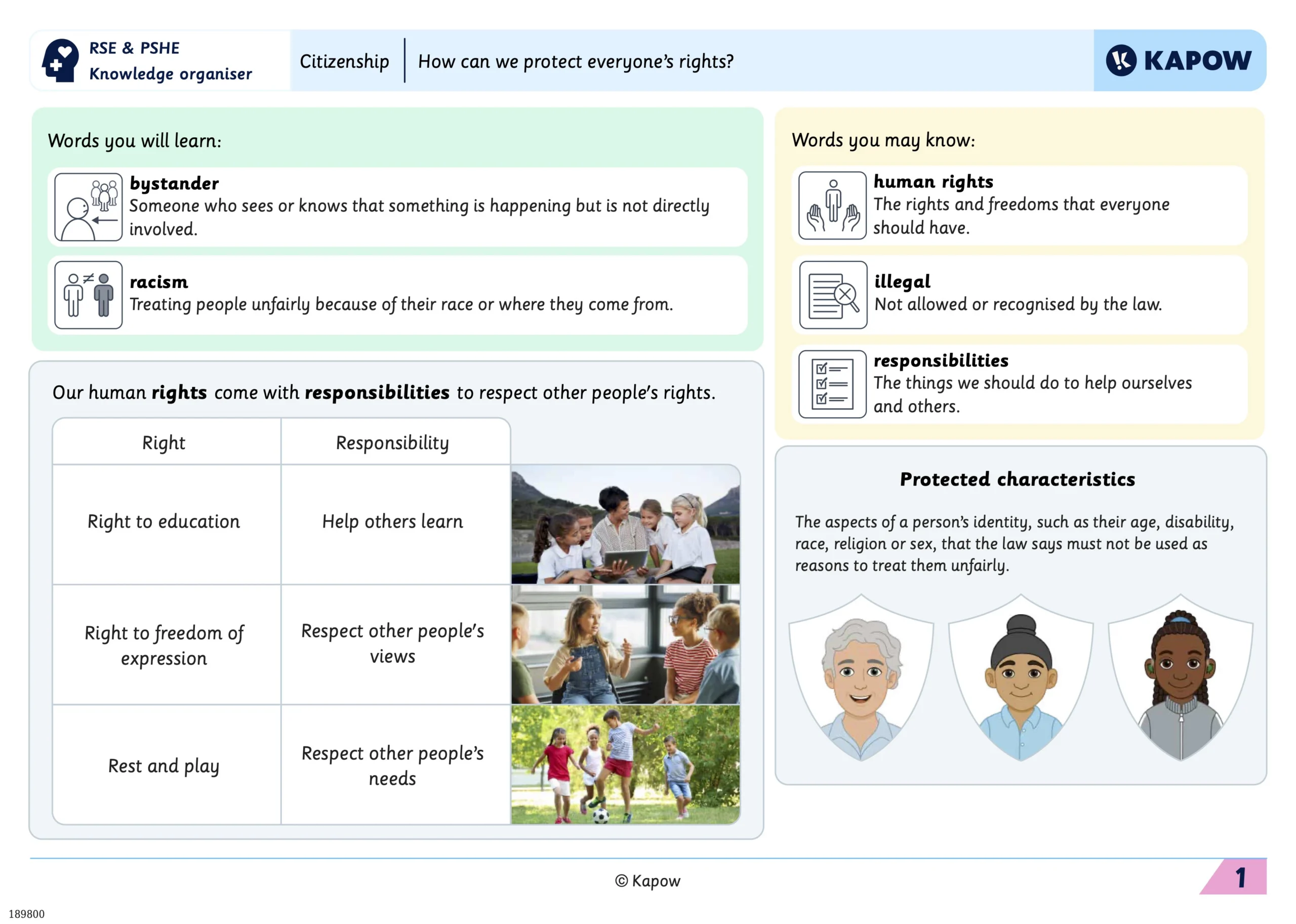
Knowledge organiser – RSE & PSHE Y6: Citizenship: How can we protect everyone’s rights?
Aimed at pupils, two pages providing key facts and definitions from the unit 'How can we protect everyone’s rights?'.
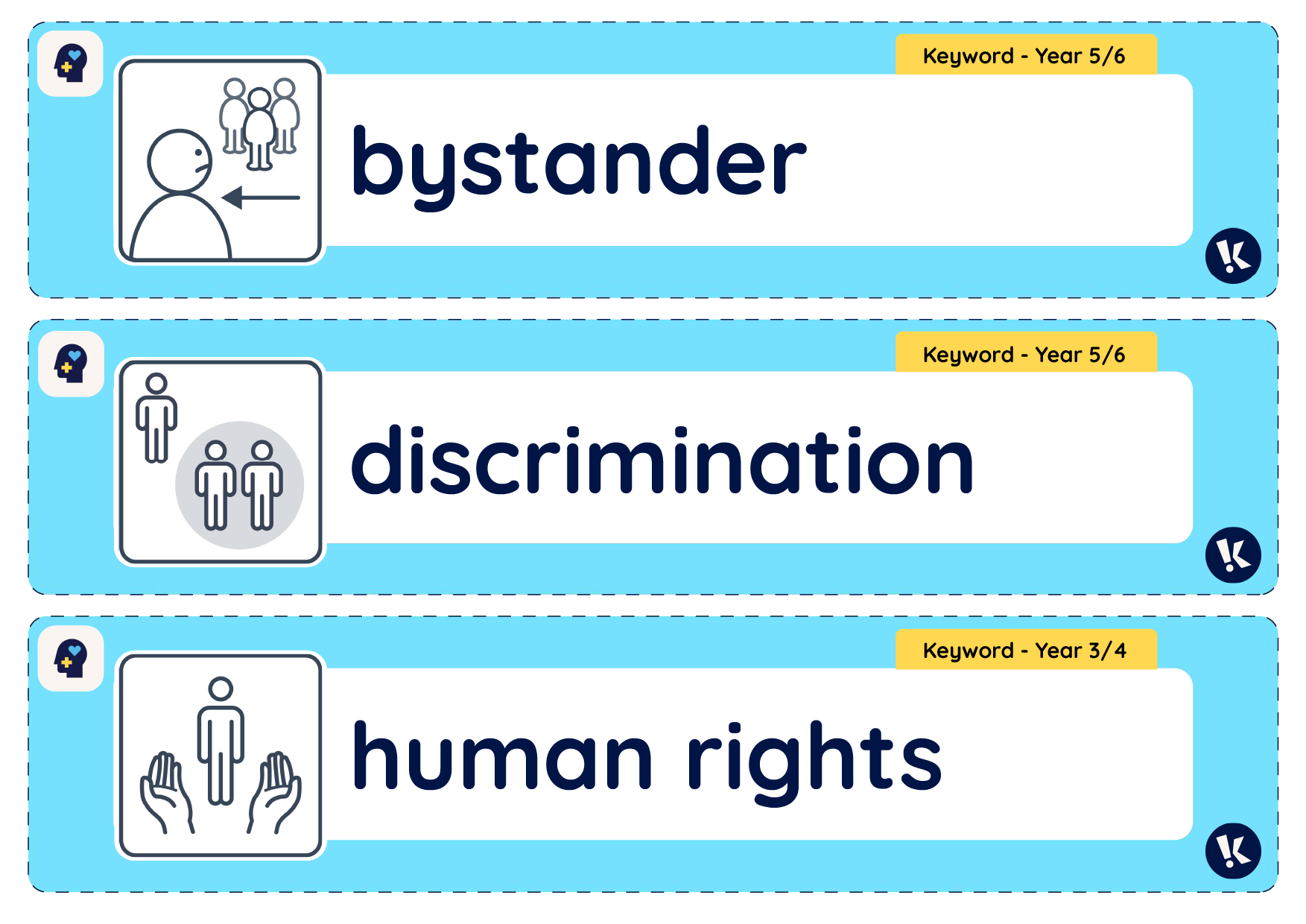
Vocabulary display – RSE & PSHE Y6: Citizenship: How can we protect everyone’s rights?
A display version of the vocabulary from the unit 'How can we protect everyone’s rights?'.
Cross-curricular opportunities
- English: Spoken language: developing discussion and presentation skills by explaining and justifying ideas about human rights, responsibilities and fairness.
- British values: Individual liberty: exploring how people can exercise their rights and freedoms responsibly while respecting the rights and needs of others.
- British values: The rule of law: understanding how laws protect people’s rights and help prevent discrimination and unfair treatment.
- British values: Mutual respect: recognising the effects of prejudice, discrimination and stereotypes, and exploring ways to promote fairness, respect and inclusion.
- British values: Tolerance of those with different faiths and beliefs: respecting different religions and beliefs and challenging stereotypes and discrimination that can lead to unfair treatment.