


Plant-based materials
Considering ways to reduce, reuse and recycle by applying knowledge of material properties to solve practical problems.
- Subjects >
- Science >
- Key stage 1 >
- Year 2 >
Introducing 'Making connections' in Science

Unit outcomes
Pupils who are secure will be able to:
- Explain the terms reduce, reuse and recycle.
- Describe how paper is made.
- Select suitable materials for a plant pot.
- Describe good growth conditions for seeds.
- Make a plant pot from eco-friendly materials.
- Identify non-living materials to decorate a plant pot.
When working scientifically, pupils who are secure will be able to:
- Use an online source to find answers to questions.
- Identify and classify different types of material.
- Classify natural and human-made materials.
- Carry out tests to assess the properties of different materials.
- Use observations to answer questions.
- Draw conclusions about the suitability of materials.
Please note that Kapow Primary Science lessons are designed to be 1 hour and 30 minutes long to reflect the requirements of a core subject.
Suggested prior learning
Materials: Uses of everyday materials
Get started
Lessons
Lesson 1: Reduce, reuse, recycle
Lesson 2: From plants to products
Lesson 3: Testing suitability
Lesson 4: Testing plant pots
Lesson 5: Choosing materials
Key skills
Posing questions
- Exploring

This content is for subscribers only. Join for access today.
Key knowledge
Plants
To know:
- Seeds
This content is for subscribers only. Join for access today.
Key vocabulary
alive
dead
This content is for subscribers only. Join for access today.
Equipment list
Equipment needed across all lessons in this unit.
This list does not include equipment which is usually readily available in the classroom (e.g pencils, A4 paper etc)
 Download
Full equipment list for the subject
Quantities marked × will update. Items without quantities are unaffected
- Materials for sorting (bottle tops, yoghurt pots, egg cartons, socks, t-shirts and plastic bottles) ×5
-
Natural materials (e.g. wool, cotton, wooden toys, rubber balloons and clay pots).
×1 - Human-made materials (e.g. polyester clothing, plastic bottles, nylon rope and acrylic paint). ×1
-
Materials to testing (newspaper, card, bubble wrap, natural fabric, tin foil and hard plastic – one small piece of each)
×8 -
Measuring cylinders or pipettes
×8 -
Materials to make pots (newspaper, bubble wrap, tin foil, fabric)
×8 - Cylindrical objects (e.g. pencil pots) ×8
-
1 bag of compost
-
A3 sheets of newspaper
×30 - Spoons ×8
-
Sunflower seeds
×30 - A device that takes photographs ×8
This content is for subscribers only. Join for access today.
Related content
Unit resources


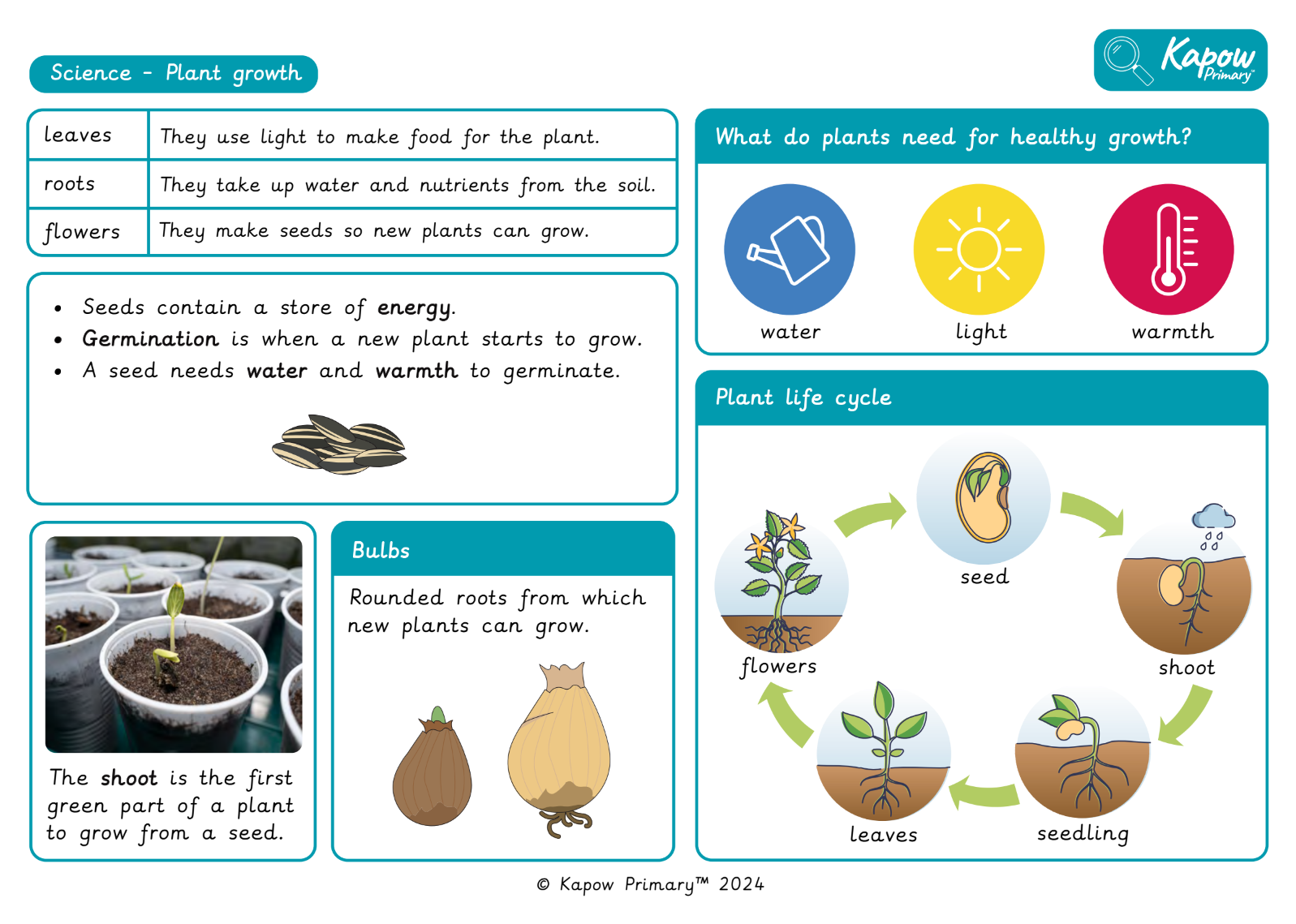
Y2 Science knowledge organisers
A complete collection of the Year 2 Knowledge organisers. The Making connections units do not have new Knowledge organisers as…
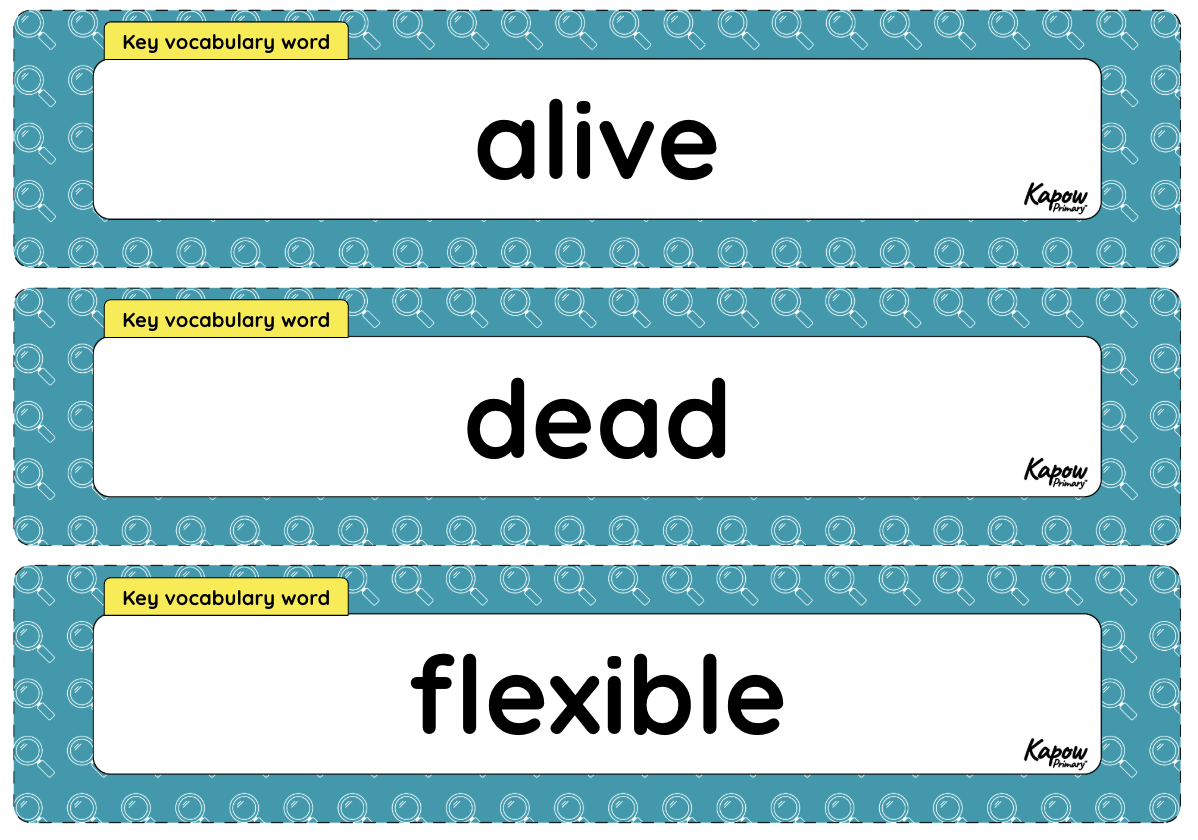
Vocabulary display: Making connections: Plant-based materials
A display version of the key vocabulary from the 'Making connections: Plant-based materials' unit.
Subject resources
This content is for subscribers only. Join for access today.
Cross-curricular opportunities
Design and technology: Design, make.
British values: Mutual respect.
