




- Subjects >
- Science >
- Key stage 1 >
- Year 1 >
Unit outcomes
Pupils who are secure will be able to:
- Name and describe the physical features of a range of animals.
- Sort animals into groups based on their similarities and differences.
- Identify characteristics specific to mammals, birds, reptiles, amphibians and fish.
- Recall the diets of carnivores, herbivores and omnivores.
When working scientifically, pupils who are secure will be able to:
- Use a non-fiction text to find out about specific animals’ diets.
- Recognise that there are different ways to gather data.
- Record data in a block graph and use this to answer questions.
- Recognise what the scientist Jane Goodall was known for.
- Recall some of Jane Goodall’s key findings.
Please note that Kapow Primary Science lessons are designed to be 1 hour and 30 minutes long to reflect the requirements of a core subject.
Note: At the end of this unit, observe seasonal changes in spring. Allow the pupils to complete the Activity: Observing seasons over time (see Science, Year 1, Seasonal changes, Lesson 5: Observing over time).
Suggested prior learning
Lessons
Lesson 1: Animal groups
Lesson 2: Describing animals
Lesson 3: Comparing animals
Lesson 4: Carnivore, herbivore or omnivore?
Lesson 5: Pets
Lesson 6: Jane Goodall
Key skills
Posing questions
- Recognising

This content is for subscribers only. Join for access today.
Key knowledge
To know:
- A
This content is for subscribers only. Join for access today.
Key vocabulary
amphibian
bird
This content is for subscribers only. Join for access today.
Equipment list
Equipment needed across all lessons in this unit.
This list does not include equipment which is usually readily available in the classroom (e.g pencils, A4 paper etc)
 Download
Full equipment list for the subject
Quantities marked × will update. Items without quantities are unaffected
-
PE hoops
5 - A device that takes photographs ×1
-
Craft materials (e.g. feathers, fur, foil, felt and coloured paper).
×1 -
Sticky notes (two different colours)
×30 - ‘Dear zoo’ storybook by Rod Campbell ×1
-
Connecting cubes of different colours.
×15 -
Toilet rolls to make binoculars (two each).
×30 -
Craft materials to decorate binoculars
×1 - Masking tape ×1
- Sticky labels ×30
- Clipboards ×30
The equipment below is optional
-
Green fabric
×1 -
Chimpanzee toys
×1
This content is for subscribers only. Join for access today.
Related content
Unit resources


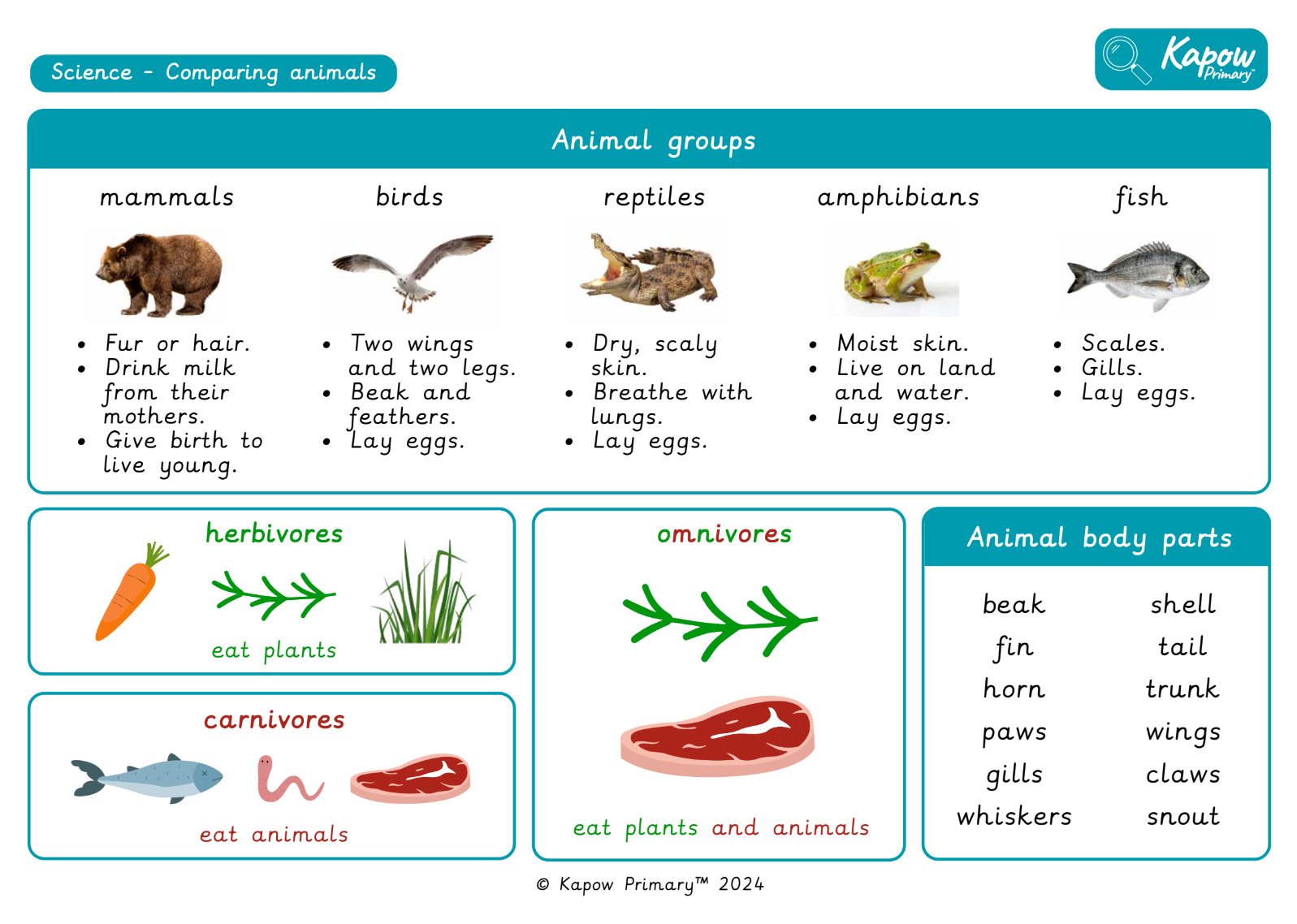
Knowledge organiser – Science Y1: Animals, including humans: Comparing animals
Aimed at pupils, a single page which gives key facts and definitions from the unit 'Comparing animals'.
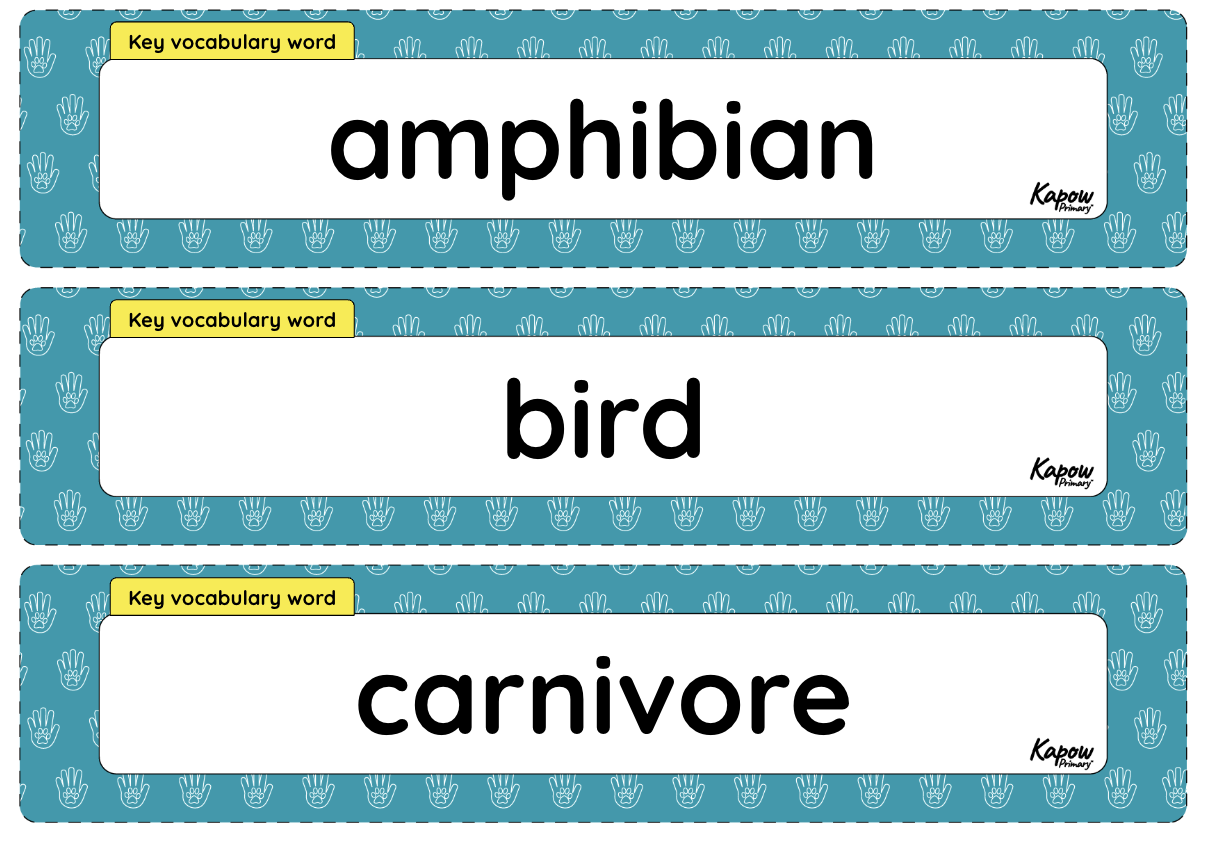
Vocabulary display – Science Y1: Animals, including humans: Comparing animals
A display version of the vocabulary from the unit 'Comparing animals'.
Subject resources
This content is for subscribers only. Join for access today.
Cross-curricular opportunities
English: writing – capital letters and full stops, pronoun ‘I’.
Maths: number – counting, block charts, more than, less than, most and least.
British values: mutual respect.
Build on the learning
Living things: Habitats
Get started
