




- Subjects >
- Art and design >
- Key stage 2 >
- Year 5 >
Unit outcomes
Pupils who are secure will be able to:
- Group images together, explaining their choices.
- Answer questions about a chosen installation thoughtfully and generate their own questions.
- Show that they understand what installation art means.
- Justify their opinions of installation artworks.
- Evaluate their box designs, considering how they might appear as full-sized spaces.
- Suggest changes they could make if they repeated the activity to create a different atmosphere in the space.
- Create an installation plan, model or space.
- Describe their creations and the changes they made as they worked.
- Describe how their space conveys a particular message or theme.
- Make and explain their choices about materials used, arrangement of items in the space and the overall display of the installation.
- Show they have considered options for how to display their installation best e.g. lighting effects.
- Present information about their installation clearly in the chosen format.
- Justify choices made, explaining how they improve the viewer experience or make it interactive
Lesson 2 requires recycled cardboard boxes (one per group of four). A variety of recycled materials and everyday objects, such as bubble wrap, fabric, PE equipment, plastic bottles, etc, are used throughout this unit.
Suggested prior learning
Sculpture and 3D: Mega materials
Get started
Lessons
Lesson 1: What is installation art?
Lesson 2: Space and scale
Lesson 3: Everyday amazing
Lesson 4: Creative concepts
Lesson 5: Viewer experience
Key skills
Generating ideas:

This content is for subscribers only. Join for access today.
Key knowledge
Formal elements:
- Form:
This content is for subscribers only. Join for access today.
Key vocabulary
analyse
art medium
This content is for subscribers only. Join for access today.
Equipment list
Equipment needed across all lessons in this unit.
This list does not include equipment which is usually readily available in the classroom (e.g pencils, A4 paper etc)
 Download
Full equipment list for the subject
Quantities marked × will update. Items without quantities are unaffected
- Cardboard boxes ×15
- Range of materials (such as: powder paint, glitter, charcoal, chalk, coloured sand, ready-mix paint) ×15
- Digital cameras ×8
- Access to classroom objects (such as: chairs, PE equipment, trays, boxes) ×8
-
Large pieces of fabric/ materials (such as: foil or bubble wrap and interesting objects readily available around school to cover furniture)
×8 - Masking tape ×1
- A selection of Pegs or bulldog clips
The equipment below is optional
- Protective goggles ×30
- Torches ×8
This content is for subscribers only. Join for access today.
Related content
Unit resources


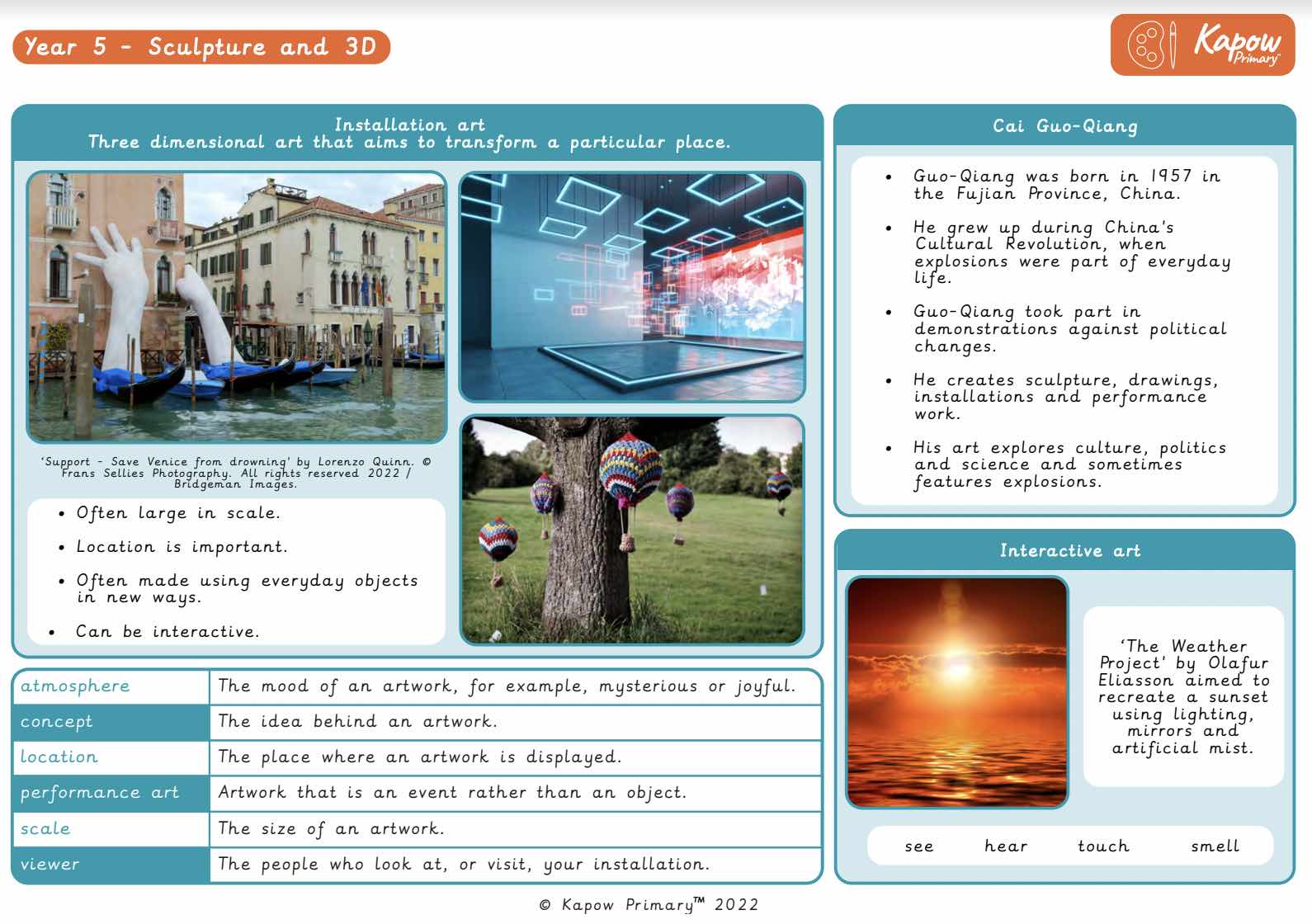
Knowledge organiser: Sculpture and 3D: Interactive installation
Aimed at pupils, a single page which gives key facts and definitions from the unit "Sculpture and 3D: Interactive installation",
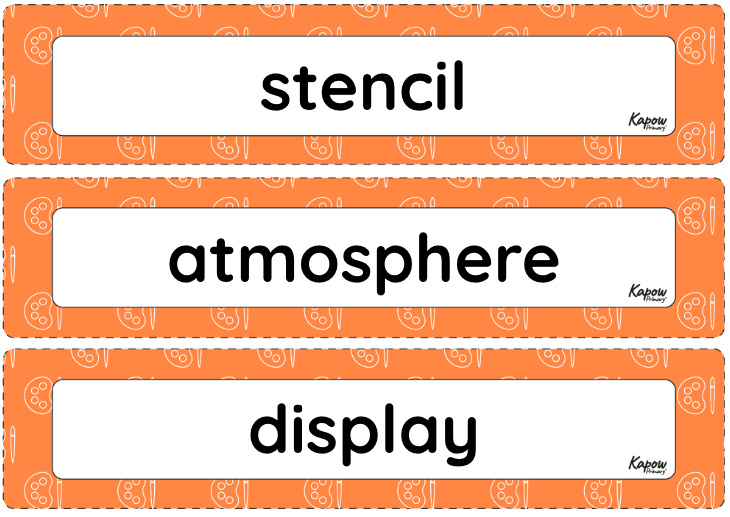
Vocabulary display – Art and design Year 5: Interactive installation
A display version of the key vocabulary from the Interactive installation unit.
Subject resources
This content is for subscribers only. Join for access today.
Cross-curricular opportunities
None.
Build on the learning
Sculpture and 3D: Making memories
Get started
