




Unit outcomes
Pupils who are secure will be able to:
- Identify things which are natural and man-made.
- Discuss ideas about how natural things were created.
- Recall the key elements of the Jewish and Christian creation story in the correct order.
- Understand that some Christian and Jewish people believe the story explains how the world was created.
- Correctly order the key events of a Hindu creation story.
- Make some links between the Hindu creation story and the Christian and Jewish creation story.
- Choose appropriate adjectives and adjectival phrases from a selection to describe what people might think about God.
- Share their own ‘I wonder’ questions.
- Recognise that Humanists use evidence to understand how the world began.
- Create a thoughtful representation that reflects the Humanist belief of how the world began.
- Use art to express their ideas about how they think the world began.
Suggested prior learning
Why are some stories special?
Get started
Teacher video: How did the world begin?

Lessons
Lesson 1: What is creation?
Lesson 2: What might some Jewish and Christian people think about creation?
Lesson 3: What do some Hindu people believe about creation?
Lesson 4: What do creation stories suggest to some people about God?
Lesson 5: How do some Humanists believe the world began?
Lesson 6: Where did the world come from?
Key skills
Disciplinary
- Asking questions about things

This content is for subscribers only. Join for access today.
Key knowledge
Personal
To know:
- What they and
This content is for subscribers only. Join for access today.
Key vocabulary
belief
believe
This content is for subscribers only. Join for access today.
Equipment list
Equipment needed across all lessons in this unit.
This list does not include equipment which is usually readily available in the classroom (e.g pencils, A4 paper etc)
 Download
Full equipment list for the subject
Quantities marked × will update. Items without quantities are unaffected
-
A box with a lid (e.g. a shoe or chocolate box), covered or decorated and labelled ‘wonder box’
×1 - A4 paper ×30
- Coloured pens ×30
- Scissors right- and left-handed options recommended. ×15
- Glue stick ×15
- Flipchart ×1
-
Large sheets of sugar paper
×8 -
Art materials, e.g. paint, pastels or pens.
×8 -
Art paper
×30
The equipment below is optional
- Devices to take photos ×8
- Video recording devices ×1
- A Christian Bible ×1
- A Torah book or scroll ×1
-
Props to tell the creation story
×1 -
Collage materials
×8 -
Building blocks or modelling clay
×8
This content is for subscribers only. Join for access today.
Related content
Unit resources


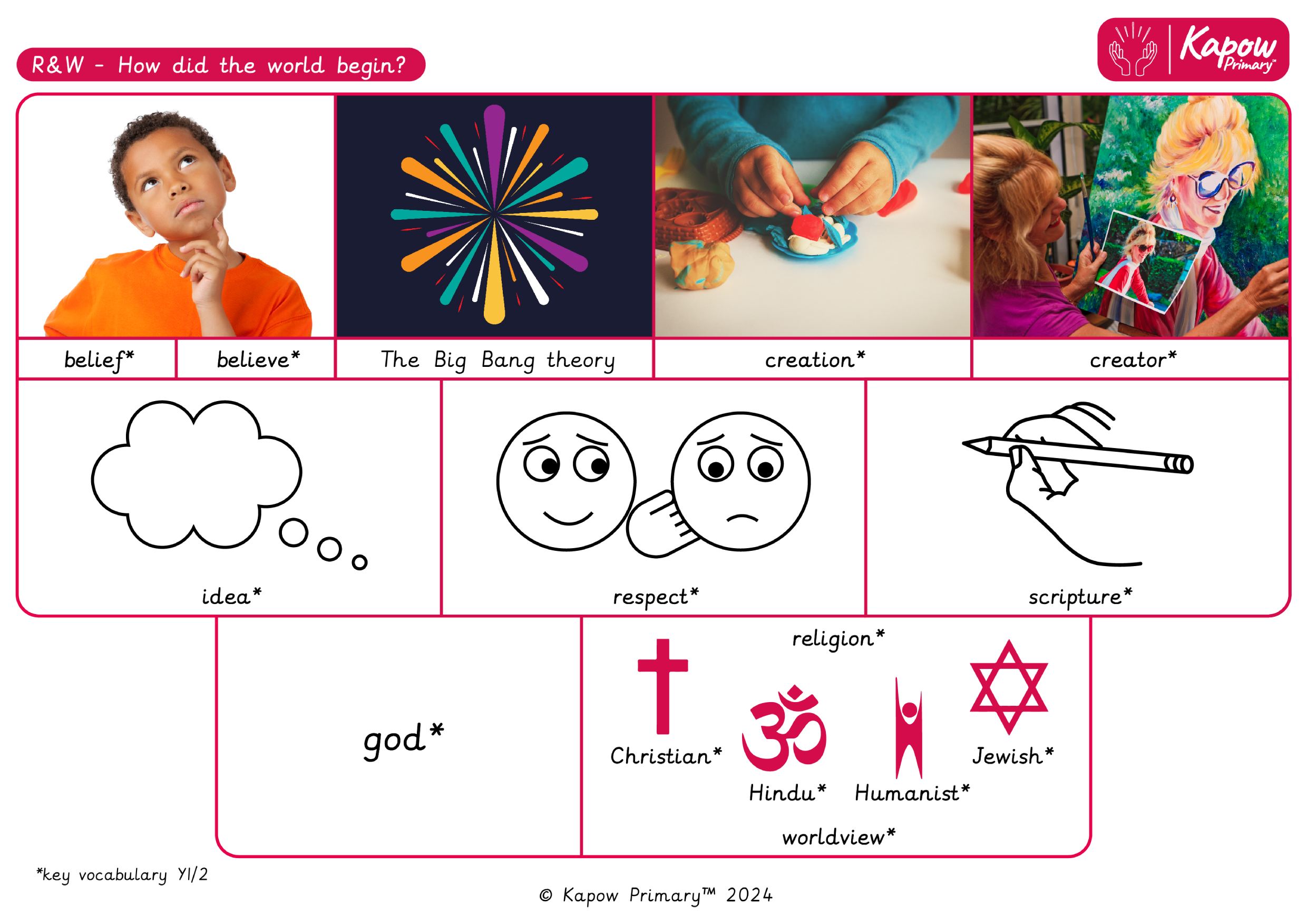
Knowledge organiser – R&W Y1: How did the world begin?
Aimed at pupils, a single page that gives key facts and definitions from the unit 'How did the world begin?'.
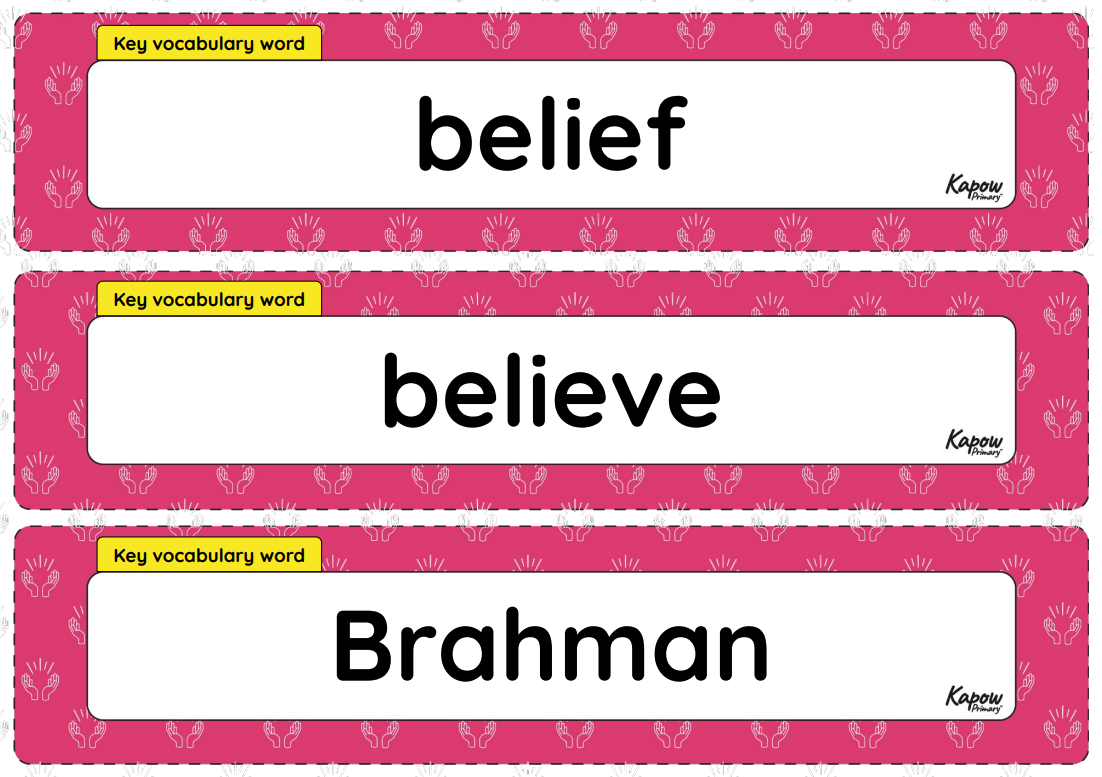
Vocabulary display: R&W Y1: How did the world begin?
A display version of the key vocabulary from the 'How did the world begin?' unit.
Subject resources
This content is for subscribers only. Join for access today.
Cross-curricular opportunities
English: Spoken language, reading.
Science: Everyday materials, working scientifically.
Maths: Number – number and place value.
Geography
Art and design
RSE
Build on the learning
What do some people believe God looks like?
Get started
