


Science curriculum
This page is designed for Science subject leaders to:
- View the Kapow Primary Science curriculum in one convenient place.
- Discover the rationale behind Kapow Primary’s Science curriculum.
- Find relevant information to support leading Science.
The Curriculum and Assessment Review final report has been released. We’re reviewing the recommendations and planning for future updates.
For more information, see our Curriculum updates and FAQs pages.
Science scheme of work
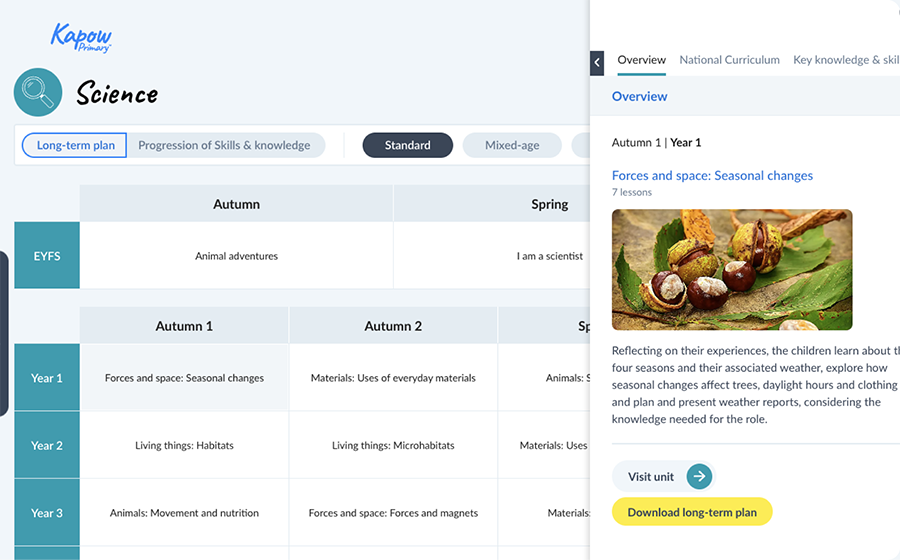
Click the image above to visit the Science portal for long-term plans, curriculum information and more.
1. Intent
This section outlines the overall Science curriculum plan, including its structure, sequencing and the specific knowledge and skills pupils are expected to acquire.

Curriculum aims
Kapow Primary’s Science scheme of work aims to inspire pupils to become curious, inquisitive and analytical thinkers with a broad understanding of the natural world – in other words, to think like scientists. The intention is for pupils to develop the confidence to ask questions, make observations, carry out investigations, record data in a variety of ways and analyse and present their findings.
The scheme aims to build an awareness of how science influences everyday life and drives progress in society. The hope is to encourage pupils to become reflective, responsible individuals who use scientific knowledge and skills to make informed decisions and contribute positively to the world around them.
The scheme supports teachers in developing their subject knowledge and skills, enabling the delivery of engaging, well-informed lessons with confidence. The curriculum is designed to be both accessible and ambitious, ensuring all learners’ full participation and potential achievement.
Statutory and non-statutory guidance
National curriculum
Kapow Primary’s standard and mixed-age schemes of work fulfil the statutory requirements for Science outlined in the National curriculum (2014).
Ofsted research review
The standard and mixed-age Science schemes are based on principles outlined in Ofsted’s Science research review.
New research and developments
The standard and mixed-age Science schemes are continually evaluated and refined through regular curriculum reviews, internal audits and feedback from subscribing schools.
Updates are informed by the latest subject-specific research, changes to National curriculum guidance and developments in pedagogy. This ensures the curriculum remains current, effective and relevant.

Broad and balanced curriculum
The three strands
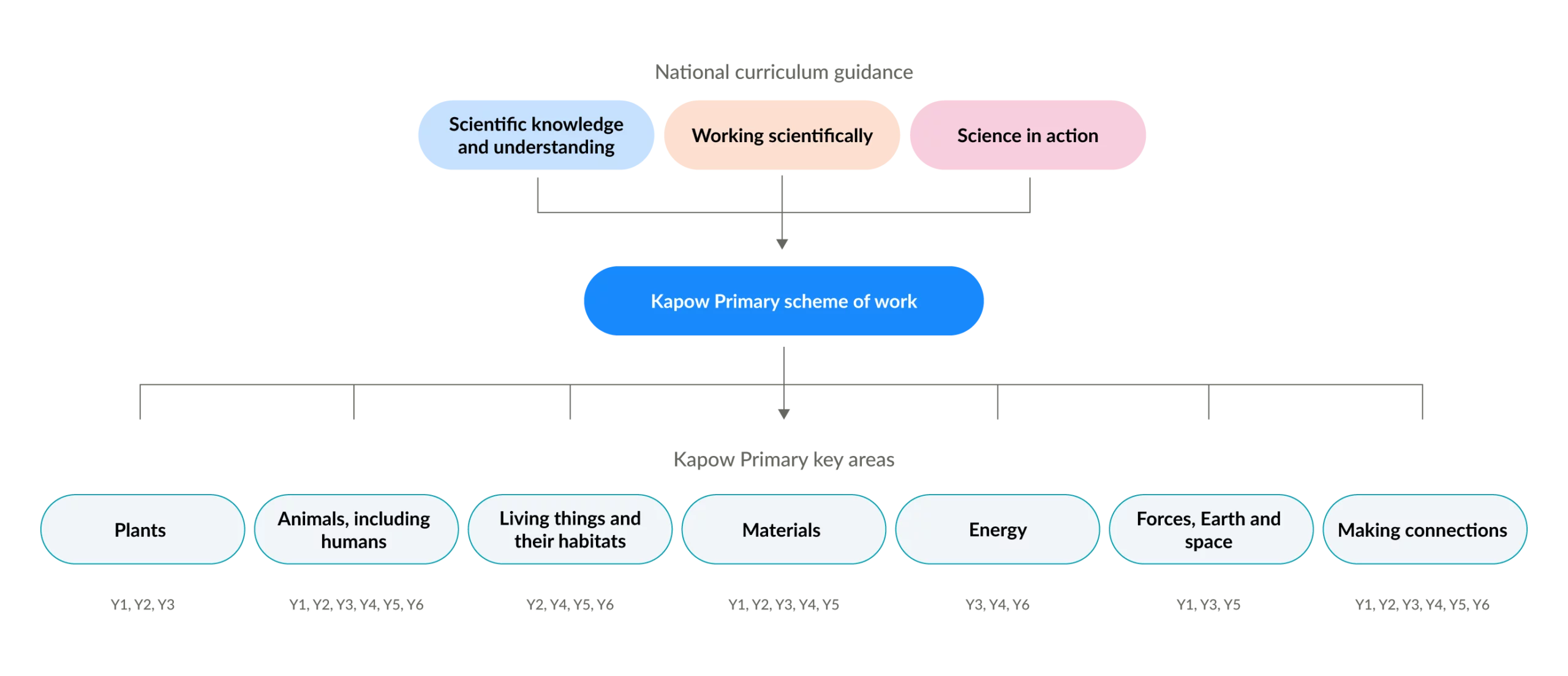
Based on the National curriculum, the following three strands have been identified, which run throughout the Science curriculum:
- Scientific knowledge and understanding.
- Working scientifically.
- Science in action.
The Science curriculum has been planned with these strands running through each unit, ensuring balanced coverage of the different areas of Science and both substantive and disciplinary knowledge.
Scientific knowledge and understanding
Developing scientific knowledge and conceptual understanding through the specific disciplines of biology, chemistry and physics.
Working scientifically
Developing an understanding of the nature, processes and methods of science through different types of enquiry that help pupils answer questions about the world around them.
Science in action
Equipping pupils with the scientific knowledge required to understand the uses and implications of science, today and for the future.
Key areas
The National curriculum for Science sets out the importance of developing scientific knowledge and conceptual understanding across the disciplines of biology, chemistry and physics. It also emphasises the role of scientific enquiry in helping pupils understand the nature and methods of science.
To support this, Kapow Primary’s Science curriculum is organised into the following seven key areas:
• Plants
• Animals, including humans
• Living things and their habitats
• Materials
• Energy
• Forces, Earth and space
• Making connections
These areas are revisited across year groups to ensure that pupils build a secure and connected understanding of key scientific concepts while developing their ability to think and work scientifically.

Progression
Progression of skills and knowledge
The Science: Progression of skills and knowledge document provides an overview of the skills and knowledge covered in each phase and strand.
It explains how Science skills and knowledge are developed to support pupils in reaching the key stage outcomes as outlined in the National curriculum.
New learning is weighted toward the start of each key stage, allowing ample opportunity for it to be revisited and applied in later years. As a result, knowledge accumulation may look heavier in some year groups than others.

Progression of vocabulary
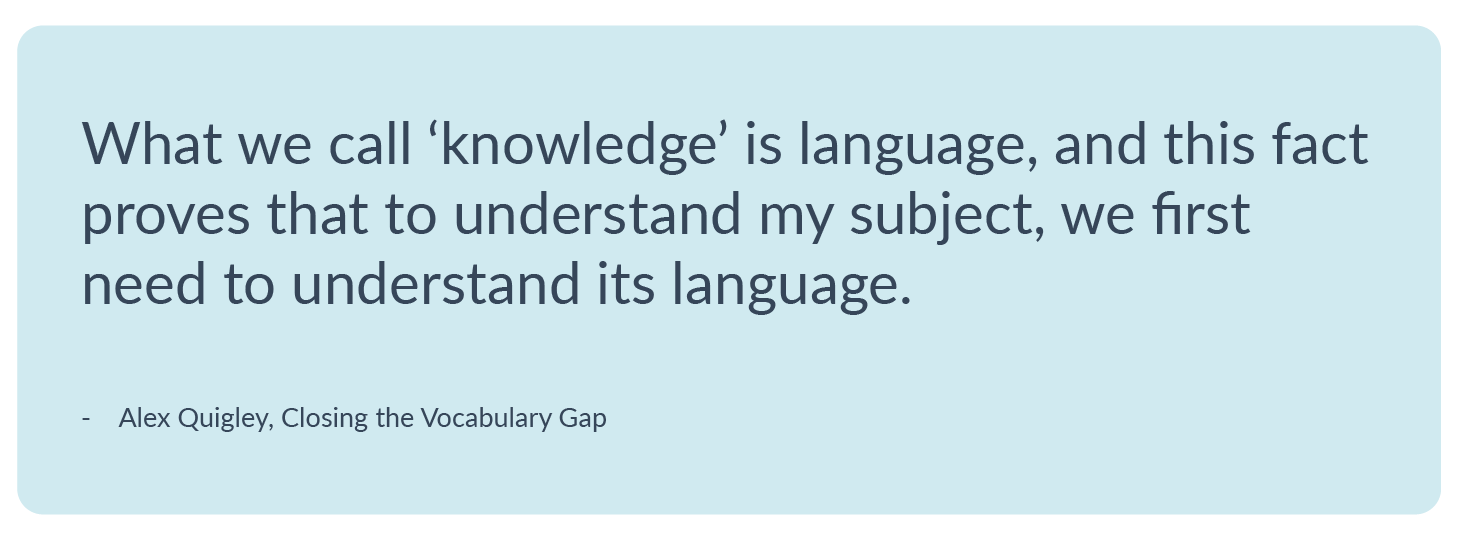
Kapow Primary’s progression of vocabulary for Science focuses on the essential words and terms for understanding the subject. These words are carefully selected to help pupils grasp concepts and ideas outlined in the Kapow Primary Science scheme.
Science vocabulary is categorised under three curriculum strands: Working scientifically, Science in action and Scientific knowledge and understanding.
Spiral curriculum
Kapow Primary’s Science scheme of work has been designed as a spiral curriculum with the following key principles in mind:
- Cyclical – pupils return to the key knowledge and skills again and again during their time in primary school.
- Increasing depth – each time a skill is revisited, it is covered with greater complexity.
- Prior knowledge – pupils build upon previous foundations rather than starting again.

Broadening horizons
The process of broadening horizons involves starting with familiar contexts, such as the pupils’ local area, and concrete experiences with materials, animals and plants, before learning to explain phenomena using scientific language, models, and evidence.
Kapow Primary’s Science scheme supports pupils’ development from direct observation and exploration towards a deeper understanding of abstract scientific concepts and the nature of scientific enquiry.

Types of knowledge
Types of knowledge
Knowledge is defined differently depending on the subject in question. Ofsted’s Science research review helps to define Science knowledge as:
- Substantive knowledge.
- Disciplinary knowledge.

Substantive knowledge
Substantive knowledge refers to scientific understanding, including concepts, laws, theories and models.
It is referred to as ‘Scientific knowledge and conceptual understanding’ in the National curriculum and ‘Scientific knowledge and understanding’ in the Kapow Primary Science scheme.
In the Science: Progression of skills and knowledge document, the National curriculum attainment targets are broken down into knowledge components, showing how they build over time to develop pupils’ understanding of key scientific concepts.

Disciplinary knowledge
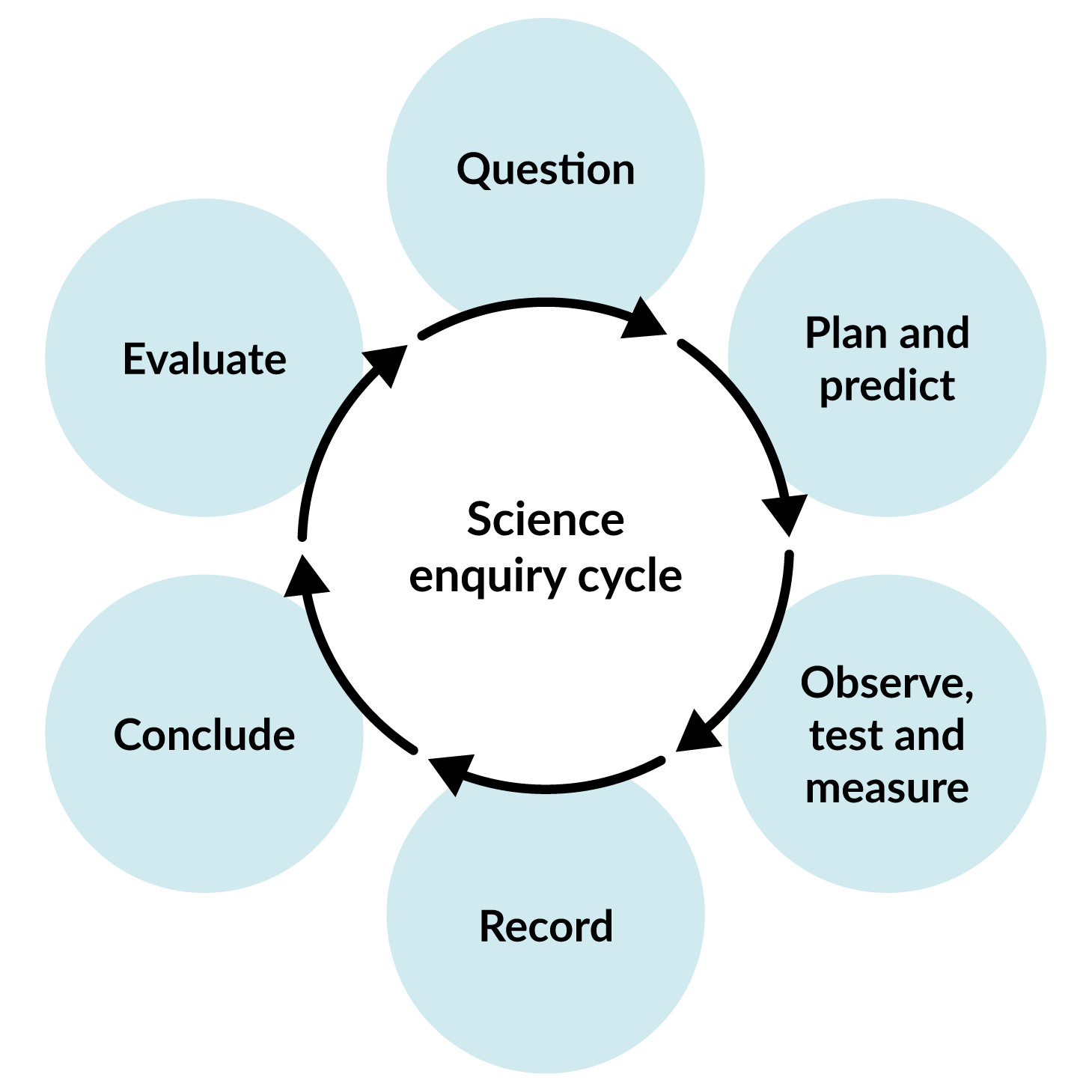
‘Working scientifically’ specifies the understanding of the nature, processes and methods of Science for each year group. It is covered alongside the ‘Scientific knowledge and understanding’ strand in every unit, not in isolation.
The ‘Working scientifically’ statements from the National curriculum have been further broken down to ensure gradual progression in skills development. This also allows teaching to focus on the component disciplinary knowledge that pupils need to successfully perform these skills.
Wider knowledge and skills
Digital literacy
Kapow Primary’s Science scheme integrates technology through digital representations, research tasks and interactive activities.
This helps develop the children’s ability to find, evaluate and use scientific information effectively.

Oracy
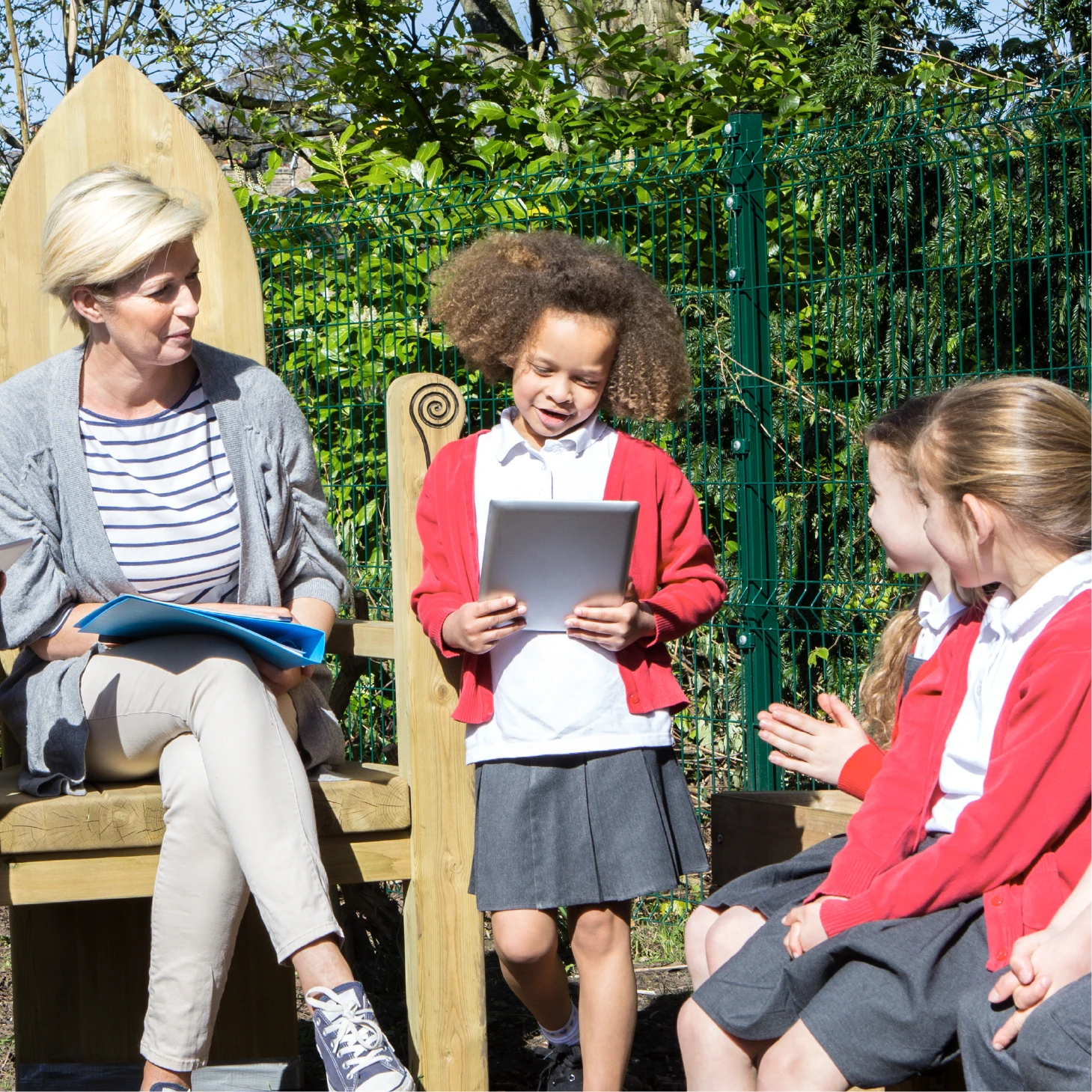
Lessons encourage discussion, debate and presentations on scientific topics. This enables pupils to articulate their understanding, justify their opinions and engage in collaborative learning.
Throughout the Science scheme, pupils use oracy to enhance their learning by thinking aloud, questioning and discussing activities.
They develop essential skills such as choosing appropriate vocabulary, organising their ideas and listening effectively.
Sustainability
The Science curriculum promotes awareness of environmental issues by enabling pupils to explore topics such as climate change, the use of natural resources, biodiversity and the impact of human activity on ecosystems.
Through practical enquiry and real-world contexts, pupils develop a scientific understanding of sustainability and the importance of caring for the natural world.
Understanding climate change is crucial for comprehending the interconnected systems that sustain life on Earth. As outlined in the Department for Education’s 2023 guidance, educating pupils about the planet’s evolving conditions is a national priority. The guidance encourages all schools to create climate action plans and provide sustainability-rich learning environments.
By investigating environmental issues through Science, pupils are encouraged to think critically, act responsibly and feel empowered to contribute to a more sustainable future.

Critical thinking
Pupils analyse scientific data, compare different perspectives and draw conclusions from findings.
This helps them question assumptions and form reasoned conclusions based on their discoveries.

Personal development in Science
SMSC
The Science scheme supports Spiritual, Moral, Social and Cultural (SMSC) development by encouraging pupils to:
- Explore different perspectives.
- Reflect on ethical issues.
- Collaborate with others.
- Appreciate cultural diversity through subject-specific content.

British values
Lessons promote British values (democracy, the rule of law, individual liberty, mutual respect and tolerance) by incorporating activities that encourage debate, respect for differing opinions and an understanding of societal structures.

Cultural capital
Kapow Primary’s Science curriculum broadens children’s experiences by introducing them to key scientists, significant discoveries and diverse scientific contexts.
The scheme helps ensure they gain the knowledge and skills needed to understand the world around them and engage meaningfully with science in everyday life.
Transition from EYFS to KS1
Continuity of learning
Kapow Primary’s Science scheme aligns with the statutory EYFS (Reception) guidance.
Key themes and skills introduced in EYFS (Reception) are revisited and developed further in KS1, ensuring continuity and progression.
This transition is aided by the continuity of learning created by the curriculum strands, which run from EYFS (Reception) to Year 6. Subject leaders can pinpoint how knowledge develops in Reception and how this creates the foundation for learning in KS1.

Building on early experiences
Lessons build on curiosity, exploration and discussion, which are central to EYFS (Reception) learning. As pupils move into Year 1, more structured activities are gradually introduced.
In KS1, oracy, questioning and storytelling help pupils transition from informal to more formal subject-based learning.

Development of key skills
The Science scheme supports the progressive development of skills, such as observation, reasoning and problem-solving, which are introduced in EYFS (Reception) and strengthened in KS1.
Adaptive teaching strategies ensure all learners are supported as they transition to more formal learning approaches.

Cross-curricular links
The Science scheme aligns with the EYFS Early Learning Goals, making connections with communication and language, understanding the world and expressive arts to create a seamless transition.
It promotes independence and confidence, supporting pupils as they adapt to the expectations of KS1 learning.

Inclusion and diversity
Inclusion and diversity
Kapow Primary’s Science scheme has been designed to represent a wide range of cultures, communities and perspectives.
- Where appropriate, the contributions of scientists from diverse backgrounds and the historical context of scientific discoveries are explored.
- The scheme’s visual and textual content is inclusive and representative of diverse people and fields of study, challenging stereotypes and outdated ideologies.
- Within sensitive units, questions are included to support pupils’ lived experiences and backgrounds.
- Resources and case studies are carefully selected to encourage children to think about their role in society and to respect the many ways in which Science has shaped and continues to shape people’s lives.

2. Implementation
This section outlines how the Science curriculum is taught in the classroom – including teaching strategies, learning activities and the use of resources. It also includes details on how the curriculum can be adapted to suit your school and cohort.
Timetabling
Kapow Primary’s Science scheme is designed to be taught for one hour and a half per week. This ensures that National curriculum requirements are met.

CPD
Kapow Primary supports teachers in delivering the Science curriculum effectively through clear and informative CPD videos.
The videos are designed to help teachers feel confident in their role by providing guidance on key concepts, teaching strategies and best practices.

With Kapow Primary’s CPD videos, subject leaders can develop their expertise and, in turn, support their colleagues in delivering high-quality lessons.
Whether helping with subject knowledge, modelling effective teaching techniques or offering practical tips for the classroom, Kapow Primary’s CPD videos ensure that every teacher has access to the support they need.

Preparing for lessons - Before the lesson
Watch
View teacher CPD videos and pupil videos in one place. The videos relate directly to the teaching and learning in the lesson or unit.
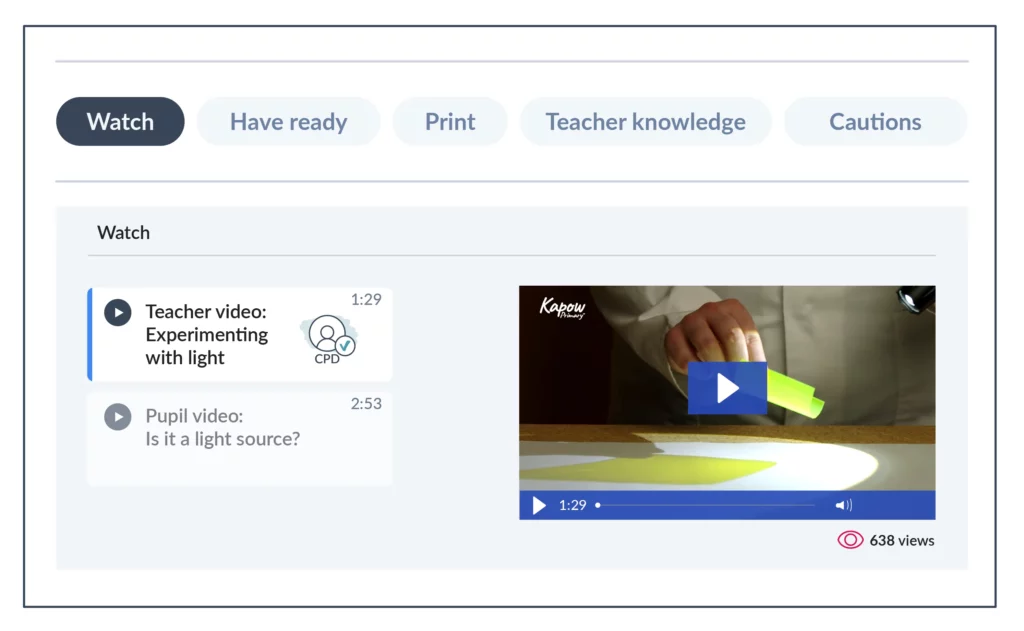 For illustrative purposes only – the exact ‘Before the lesson’ sections vary between lessons.
Have ready
Prepare for each lesson using a list of the suggested presentations, materials, items or links.
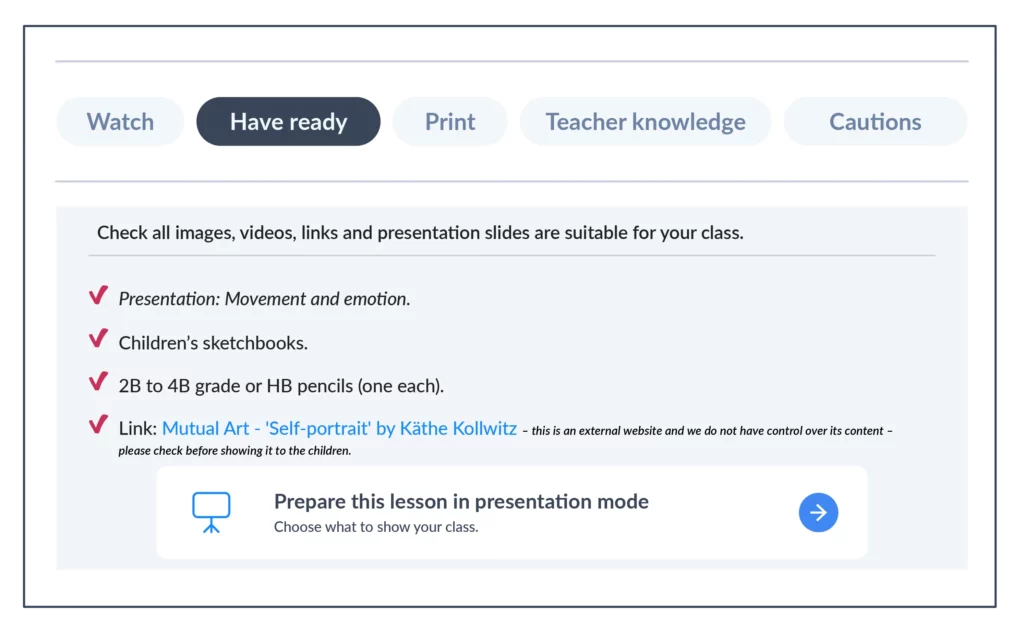 For illustrative purposes only – the exact ‘Before the lesson’ sections vary between lessons.
This section groups printable resources for each lesson so they can be located easily. Resources are also clearly stated at the point of use in each lesson plan.
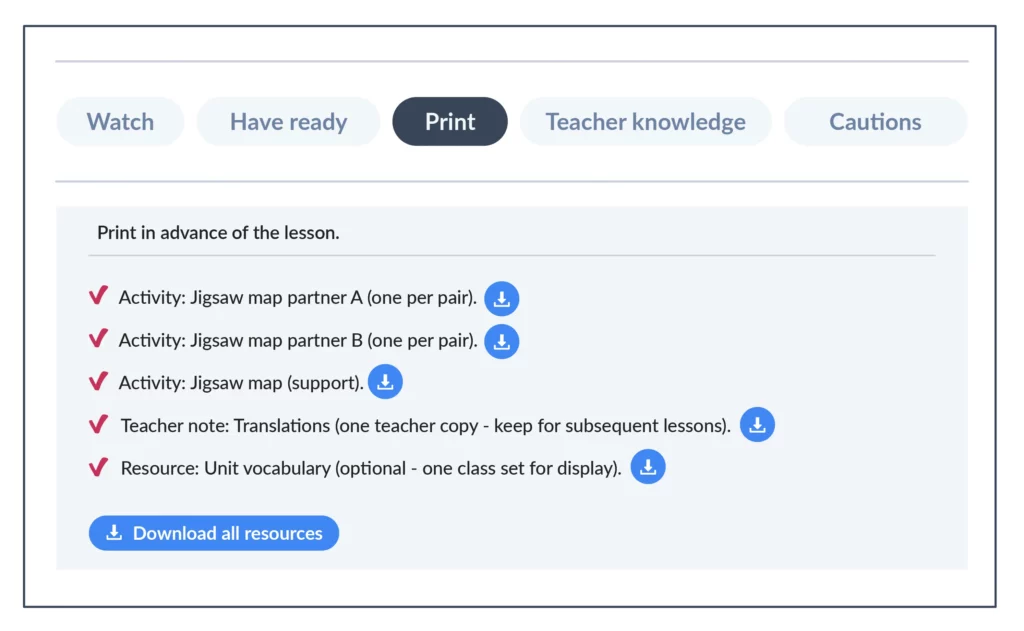 For illustrative purposes only – the exact ‘Before the lesson’ sections vary between lessons.
Teacher knowledge
View teacher knowledge at a glance relevant to the particular lesson. This includes tips on lesson organisation, common misconceptions and additional subject knowledge to help teach tricky concepts with confidence.
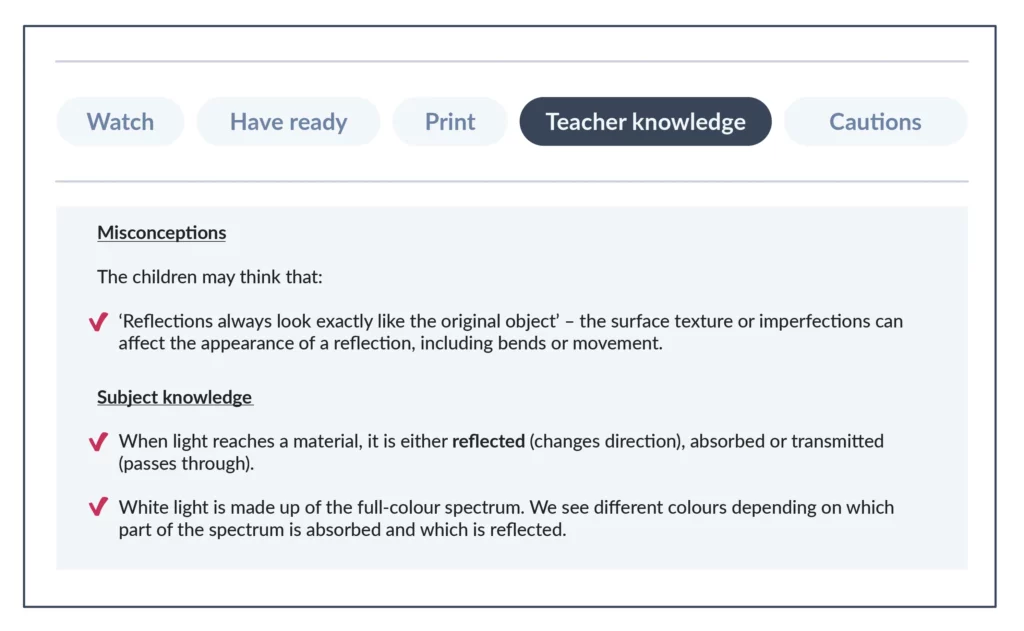 For illustrative purposes only – the exact ‘Before the lesson’ sections vary between lessons.
Cautions
This section highlights parts of the lesson that may require careful handling or are particularly relevant for a specific cohort.
Background information and suggested guidance are provided to help navigate lessons that may include potentially sensitive topics.
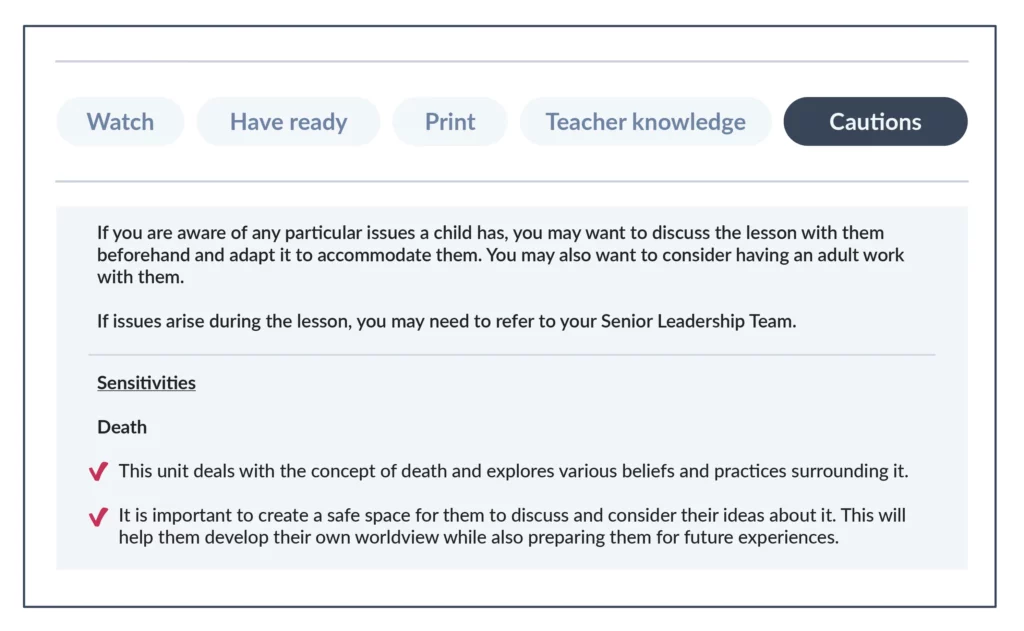 For illustrative purposes only – the exact ‘Before the lesson’ sections vary between lessons.
Unit structure
Unit hubs
Science unit hubs contain all the necessary lesson links, resources and information relevant to the unit being taught.
Information on the unit hubs corresponds to all the relevant Science key documents, such as the Progression of skills and knowledge and vocabulary progression.
The unit hub also links to useful resources and key documents, suggests units that could build on knowledge or activate prior learning and outlines cross-curricular links.
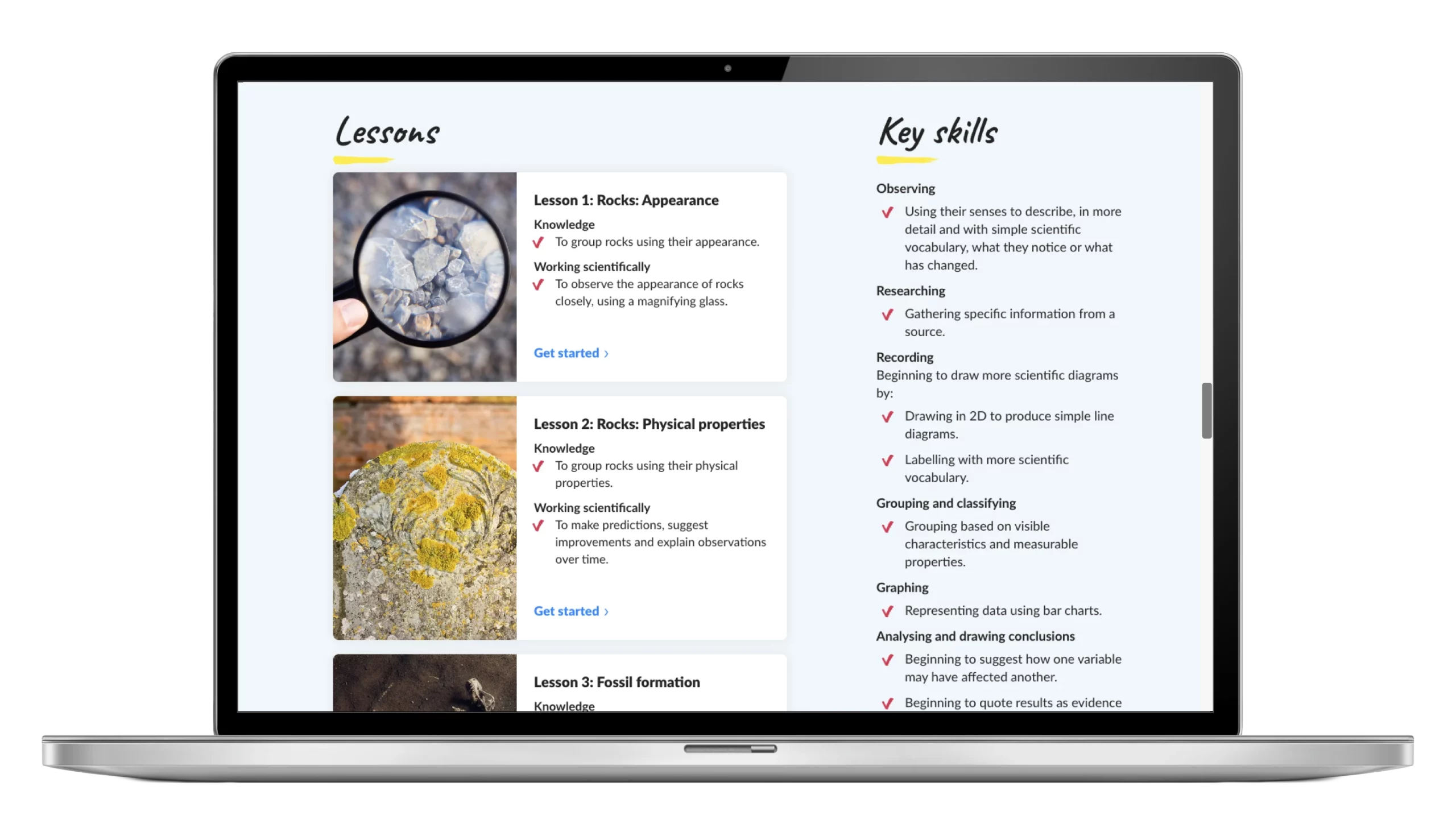
Unit hubs offer a wealth of useful information including updates, major planning considerations and key skills and knowledge.
Flexibility in our structure
Kapow Primary’s Science scheme is organised into five core units (six in Year 5) consisting of predominantly six lessons. These ensure that all aspects of the National curriculum are covered.
In addition to this, Kapow offer an additional ‘Making connections’ unit that explores beyond the statutory curriculum, enabling pupils to revise, apply and extend their learning in innovative ways.
These units help pupils to develop a deeper interdisciplinary understanding and appreciation of how scientific principles connect in the real world.
While the National curriculum states that schools are only required to teach the relevant programme of study by the end of the key stage, Kapow Primary’s Science curriculum has been created with a specific sequence in mind.
It is recommended that the units are taught in the suggested order and year group to maximise progression of knowledge and skills across each key stage.
In doing so, new subject knowledge and working scientifically skills are explicitly taught within certain units and then embedded in later units within the same year group and key stage.
Lesson structure
Recap and recall
Each lesson begins with a short activity revisiting prior learning. This helps reinforce key knowledge, activate long-term memory and create connections between past and new learning.
Recap and recall activities are varied to keep the start of the lesson engaging and fun while still supporting active recall.
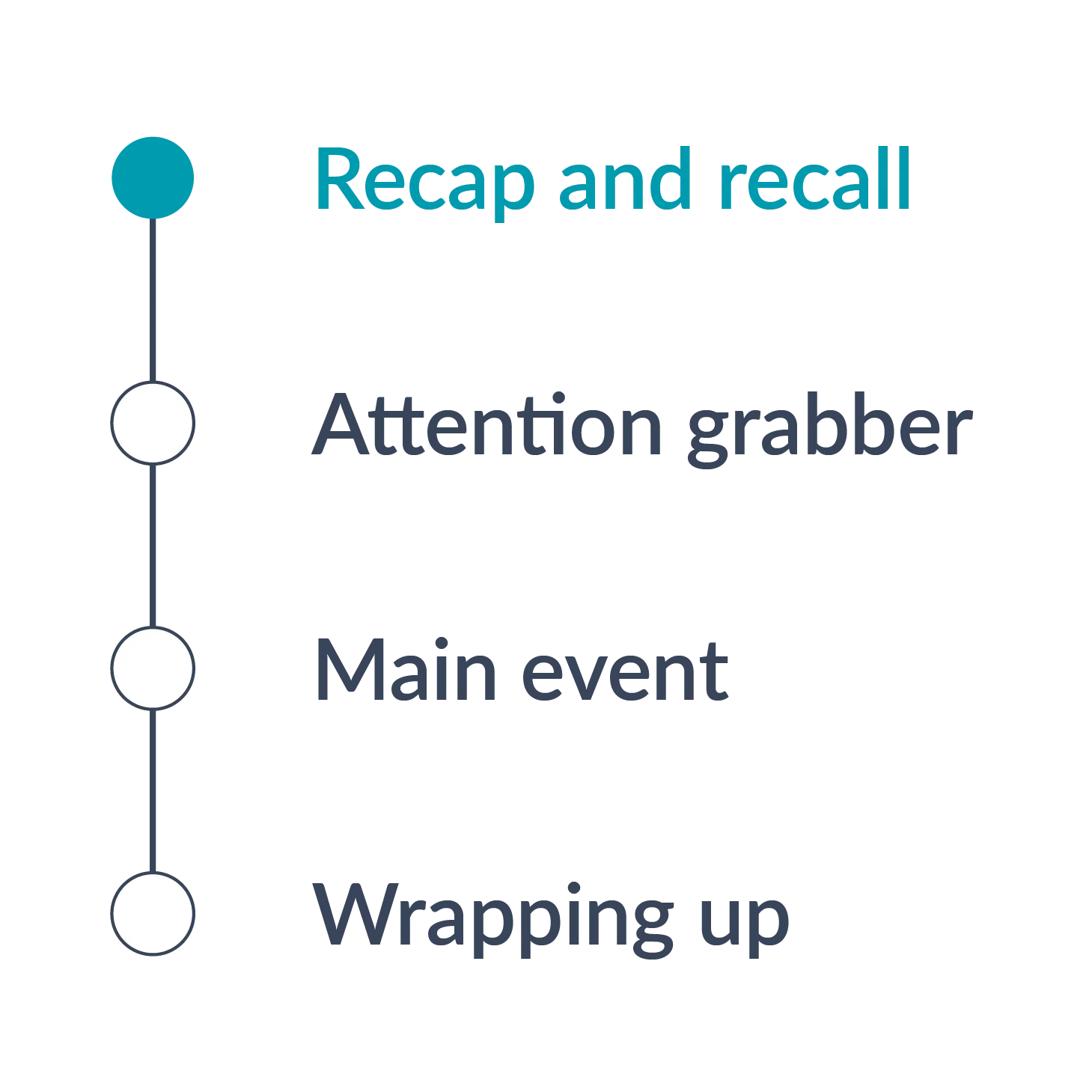
Attention grabber
A short, engaging activity designed to hook pupils into the new learning in the lesson.
This could be a thought-provoking question, a quick investigation or an interactive discussion to spark curiosity and enthusiasm for the topic.

Main event
The core part of the lesson, where children engage in activities that develop their understanding of the learning objective.
This includes a mixture of teacher modelling, guided practice and independent or collaborative tasks tailored to support all pupils.

Wrapping up
A final reflective activity that consolidates learning.
This could involve reviewing the success criteria, discussing key learning or applying knowledge in a different context to assess understanding and encourage deeper thinking.

SEND
The Kapow Primary Science scheme of work is designed to be fully adaptable for pupils with SEND. Every lesson includes an adaptive teaching section, providing clear guidance on how activities can be modified to meet the needs of all learners.
Children learn in various ways. As such, Kapow Primary Science lessons include a range of strategies to support and challenge every pupil, such as:

Scaffolding – activities are designed with flexibility in mind, allowing for additional support or challenge where needed.
Multi-sensory approaches – lessons incorporate different elements to engage all learners.
Clear instructions and structured tasks – ensuring clarity and reducing cognitive load for pupils who benefit from additional support.
Opportunities for collaborative and independent learning – allowing pupils to work at their own pace while building confidence and independence.
By embedding adaptive teaching throughout, the scheme ensures that all pupils, regardless of their starting points, can access and succeed in their learning.
In addition, the step-by-step curriculum design supports pupils with SEND, avoiding sudden jumps in complexity at transition points and allowing for steady, manageable progression.
Knowledge retention
Spiral curriculum
Kapow Primary’s Science scheme incorporates a spiral curriculum model, ensuring that children revisit and develop their understanding of key themes and concepts as they progress through the curriculum.
This approach allows them to make meaningful connections, reinforce their learning and achieve mastery over time.
- Revisiting key concepts – pupils encounter the same ideas multiple times throughout their education, with each revisit adding more complexity.
- Progressive depth – concepts are not just repeated but expanded upon, helping pupils to make connections and develop a richer understanding over time.
- Knowledge retention – regular exposure to key ideas strengthens memory and prevents knowledge from being forgotten.
- Skill development – pupils refine and apply their skills in different contexts, improving their ability to think critically and solve problems.
- Adaptive learning – by building on prior knowledge, the curriculum meets pupils at their current level and supports all learners, including those who need extra reinforcement and those who are ready for greater challenges.
Knowledge organisers
Kapow Primary’s Knowledge organisers are a structured document designed to support pupils’ learning by clearly outlining the key knowledge, vocabulary and concepts covered in a unit of work.
It serves as a reference tool for both teachers and pupils, helping to consolidate learning and support knowledge retention.
- Essential knowledge at a glance – summarises the most important facts, concepts and skills that pupils need to learn for a particular unit.
- Key vocabulary – provides a list of subject-specific terms with definitions to develop pupils’ language and understanding.
- Clear and visual layout – organised in a way that makes information easy to digest and revisit, often using diagrams, timelines or key images.
- Support for retrieval practice – helps pupils engage in self-assessment, recall activities and revision, reinforcing long-term memory.
- Teacher and pupil-friendly – acts as a quick reference for teachers when planning lessons and an accessible learning aid for pupils to develop independence in their studies.
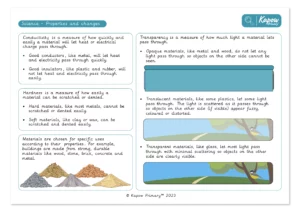
Recap and recall
- Activates prior knowledge – helps pupils make connections between new and existing learning, reducing cognitive overload.
- Strengthens memory pathways – retrieval practice has been shown to improve retention more effectively than passive review.
- Identifies gaps in understanding – teachers can quickly assess what children remember and address misconceptions before introducing new content.
- Builds confidence – regular recall activities reassure pupils that they can remember key concepts, improving engagement and motivation.
- Promotes spaced learning – revisiting prior learning at regular intervals supports long-term retention, rather than cramming information in a single lesson.

Additional adults
Support for additional adults
Kapow Primary recognises that teaching assistants play a vital role in many classrooms and that in some schools, they may be responsible for delivering lessons.
Accordingly, anyone teaching Kapow Primary’s Science lessons can be issued with a login. While the scheme is primarily designed for teachers, the clear lesson structure, step-by-step guidance and adaptive teaching strategies ensure that lessons can also be taught by teaching assistants.

Schools without additional adults
Due to budget constraints and varied staffing structures, it is not always possible to have classroom support from additional staff. Kapow Primary’s Science lessons are designed with this in mind, providing resources and explanations that allow teachers to deliver high-quality lessons independently without necessarily relying on additional adults.
If additional support is suggested in a lesson, it is clearly marked within the Have ready part of the lesson plan.

Adapting the Science scheme
Mixed-age
For schools with mixed-age classes, Kapow Primary offers structured long-term plans that ensure a coherent and progressive curriculum.
These plans avoid content repetition while ensuring all pupils cover the full curriculum.
Cross-curricular learning
Kapow Primary’s Science scheme of work supports cross-curricular learning by making clear connections between subjects, helping pupils develop a broader understanding of key concepts and skills.
Cross-curricular links are explicitly highlighted: each unit includes identified cross-curricular connections, detailed in the unit hub and long-term plans. These allow teachers to integrate learning across different subjects.
In addition, each lesson has a Cross-curricular links section that shows the links to the National Curriculum in subjects other than Science.

Transitioning to Kapow Primary
Transitioning schemes
Schools may have questions about introducing Kapow Primary’s Science curriculum if pupils have not followed the scheme from the beginning.
Where a different scheme or a school-designed curriculum has been used previously, there may be concerns about pupils’ prior knowledge and how this might affect their access to lessons in later year groups.
Curriculum considerations
Should pupils join the Science scheme partway through, their prior learning may not align exactly with the curriculum sequence. In Science, progression is shaped by both the development of working scientifically and the statutory subject content set out in the National curriculum.
The key progression considerations in Science are:
- Working scientifically and vocabulary – Scientific enquiry skills and associated vocabulary are developed progressively across the scheme. Pupils may be less familiar with key terms and concepts (e.g. variables, fair testing and drawing conclusions), which may need to be revisited to access investigations and discussions.
- National curriculum subject content – As a core subject, the National curriculum specifies which scientific topics should be taught in each phase (Key stage 1, Lower key stage 2 and Upper key stage 2). Where schools have already taught some of this content through a previous curriculum, subject leaders may need to review and adjust long-term planning to ensure full coverage without unnecessary repetition.
- Timetabled curriculum time – Kapow Primary Science lessons are designed to last around 90 minutes, reflecting the practical and investigative nature of the subject and its status as a core area of the curriculum. Schools may wish to consider how Science is timetabled to ensure sufficient time for enquiry, discussion and application of knowledge.
Guidance
Each Kapow Primary Science lesson is supported by a teacher CPD video that explains the subject knowledge, key concepts and intended learning. These videos are designed to upskill teachers and support confident implementation of the curriculum, without requiring prior familiarity with the wider scheme.
Kapow Primary’s detailed Science progression documents clearly outline how skills and knowledge and vocabulary develop across year groups. Teachers can use them selectively as references to support planning and decision-making, such as checking what pupils may already have encountered. For subject leaders, the documents provide an overview of the curriculum’s structure and how learning builds over time.
Support
Transitioning to a new curriculum does not need to be challenging. Kapow Primary supports and upskills teachers, ensuring they can implement the curriculum as intended. To help teachers feel confident and prepared, every lesson includes a teacher CPD video that clearly explains the subject knowledge, key concepts, and intended learning.
In Science, the curriculum is organised into key areas, making it easier to see how units within each area build on one another and to check prior learning where helpful. If pupils join the scheme partway through the curriculum sequence, teachers may choose to allow more time to work through units, pausing to revisit or explain concepts and vocabulary that pupils have not yet secured.
Lessons include built-in opportunities for formative assessment, allowing teachers to assess understanding and respond through discussion, questioning and observation, so they can support pupils in making progress from their current starting points.

3. Impact
This section outlines how the curriculum checks what pupils know, understand and are able to do as a result of studying Science.
Assessment
Formative
Kapow Primary Science lessons include ongoing assessment opportunities, such as questioning, retrieval practice and interactive activities.
These enable teachers to assess understanding in real time and adapt their teaching accordingly.

Summative
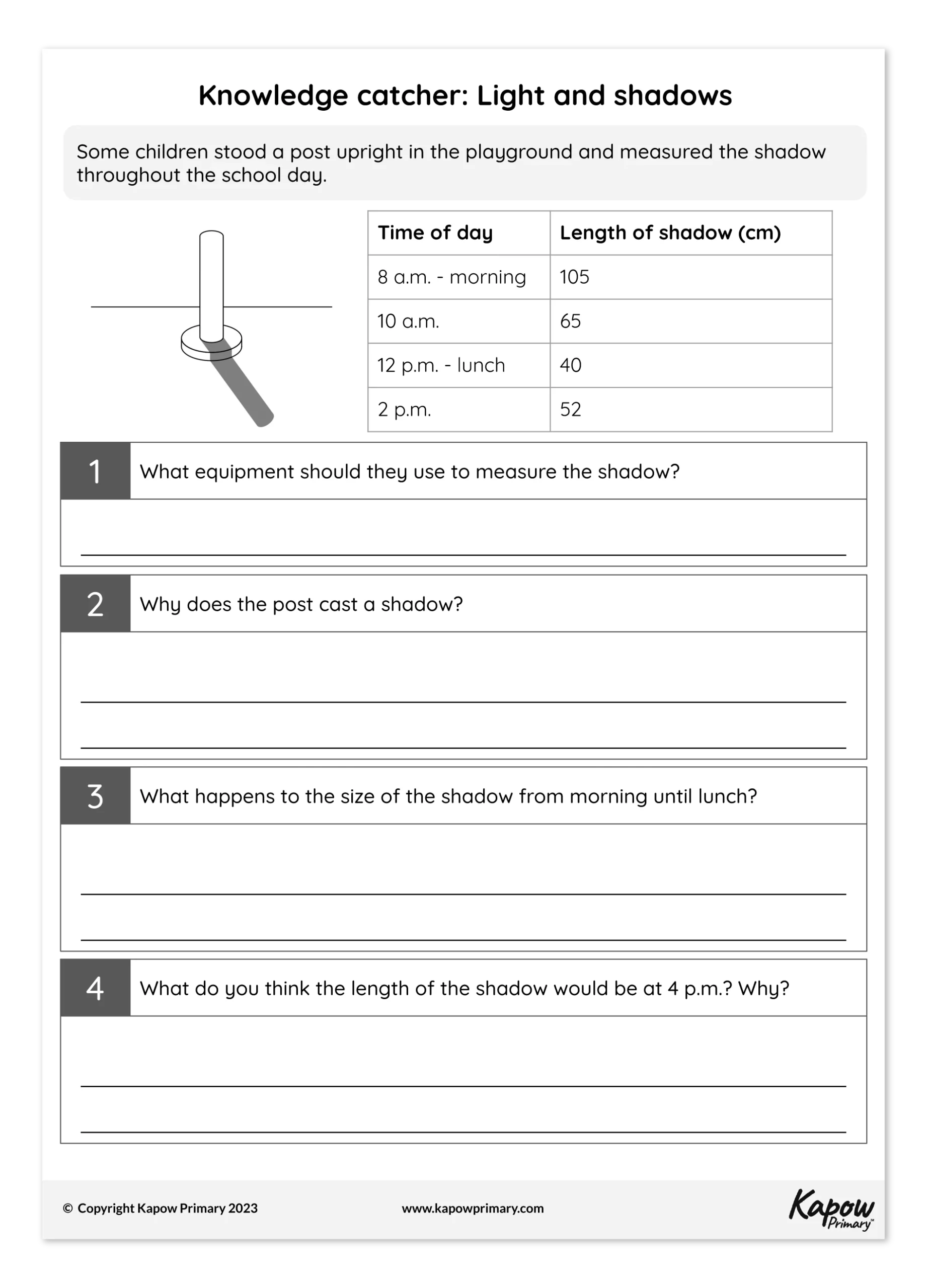
Each unit provides an Assessment quiz and Knowledge catcher, which allow teachers to measure pupils’ understanding at key points.
These tools help gauge how well pupils have retained key knowledge and skills over time.
Evidencing progress
Written outcomes
Pupils demonstrate their learning and provide tangible evidence of progress through a variety of activities, including structured written work, annotated diagrams and creative responses.

Pupil voice
Lessons encourage discussion, reflection and verbal explanations. This allows teachers to capture pupils’ understanding through questioning, class discussions and recorded responses, supporting a broader view of progress beyond written work.

Assessment spreadsheet
The Assessment spreadsheet helps to track pupils’ Science attainment over time.
This tool allows teachers to record progress against learning objectives and assessment statements, making it easier to monitor development and identify areas for support.

Whole-school development
Teacher confidence
Kapow Primary’s Science scheme is designed to boost teacher confidence and support whole-school improvement by providing high-quality, accessible resources that empower teachers to deliver engaging and effective lessons.
The scheme supports teacher confidence using:
- Clear lesson plans and subject knowledge support – step-by-step guidance ensures teachers feel well-prepared, even if they are not subject specialists.
- CPD videos – short, expert-led training videos help subject leaders develop their expertise and support their colleagues.
- Adaptive teaching strategies – practical suggestions for differentiation ensure that teachers can confidently meet the needs of all learners.

School improvement
The scheme supports school improvement using:
- Consistent, high-quality teaching – a structured scheme ensures a coherent approach across year groups, supporting curriculum progression.
- Assessment and evidence tracking – built-in assessment materials help teachers monitor progress and demonstrate impact.
- Alignment with Ofsted expectations – the scheme supports personal development, broadens pupils’ horizons and ensures a knowledge-rich curriculum, helping schools meet inspection criteria.
By reducing workload, building teacher expertise and ensuring high teaching standards, Kapow Primary contributes to a confident teaching staff and a well-structured, effective curriculum that supports whole-school improvement.

Support with inspections
A well-structured and progressive curriculum
- Clear learning sequences ensure knowledge builds over time.
- Lessons are aligned with the National curriculum.
Evidence of pupil progress
- Assessment materials (e.g. Unit quizzes, Knowledge catchers and the Assessment spreadsheet) can be used to provide information about pupil progress.
- Written outcomes and pupil voice show engagement, understanding and the ability to recall knowledge.

Support for subject leadership
- Key documents and CPD videos help subject leaders confidently discuss the curriculum.
- Knowledge organisers and lesson plans provide details of what has been taught and learned.
- The Adaptive teaching section in each lesson provides an opportunity to discuss inclusivity and demonstrate how all learners are supported.
A broad and balanced curriculum
- The scheme broadens pupils’ horizons, develops critical thinking and promotes British values, contributing to Ofsted’s personal development criteria.
- Lessons integrate real-world connections and cultural capital, showcasing a rich learning experience.

CPD
- Equips subject leaders to articulate intent, implementation and impact – CPD videos provide clear explanations and subject knowledge to help leaders confidently discuss the curriculum with inspectors.
- Builds teacher confidence and consistency – ongoing training ensures all staff understand the curriculum structure and feel prepared to deliver high-quality Science lessons across the school.
Kapow Primary Science scheme FAQs
Can’t find the answer you’re looking for?
Try these useful links
Units are best taught in the order shown in the long-term plans, as this supports the intended progression of knowledge and skills. The sequence also takes account of seasonal factors, such as growing plants in warmer weather. It also builds key understanding in the right order, for example, learning about states of matter before exploring how sound travels through different materials.
The Science scheme also offers an additional ‘Making connections’ unit that explores beyond the statutory curriculum, allowing pupils to revisit, apply and extend their learning in new contexts. These units should always be taught as the last unit of the year, as they help to reinforce and embed previous learning.
For schools adopting a mixed-age approach to Science, it is important to ensure that the two cycles for each phase are constructed so that the topics in each do not depend on prior learning from the other cycle.
The Science mixed-age long-term plan (designed for cohorts of Year 1/2, Year 3/4 and Year 5/6) takes this into careful consideration.
The Autumn, Spring and Summer 1 units (plus Human timeline) ensure full coverage of the statutory Science National curriculum and many of the non-statutory points too. The Making connections units are supplementary to this.
It is recommended that children receive two hours of Science teaching per week, though this may not always be possible due to timetable constraints. Kapow Primary’s Science lessons include extension activities that can be explored further when additional time is available.
The Science: Equipment list (also available on the Science curriculum portal) outlines the equipment and materials required for each unit. It is recommended that teachers review this well in advance of teaching any units. Basic materials (e.g., cups, trays, stopwatches) can be used repeatedly across units.
Most Kapow Primary Science units can be taught using simple materials such as paper cups, empty packaging and rulers.
Some units do introduce more specialist materials (e.g. stopwatches, magnifying glasses, thermometers and torches) to give pupils access to disciplinary skills and knowledge related to the National curriculum. These materials are carefully selected to provide good value across the curriculum. If you decide to invest in them, you will be able to use them in other year groups and units.
Where possible, alternatives are provided so that schools can choose the option that best suits their needs. Teachers are advised to review the materials list before the start of a new year. All materials are also listed at the start of each unit, allowing teachers to plan their budget and order only what is needed.
It is recommended that teachers review each unit before teaching it to determine the necessary materials and preparation. This could be in advance of the start of a new term to organise resources, gather any items that need collecting and plan for activities that may require asking pupils to bring recycled materials.
The National curriculum states that ‘types of scientific enquiry should include: observing over time; pattern seeking; identifying, classifying and grouping; comparative and fair testing (controlled investigations); and researching using secondary sources’.
The Kapow Primary curriculum aims to familiarise pupils with all these types of enquiry so that by the end of Key stage 2 they can choose the most suitable enquiry type to answer questions. In Key stage 1, pupils are introduced to enquiry types as ‘Super science skills’ and are encouraged to reflect on which skills they have used to answer questions.
