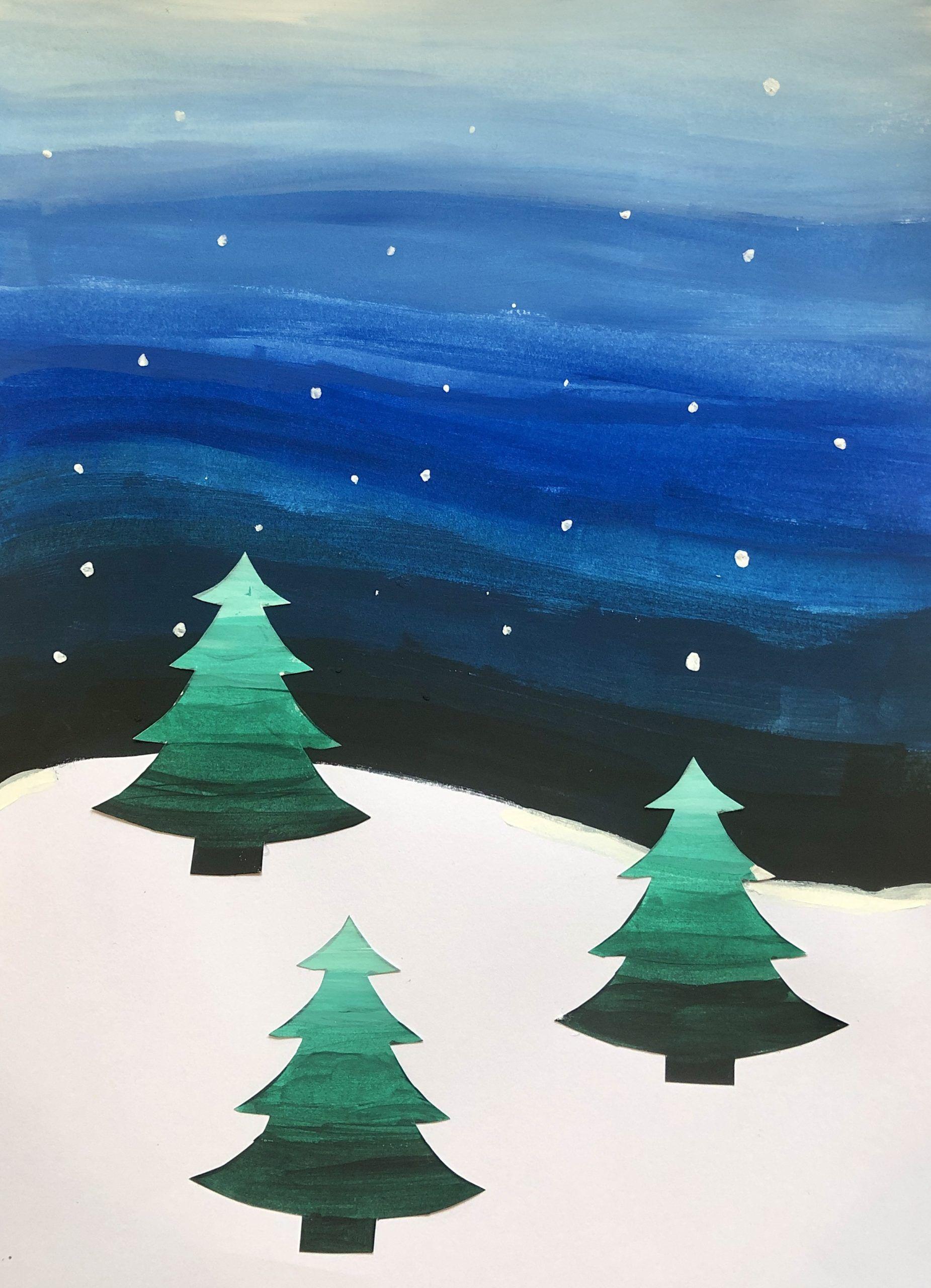
Lesson 1: Tints and shades
Analysing different painting techniques, comparing paintings by artists according to elements such as texture or colour and practising creating tints and shades when colour mixing.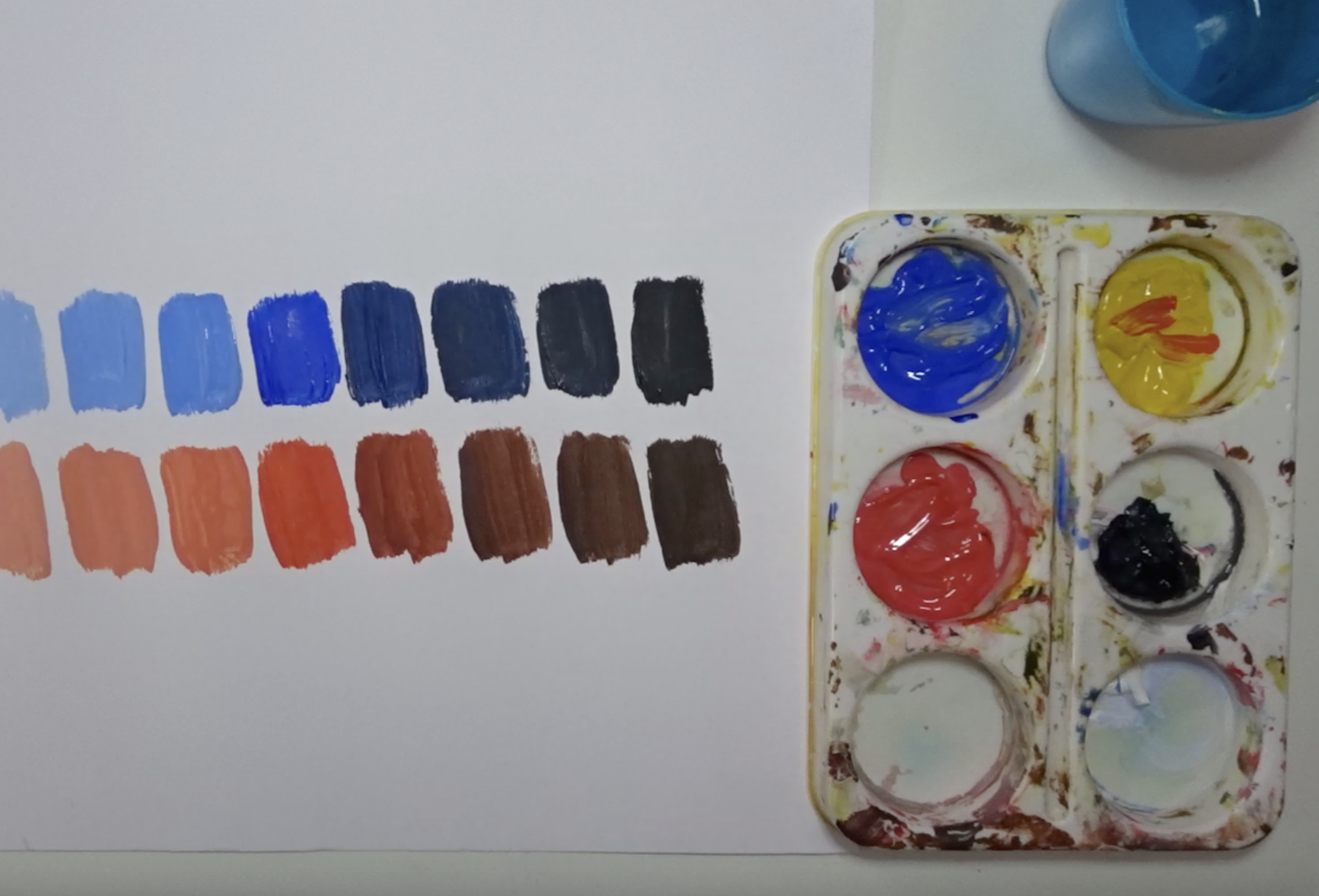
Learning objective
-
To understand how to darken or lighten a colour when mixing paint.
Success criteria
-
I can add white paint to one colour to create a tint.
-
I can add black paint to one colour to create a shade.
-
I can investigate creating a wide range of colours by mixing tints and shades.
Before the lesson
Check all images, videos, links and presentation slides are suitable for your class.
- Presentation: Odd painting out.
- Presentation: 'Mont Saint-Victoire' by Paul Cezanne.
Table coverings (for each table).
Red, yellow, blue, black and white paint (a selection per table group).
Palettes for mixing (one each).
Medium paintbrushes (one each).
Pots of water (one per pair).
Sketchbooks or paper to paint on (one each).
Lesson plan
Before starting this unit you might want to check children can recall:
How to use shapes to build initial sketches.
How to mix colours with natural pigments to make natural colours.
How to select equipment or paint to recreate specific features.
Display slide 1 of the Presentation: 'Mont Saint-Victoire' by Paul Cezanne. Ask individual children to come to the board and identify a dark green or light green. Ask how they would mix a dark green colour, or a light green colour. They may well suggest adding water, adding yellow, white, blue or black.
Display slide 2 which introduces the terms tint and shade. To check their understanding, challenge individual children to come to the board and identify a green tint or a green shade from the Cezanne painting on slide 1.
Model yourself or use the Pupil video: Tints and shades to demonstrate colour mixing tints and shades.
The children now work in their sketchbooks, practising mixing tints and shades of one starting colour. They paint small patches of colour across the page, gradually adding white to make tints and then black to make shades.
- What do we call a colour that has black added to it? (A shade.)
- What do we call a colour that has white added to it? (A tint.)
Ask the children to carry their sketchbooks around the classroom and try to find someone else who has mixed the same (or almost the same) tint or shade of a colour. Tell them to stand by that person once they think they have found a match. Alternatively, children could sit beside someone who has started with a very similar colour and try to identify the closest matching colour in both their sketchbooks.
- Was it easy to find a completely matching colour? Why/why not? (Probably not, because everyone will have added slightly different amounts of black or white to their colour.)
Full-screen slides, ready for your classroom, chosen by you.
-
To understand how to darken or lighten a colour when mixing paint.
Example work
We value your feedback
We welcome your feedback to help make our resources even better