Lesson 5: Life cycle of an insect
Exploring the three-stage and four-stage insect life cycles, identifying patterns in data and predicting new values.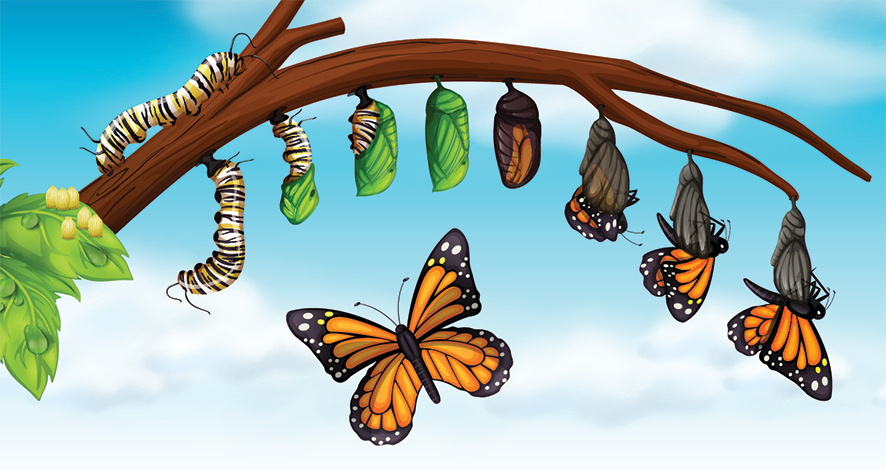
Learning objective
This content is for subscribers only. Join for access today.
Success criteria
This content is for subscribers only. Join for access today.
National curriculum
Cross-curricular links
Before the lesson
This content is for subscribers only. Join for access today.
Lesson plan
Arrange the class into the same groups from the asexual reproduction cutting activity in Lesson 1. Provide each group with a 30 cm ruler, the tablet they used to photograph their cutting and the Activity: Stem cutting data table (one each) (see Lesson 1: Life cycles and reproduction in plants). Instruct the groups to collect their plant cutting, photograph it and measure any plant root growth with the ruler. Remind them to record the root growth in week four of the data table.
Hand out a sticky note to each pupil and ask them to write one characteristic of an insect on it (leaving room for others to write on it). Instruct the class to swap their sticky note with another pupil. Ask the children to write down a characteristic of insects not already on the sticky note. Repeat swapping the sticky notes and recording new characteristics until the pupils have run out of ideas.
Select some sticky notes and read out the correct characteristics of an insect:
Invertebrate (no backbone).
Six legs/three pairs of legs.
Three body segments.
Two pairs of wings (except for some species with no wings).
Exoskeleton (hard outer casing, like a beetle).
Compound eyes (optional knowledge).
Antennae (optional knowledge).
This content is for subscribers only. Join for access today.
Adaptive teaching
Assessing progress and understanding
Vocabulary definitions