Lesson 5: Planning recipes
Designing different wraps with a balance of ingredients.
Learning objective
- To design based on criteria.
Success criteria
- I can follow design criteria.
- I can design three different wraps.
- I can justify the choice I have made.
Before the lesson
Check all images, videos, links and presentation slides are suitable for your class.
Presentation: Odd one out.
Presentation: Design brief.
Presentation: Designing wraps.
Design brief on flipchart page from Lesson 4: Taste testing ingredients (see Attention grabber).
Shop-bought wraps (one per table - see Attention grabber).
Colouring pencils (a selection per table - see Main event).
Lesson organisation
The subsequent lesson in this unit (Lesson 6: Creating and evaluating wraps) is an evaluation lesson, so ideally the children should make their wraps during the day before the lesson in the afternoon.
Small groups should prepare the ingredients and fold their wraps.
The completed wraps should be refrigerated before evaluation in lesson 6.
Make a teacher wrap for modelling purposes.
Please be aware Lesson 6 may take longer than one hour.
The information within this section provides basic generic guidance only and is not tailored to the circumstances of your school or class. You must ensure you refer to and follow your own school’s health & safety policy and complete any necessary risk assessments. It is the teacher's responsibility to check all resources and lesson content to ensure it is suitable for their class setting.
Health and safety
It is important to consider any dietary restrictions or allergies the children may have when passing around the shop-bought wraps.
Lesson plan
Display the Presentation: Odd one out which shows some foods from the last lesson and ask the children to discuss the question.
Give the children time to discuss the options with a partner. Take feedback and discuss the children's reasons for their choices.
The children might suggest one of the foods being an odd one out because:
It was in a different food group.
It had a different taste.
It wasn't popular.
Design brief
Display slides 1-3 of the Presentation: Design brief to remind the children of the design brief letter.
Discuss the design criteria recorded on a flipchart in Lesson 4: Taste testing ingredients.
Questions
What are you designing? (A balanced wrap.)
Who are you designing it for? (A charity that wants a healthy wrap that children will like.)
What food groups must it contain? (Protein, fruit or vegetables, dairy.)
Existing products
Present the children with some wraps that are available to buy in shops.
Ask the children to keep the packaging sealed and to look at the information.
Questions
What are the ingredients?
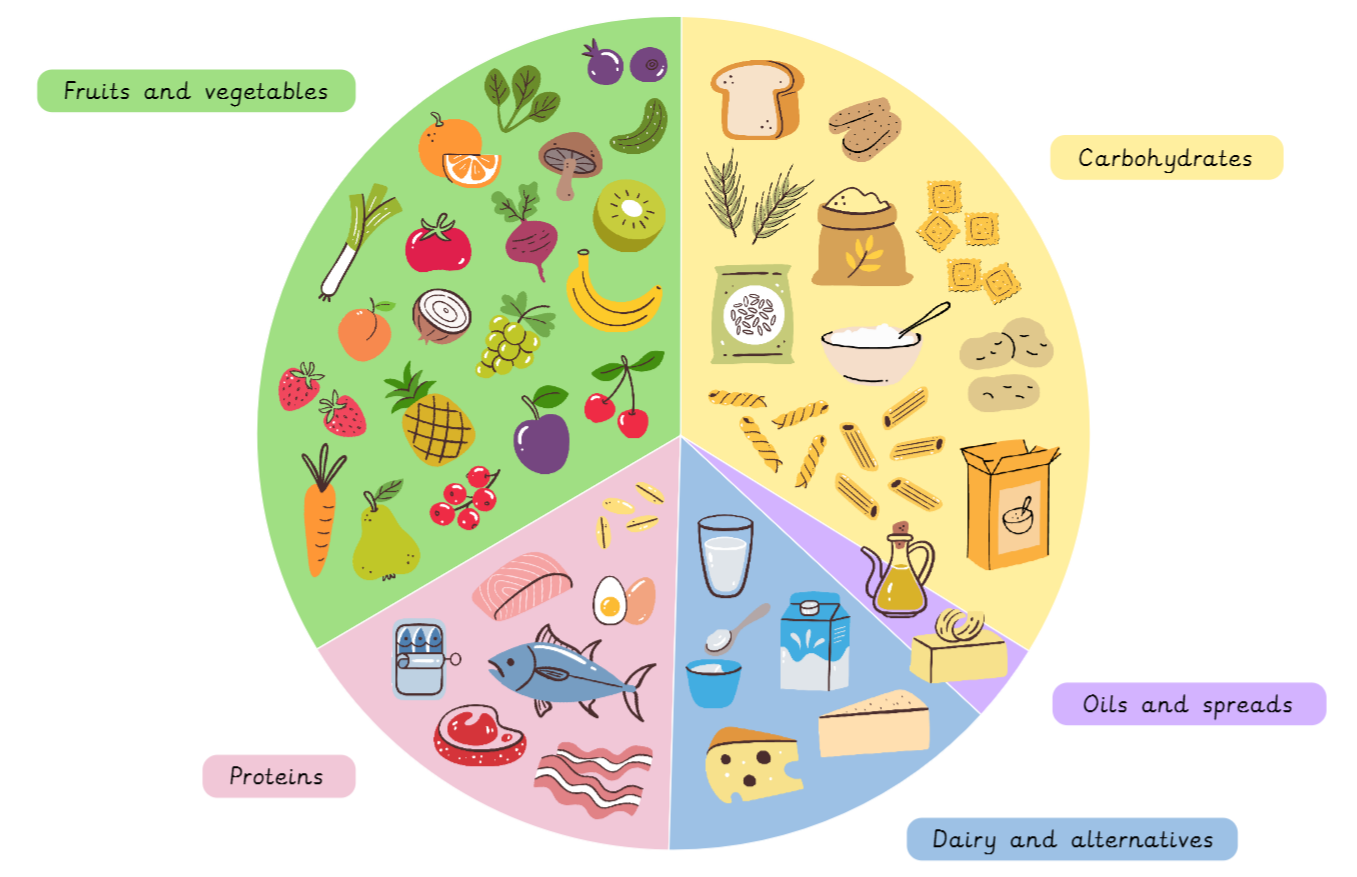
What food groups are represented? (The children may identify carbohydrates, protein, fruits and vegetables, dairy or oils and spreads.)
Which ingredient does it look like there is most of in the wrap? (Encourage the children to work out what the main ingredient is.)
Are there any ingredients similar to those that you tried in the last lesson?
Designing wraps
Ask the children to review the Activity: Taste combinations they completed in Lesson 4: Taste testing ingredients. Allow time for the children to tell their partner what their favourite flavour combinations were and which were less successful.
Questions
How do you know which was your favourite combination? (Any with smiley faces next to them.)
What was your favourite combination? (For example, my highest-rated was cucumber, hummus and cheddar cheese.)
Hand out the Activity: Ideas template (one each) and colouring pencils. Explain that the children will design three wraps using their favourite flavour combinations.
Display the Presentation: Designing wraps to model an example.
Explain the choices the children can make:
To design three wraps with the same ingredients but with varying amounts of the ingredients in each design. (Child A loved cucumber, cheddar cheese and hummus. Child A designed three wraps using these ingredients but varied the amounts in each. One wrap was mostly cucumber, one was mostly cheese and one was mostly hummus.)
To design three wraps using three different taste combinations. (Child B had three different combinations with a smiley face. They designed three different wraps, each one using one of their favourite flavour combinations.)
Ask the children to draw their designs and label the ingredients. Explain that they are drawing the ingredients in the wrap before it has been wrapped up. If they want to show that there is going to be more of one ingredient, they should draw it larger so that it takes up more space.
Getting feedback
Ask the children to leave their designs on their tables.
Instruct them to move to another child's space and look at all the designs. Explain that the children need to draw a smiley face in the space below their favourite wrap design.
Ask the children to move a few more times to new spaces so that each child has received feedback from multiple children.
Invite the children to return to their seats. Ask them to choose their favourite by placing a tick in the box. Explain that they can choose to listen to the feedback from their peers or choose the design they like the best.
Full-screen slides, ready for your classroom, chosen by you.
- To design based on criteria.
We value your feedback
We welcome your feedback to help make our resources even better