




Unit outcomes
Pupils who are secure will be able to:
- Define a mechanism as a system of parts working together to create movement and a pneumatic system can be used as part of this.
- Describe how a pneumatic system forces air over a distance to create movement and identify pneumatic systems in a range of everyday objects.
- Describe different types of drawings used in design to explain ideas clearly and explain why one may be more useful for a particular situation.
- Develop design criteria from a design brief.
- Begin to draw different types of diagrams to generate suitable ideas.
- Recall different types of pneumatic systems used to design a toy and create one for a specific movement.
- Build secure housing for a pneumatic system, consider sustainable resources and work with materials to create different effects by cutting, creasing, folding, etc.
- Evaluate how well the design, materials and equipment help to achieve the design brief.
Suggested prior learning
Mechanisms: Levers
Get started
Lessons

Lesson 1: Exploring pneumatics
Lesson 2: Drawing diagrams
Lesson 3: Designing a pneumatic toy
Lesson 4: Making a pneumatic toy
Lesson 5: Finishing the toy
Key skills
Design
- Creating simple

This content is for subscribers only. Join for access today.
Key knowledge
To know:
- How
This content is for subscribers only. Join for access today.
Key vocabulary
diagram
evaluate
This content is for subscribers only. Join for access today.
Equipment list
Equipment needed across all lessons in this unit.
This list does not include equipment which is usually readily available in the classroom (e.g pencils, A4 paper etc)
 Download
Full equipment list for the subject
Quantities marked × will update. Items without quantities are unaffected
- Large books ×30
- Balloons ×30
- Masking tape ×1
- Glue ×30
-
Syringes: 2 the same size, 1 a different size
×15 -
Tubing to connect syringes (diameter approximately 4-5 mm to fit a pump or bottle)
×15 - Ball or balloon pumps (or bottles with small nozzles, such as washing-up or sports cap bottles)
- Sandwich bags ×15
- Boxes with hinged lids ×30
-
Large paper plates
×30 - Split pins ×30
- Packaging and recycling materials ×1
- Materials to make the toy, such as: card, straws, pipe cleaners, cotton wool, buttons, socks, stuffing, lolly sticks, etc ×30
- Paint ×8
- Decorations (wool, buttons, ribbon etc.) ×30
- Sticky notes ×30
- Modelling clay ×30
This content is for subscribers only. Join for access today.
Related content
Unit resources


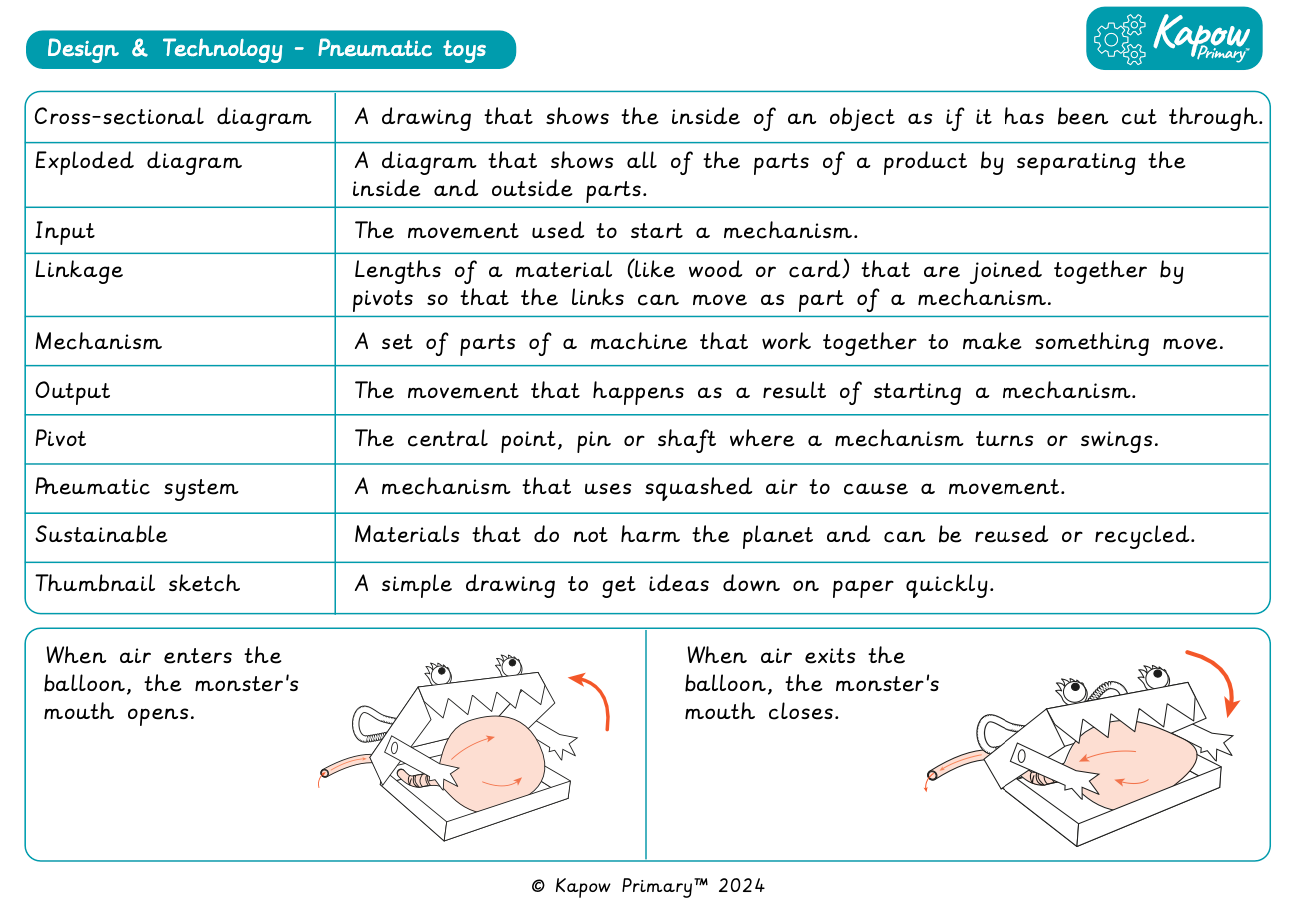
Knowledge organiser – D&T Y3: Mechanical systems: *New* Pneumatic toys
Aimed at pupils, two pages giving key facts and definitions from the unit ‘Pneumatic toys’.
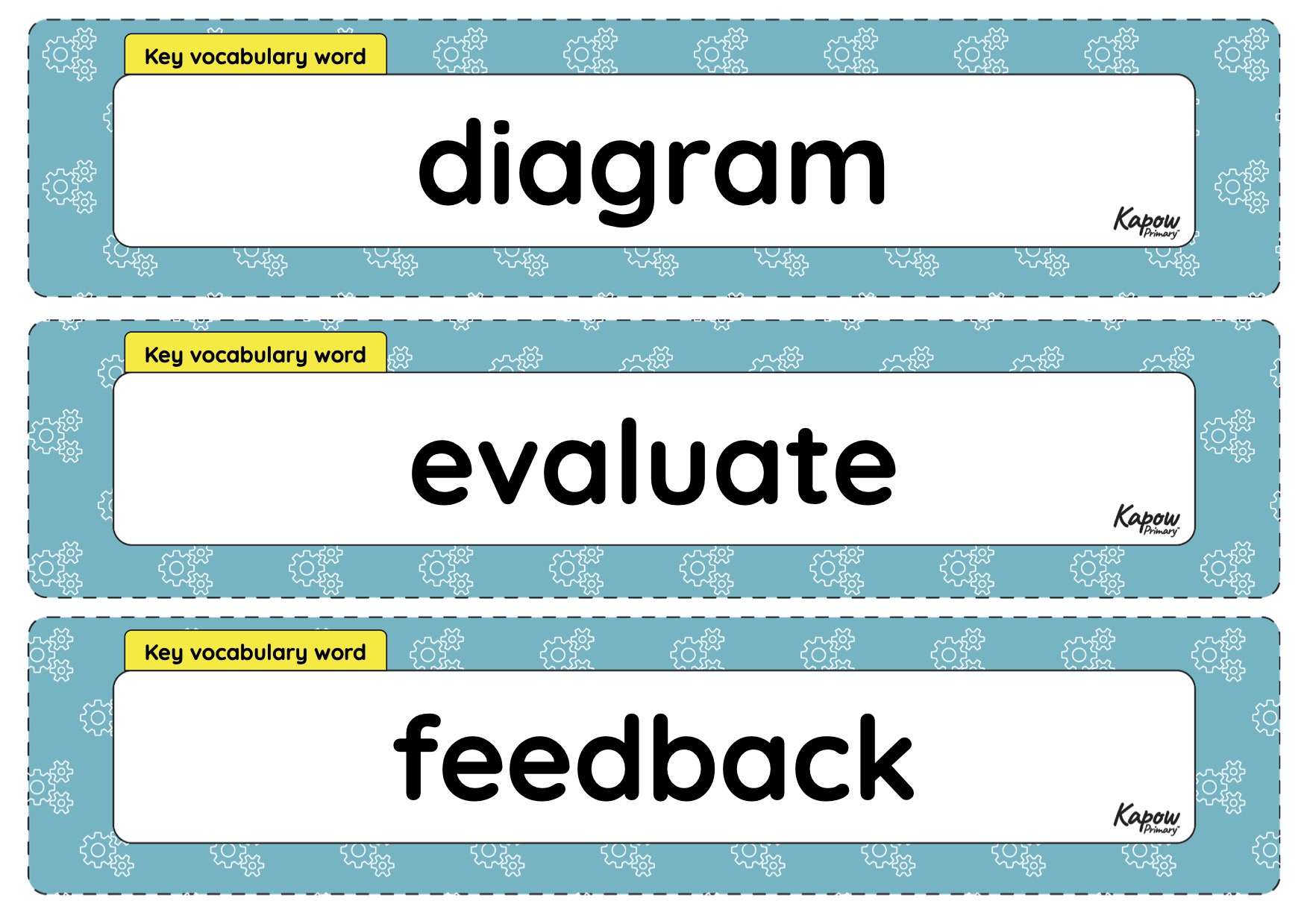
Vocabulary display – D&T Y3: Mechanical systems: *New* Pneumatic toys
A display version of the vocabulary from the unit 'Pneumatic toys'.
Subject resources
This content is for subscribers only. Join for access today.
Cross-curricular opportunities
Mathematics: Geometry – properties of shapes.
Science: Forces and magnets; Uses of everyday materials.
British values: Mutual respect; Tolerance of those with different faiths and beliefs.
Build on the learning
Mechanical systems: Mechanical cars
Get started
