




- Subjects >
- Music >
- Key stage 1 >
- Year 2 >
Important note
In this unit, the children learn folk songs and create sounds to represent three contrasting landscapes: seaside, countryside and city. This unit replaces the Year 2 unit On this island: British songs and sounds, which is permanently available in our archive but is no longer updated in line with curriculum or website developments.
For the most up-to-date information about our music scheme, please refer to the document Music: Long-term plan.
Unit outcomes
Pupils who are secure will be able to:
- Breathe after each phrase in a song when singing.
- Sing a song from memory.
- Use different pitches while singing (high and low notes).
- Sing lyrics accurately.
- Perform actions that match lyrics.
- Collaborate and communicate within a group.
- Use sounds creatively to represent a chosen environment.
- Perform a composition.
- Apply pitch and dynamics to enhance a composition.
- Read notation from left to right.
Suggested prior learning

Lessons
Lesson 1: Seaside sounds
Lesson 2: Countryside sounds
Lesson 3: City sounds
Lesson 4: Structured soundscape
Lesson 5: Performing a composition
Key skills
Listening and evaluating
-

This content is for subscribers only. Join for access today.
Key knowledge
To know
This content is for subscribers only. Join for access today.
Key vocabulary
compose
higher
This content is for subscribers only. Join for access today.
Equipment list
Equipment needed across all lessons in this unit.
This list does not include equipment which is usually readily available in the classroom (e.g pencils, A4 paper etc)
 Download
Full equipment list for the subject

No equipment added for this unit.
This unit may use classroom resources only
Related content
Unit resources


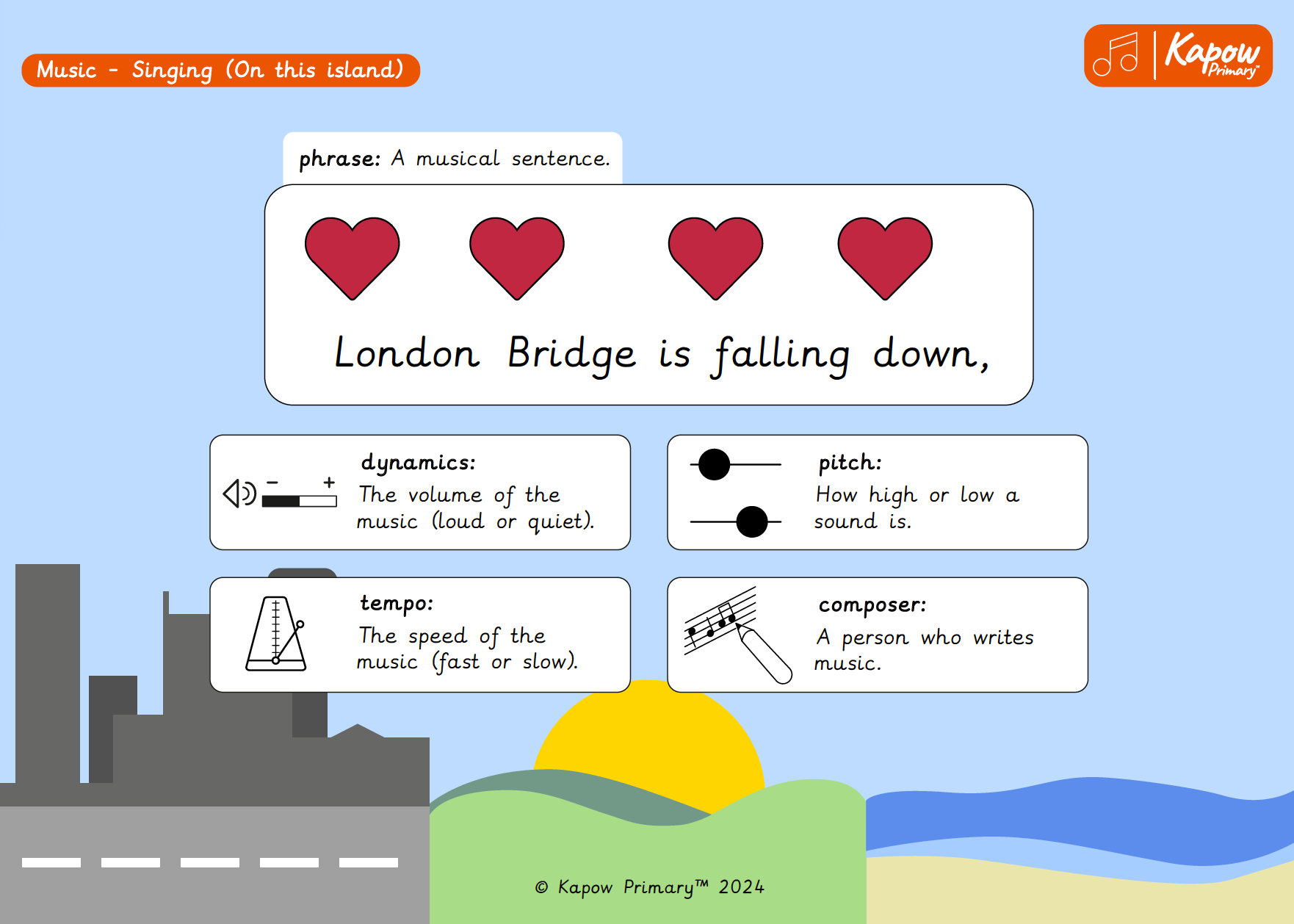
Knowledge organiser – Music Y2: Singing
Aimed at pupils, a single page which gives key facts and definitions from the unit Singing.
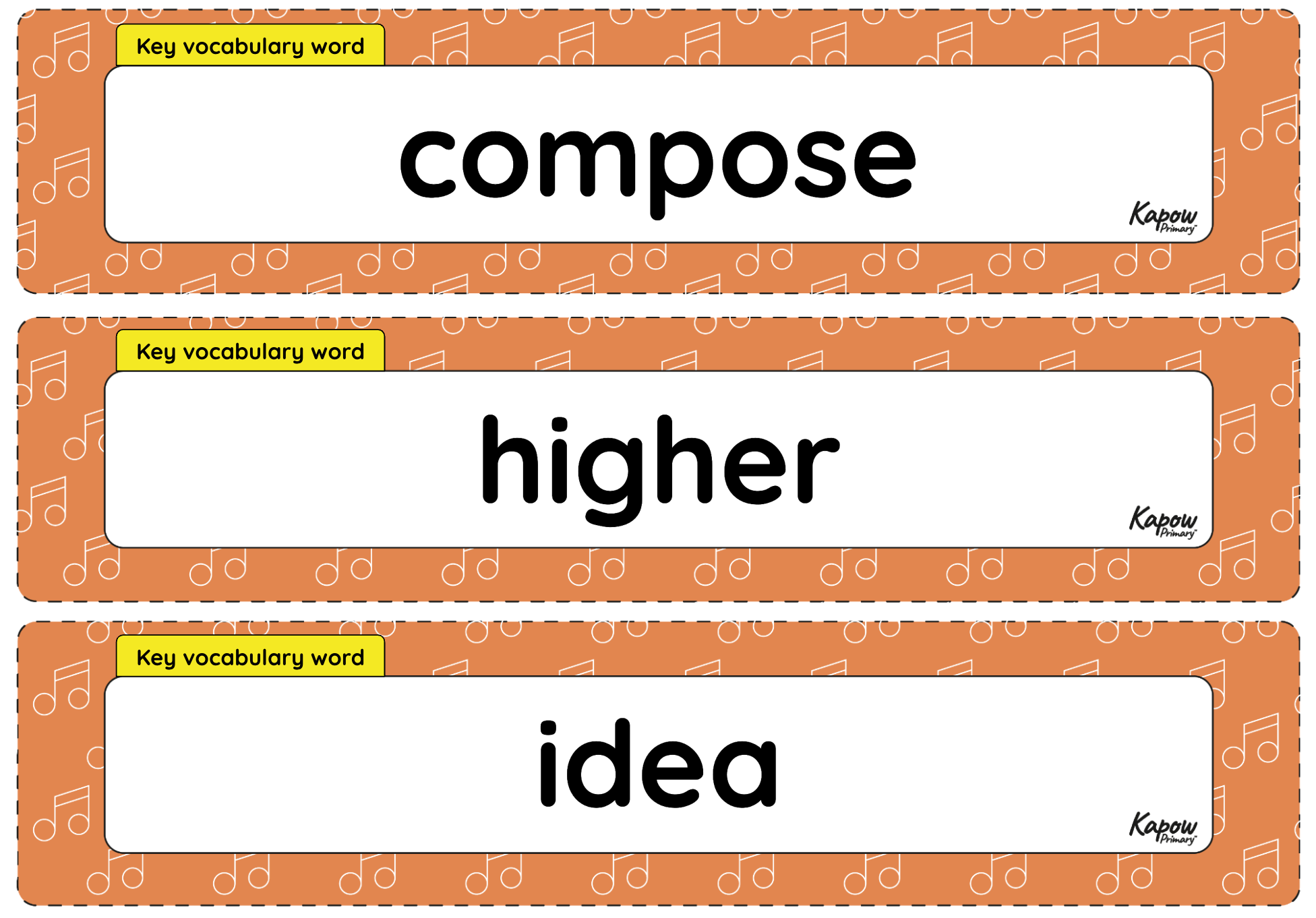
Vocabulary display – Music Y2: Singing
A display version of the key vocabulary from the unit Singing.
Subject resources
This content is for subscribers only. Join for access today.
Cross-curricular opportunities
Geography
Locational knowledge; Human and physical geography.
