




Unit outcomes
Pupils who are secure will be able to:
- Identify key similarities and differences between Jewish, Muslim and Christian beliefs about Abraham.
- Compare the ways some Jewish people observe Shabbat.
- Make links between a traditional Jewish meal and a denomination.
- Describe how a kippah can reflect someone’s beliefs or identity within the Jewish community.
- Identify reasons why someone might wear a hair covering.
- Explaining how some Christian teachings link to beliefs and practices in different communities.
Why are some places in the world significant to believers?
Get started
Teacher video: Why does religion look different around the world?

Lessons
Lesson 1: Why do some religions believe in the same God?
Lesson 2: How might a Jewish person observe Shabbat?
Lesson 3: Why is Friday night dinner different?
Lesson 4: What can a head covering tell us about identity?
Lesson 5: Why might someone want to cover their hair?
Lesson 6: How can scripture be expressed?
Key skills
Disciplinary
- Asking challenging questions and

This content is for subscribers only. Join for access today.
Key knowledge
Substantive
To know:
- The meaning of
This content is for subscribers only. Join for access today.
Key vocabulary
Liberal
mitzvot
This content is for subscribers only. Join for access today.
Equipment list
Equipment needed across all lessons in this unit.
This list does not include equipment which is usually readily available in the classroom (e.g pencils, A4 paper etc)
 Download
Full equipment list for the subject
Quantities marked × will update. Items without quantities are unaffected
- Wonder box ×1
- Sticky notes ×15
- Highlighters ×30
- Sugar paper 9
-
A selection of pens in different colours
×8 -
10 cm x 10 cm squares of paper in pastel colours
×30
This content is for subscribers only. Join for access today.
Related content
Unit resources


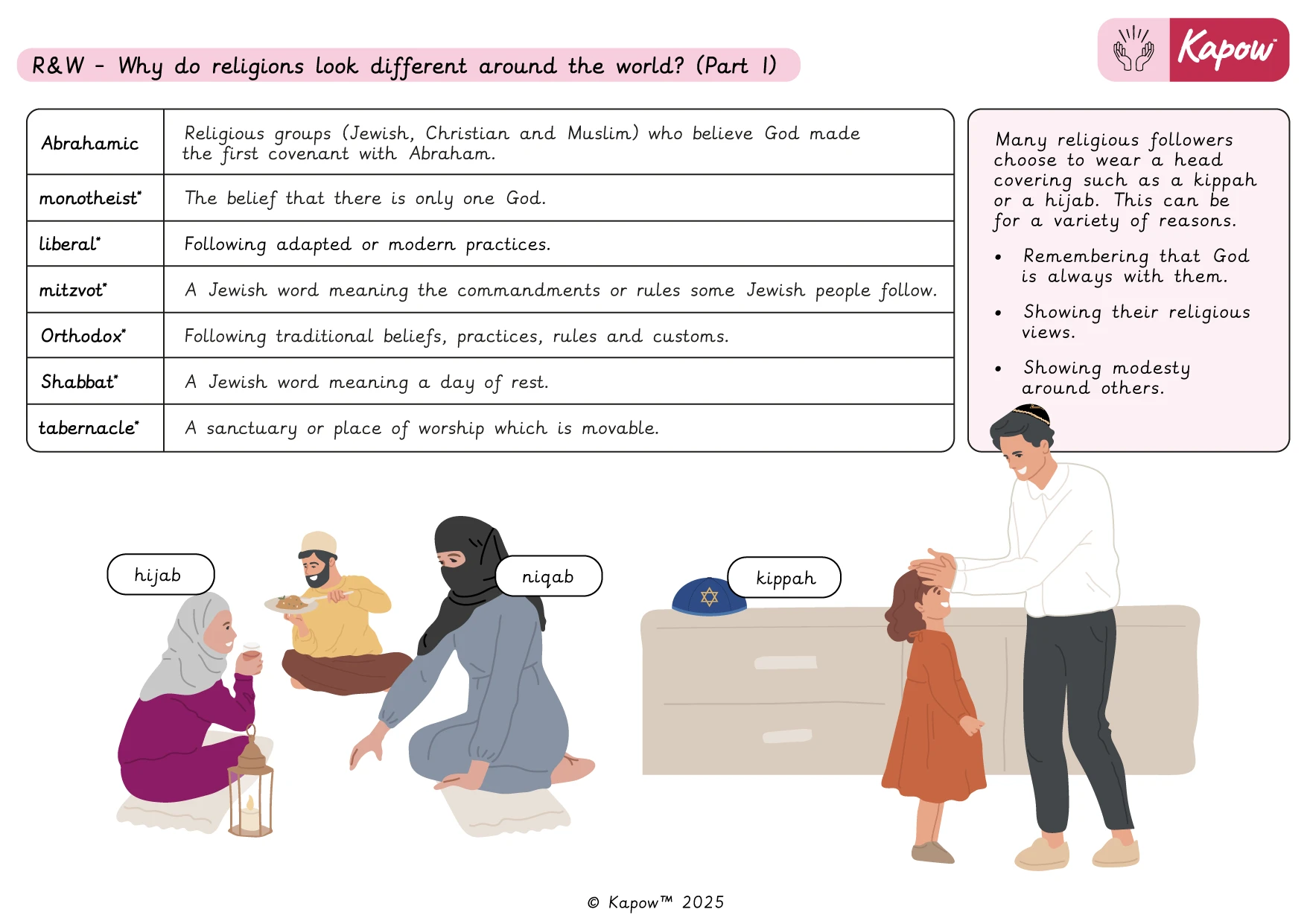
Knowledge organiser: Why does religion look different around the world? (Part 1)
Aimed at pupils, a double page document that gives key facts and definitions from the 'Why does religion look different…
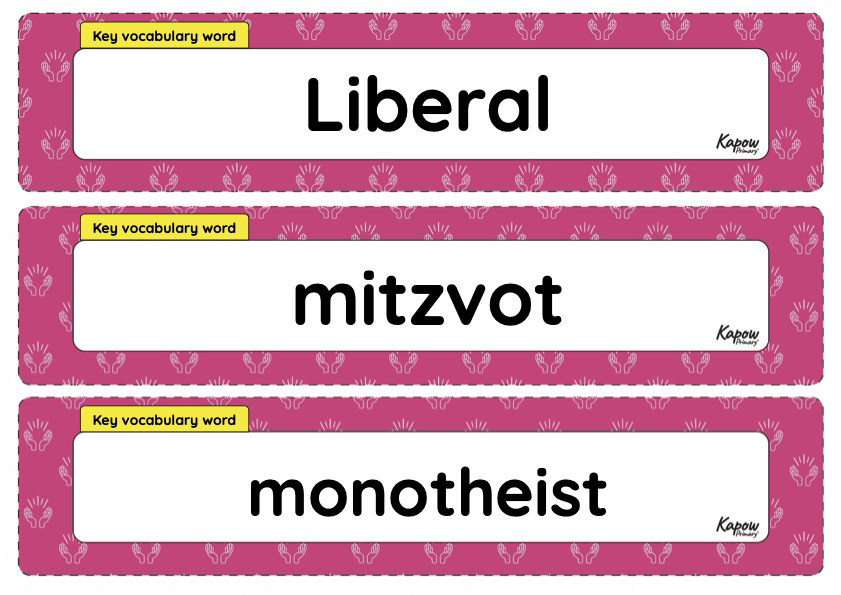
Vocabulary display – R&W : Why does religion look different around the world? (Part 1)
Subject resources
This content is for subscribers only. Join for access today.
Cross-curricular opportunities
British values: Mutual respect, Tolerance of those with different beliefs.
English: Reading – comprehension, Writing – transcription.
Geography: Human and physical geography.
