• Pricing
  • Join
Free trialLogin
  • Art and design
  • Computing
  • Design and technology
  • French
  • Geography
  • History
  • Music
  • Religion and worldviews
  • RSE & PSHE
  • Science
  • Spanish

Start using Kapow for free

No credit card required

Free trial
Children celebrating in a school hall
  • BESA Awards 2025 Winner badge in gold.
  • ERA 2024 Winner badge with bold letters and a black-and-white illustrated face.
  • UK Digital Growth Awards 2024 Winner badge in white text on a black background.
  • ERA 2025 Finalist badge with bold letters and a black-and-white illustrated face.
  • Geographical Association Publishers’ Award 2024 Silver badge.
  • BESA Awards 2024 Finalist badge in silver.
  • Teacher Tapp Gold Recommendation Award 2024 badge with a gold trophy.
  • EdTech Impact badge for Top Teacher Knowledge Tool 2025, as rated by users.
  • Teach Primary Awards 2023 badge stating “Highly Commended.”
  • EdTech Impact Recommended badge with three blue stars, dated November 2024.
  • Circular badge stating “250 reviews on EdTech Impact.”

Sign up to our newsletter

Receive news and resources directly to your inbox.

Subjects

  • Art and design
  • Computing
  • Design and technology
  • French
  • Geography
  • History
  • Music
  • RSE & PSHE
  • Religion & worldviews
  • Science
  • Spanish
  • Archive

Company

  • Our Story
  • Blog
  • Webinars
  • Careers
  • Artsmark support
  • Contact
  • Specialists
  • FAQs
  • Accessibility
  • Sustainability
[email protected]0204 634 9025

©2026 Kapow. Website Design & Development by SoBold

  • Terms of use
  • Privacy
  • Cookies

Registered office: Staverton Court Staverton Cheltenham Gloucestershire GL51 0UX VAT: GB 337 0474 07 Company number 09640574 Postal address: PO Box 79904 London SE1 3JW

  1. Subjects
  2. History
  3. Key stage 2
  4. Year 3
  5. British history 1: Would you prefer to have lived in the Stone Age, Bronze Age or Iron Age?
  6. Lesson 2: What does Skara Brae tell us about life in the Stone Age?

Lesson 2: What does Skara Brae tell us about life in the Stone Age?

Investigating Stone Age settlements; using archaeological evidence to explore the dwellings at Skara Brae.
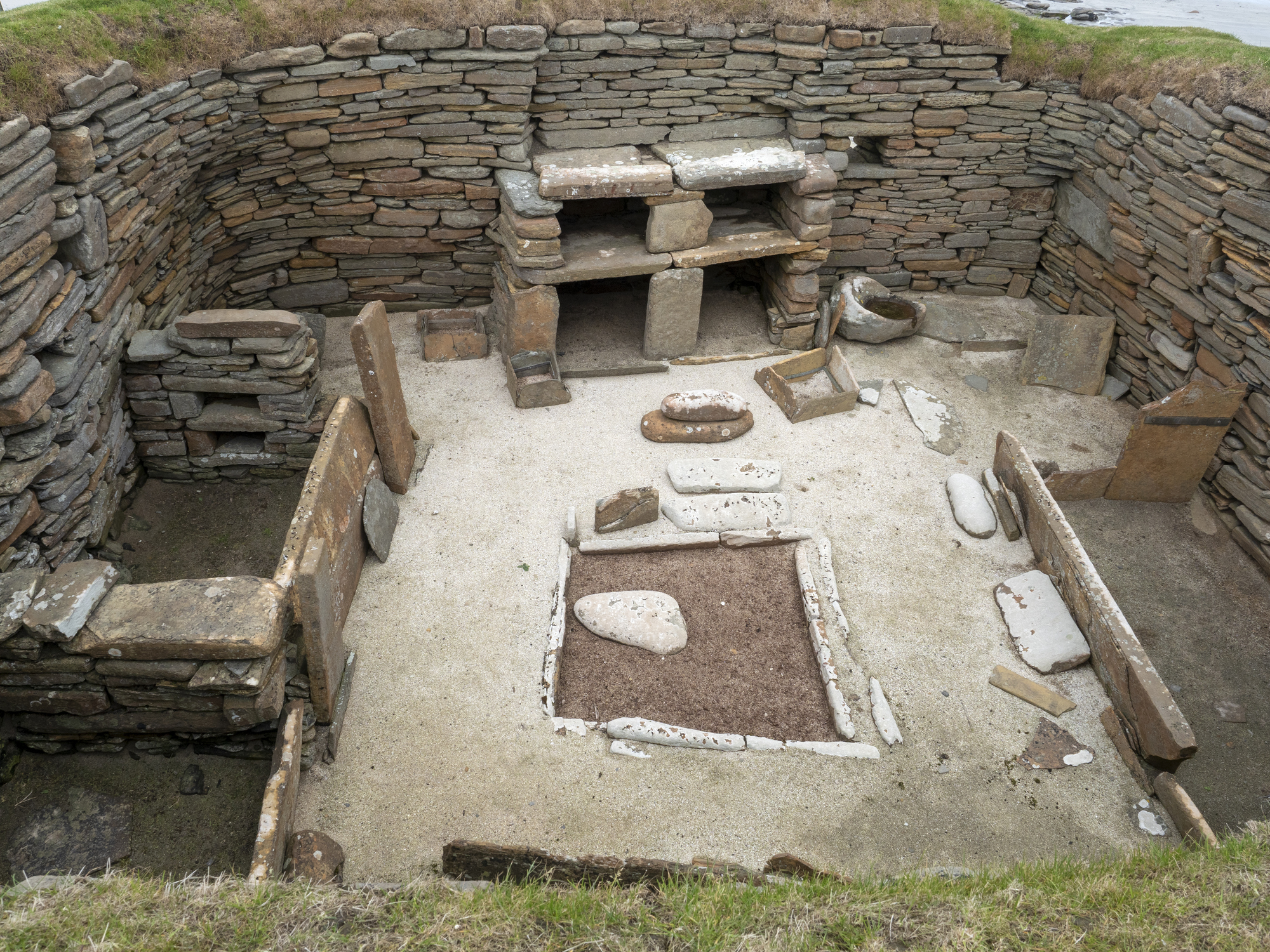
Excavated archaeological site at Skara Brae
Jump to:CPD videos in this lesson
  • Key information
  • Before the lesson
  • Lesson plan
  • Adaptive teaching & vocabulary definitions
CPD videos in this lesson

Learning objective

  • To use archaeological evidence to learn about the prehistoric dwellings of Skara Brae.

Success criteria

  • I can use evidence to make observations about Stone Age houses.

  • I can explain my observations.

  • I can explain the limitations of archaeological evidence.

Before the lesson

Watch

  • 3068 views

Watch

  • 3068 views

Lesson plan

Jump to:
  • Recap and recall
  • Attention grabber
  • Main event
  • Wrapping up

Display the Presentation: High five. In pairs, ask the children to recall five things about human history from the previous lesson.

Display the Presentation: High five. In pairs, ask the children to recall five things about human history from the previous lesson.

Presentation: High five

Allow time for the children to discuss, then take feedback. The children's answers might include:

  • Humans have lived in Britain for over 900,000 years.

  • Prehistory is the period of time in human history before written records began.

  • BC (Before Christ) is a term historians use to date the years before Jesus was born.

  • AD (Anno Domini) is a term historians use to date the years after Jesus was born.

  • History is divided into periods, eras and ages – smaller chunks of time that are easier for historians to study and compare.

  • The Stone Age consisted of three periods (the Palaeolithic, Mesolithic and Neolithic) and was followed by the Bronze Age and the Iron Age.

  • The Palaeolithic period was by far the longest of the Stone Age periods.

Watch the Pupil video: Where did Stone Age people live?

Watch the Pupil video: Where did Stone Age people live?

Pupil video: Where did Stone Age people live?

8963 views
  • How does archaeology help us learn about the past? (The remains and artefacts left by people who lived long ago tell us how people lived.)
  • Why can we not know for certain what Stone Age shelters looked like? (The children may suggest: because there are no written records from that time; because reconstructions are based on archaeological evidence which may not be complete.)
  • Why did humans use caves for shelter in the Stone Age? (Suggestions might include: caves were already there, so they did not have to build anything; they were safe from wild animals; the caves would have stayed warm in the winter and cool in the summer.)
  • Can you name some of the different materials used to build shelters in the Stone Age? (Answers might include: wood, branches, leaves, animal bones and hides.)
  • Evidence shows Stone Age shelters were built in different ways in different places. Why do you think this is? (The children may suggest: different places had different materials available, like more trees or stone; the weather was different in each place, so they needed different kinds of shelters; different groups of people had different ideas and methods of building.)
  • How did Stone Age shelters change over time? (The children's answers might include: earlier shelters were temporary because people moved around to find food; later ones became more permanent and were more complex.)

Display the Kapow Primary timeline. Scroll left to show the Palaeolithic, Mesolithic and Neolithic of the Stone Age.

Click on each time of the periods and read the short overviews. Reinforce that very little archaeological evidence remains from any of the Stone Age because most of the dwellings and the objects that people used were made from natural materials that have perished. An exception is the dwellings at Skara Brae which have been dated back to the Neolithic period.

Open the Presentation: Skara Brae.

Display the Presentation: High five! Ask the children to hold up a hand in the high five position.

Slide with a yawning cat under the heading Introduction.
Full-screen slides, ready for your classroom, chosen by you.
Teach in presentation mode

Success criteria

  • I can use evidence to make observations about Stone Age houses.

  • I can explain my observations.

  • I can explain the limitations of archaeological evidence.

Was this lesson effective?

We value your feedback

We welcome your feedback to help make our resources even better
Please rate this content
1=poor  5=excellent

As a subscriber you have read and agree to our Privacy Policy

For general enquiries not relating specifically to this subject, please contact us

In this unit

  • Assessment – History Y3: Stone, Bronze or Iron Age?

    View assessment
  • Lesson 1: How long ago did prehistoric man live?

    View lesson
  • Current lesson

    Lesson 2: What does Skara Brae tell us about life in the Stone Age?

  • Lesson 3: Who was this Bronze Age man?

    View lesson
  • Lesson 4: What was the impact of bronze in prehistoric Britain?

    View lesson
  • Lesson 5: How did trade change lives in Iron Age Britain?

    View lesson
  • Lesson 6: What changed between the Stone Age and the Iron Age?

    View lesson
  • Optional

    Optional Remembrance lesson: How can memorials help us remember?

    View lesson
Created by: Kapow Primary Team | Maintained by: Kapow team
Last update: 1 July 2026
Meet the specialists

Related content

Drawings on blackboard of people holding yellow stars
HistoryYear 3

Assessment – History Y3: Stone, Bronze or Iron Age?

Assessment quiz and Skills catcher for use at the start and/or end of the unit to assess pupil progress.

View lesson
Stone age family 1 copy
HistoryYear 3

Lesson 1: How long ago did prehistoric man live?

Creating timelines to gain a chronological understanding of prehistory; discovering the ways historians divide the past into chunks of time.

View lesson
Archaeology
HistoryYear 3

Lesson 3: Who was this Bronze Age man?

Carrying out an historical investigation, children use artefacts to solve the mystery of who the man discovered at Amesbury really was.

View lesson
Use presentation mode

Share lessons with your friends and colleagues for free.

  • Join
  • Free trialLogin

    Start using Kapow for free

    No credit card required

    Free trial
    Children celebrating in a school hall

    Used in 8,390 schools!