




Across the year
These six standalone lessons should be taught during each half-term. The timing is flexible but they should be planned to coincide with when religious and cultural festivals are celebrated.
Note – Lesson 3: What is Holi? requires the children to bring in plain white t-shirts (optional).
Unit outcomes
Development matters
Understanding the world
Recognise that people have different beliefs and celebrate special times in different ways.
Talk about members of their immediate family and community.
See Development Matters (non-statutory curriculum guidance).
Understanding the world
ELG: Past and present
Talk about the lives of the people around them and their roles in society.
People, culture and communities
Know some similarities and differences between different religious and cultural communities in this country, drawing on their experiences and what has been read in class.
See Statutory framework for the early years foundation stage, 2021.
Suggested prior learning
What makes us special?
Get started
Teacher video: Time to celebrate

Lessons
Lesson 1: What is the Harvest Festival?
Lesson 2: What is Hanukkah?
Lesson 3: What is Holi?
Lesson 4: What is Shrove Tuesday?
Lesson 5: What is Ramadan?
Lesson 6: How do some Hindu people celebrate Ganesha Chaturthi?
Key skills
- Asking questions about things

This content is for subscribers only. Join for access today.
Key knowledge
To know:
- Beliefs are things
This content is for subscribers only. Join for access today.
Key vocabulary
celebrate
festival
This content is for subscribers only. Join for access today.
Equipment list
Equipment needed across all lessons in this unit.
This list does not include equipment which is usually readily available in the classroom (e.g pencils, A4 paper etc)
 Download
Full equipment list for the subject
Quantities marked × will update. Items without quantities are unaffected
What is the harvest festival?
-
A table display of fruit, vegetables and grains (optional)
×1 -
A large roll of paper
×1 -
A selection of fruit and vegetables cut in half
×1 -
Paint and paint brushes
×1 - Paint palette ×15
-
Fruit and vegetable stampers
×1
What is Hanukkah?
-
9 battery-operated tea lights (optional)
×1 - Crayons ×30
-
Yellow and orange tissue paper
×30 - Scissors right- and left-handed options recommended. ×30
- Glue sticks ×15
What is Holi?
- Colouring pencils
-
Paint palettes (optional)
×15 -
A spray bottle (optional)
×1 -
Colourful powder paints (optional)
×1 -
Old white t-shirts (optional)
×30
What is Shrove Tuesday?
-
Equipment and ingredients to make pancakes (optional)
×1
What is Ramadan?
- Items associated with celebrating Ramadan such as dates, a lantern and a Ramadan decoration ×1
- Colouring pencils
What is Ganesha Chathurthi?
-
Equipment for Fruit kebabs (optional)
×30 -
A selection of soft fruits (e.g. banana, mango, strawberries and melon)
×30 - Child-safe knives Use child-safe knives; adult cutting knife for adult use only. ×15
- Wooden skewers ×30
- Chopping board ×15
-
Plates or trays to hold the fruit
×8 -
Equipment for Flower garlands (optional)
×1 - Hole punch ×1
-
60–80 cm lengths of wool or string
×30 -
Scissors (optional)
×15 -
A selection of leaves (optional)
×8
This content is for subscribers only. Join for access today.
Related content
Unit resources

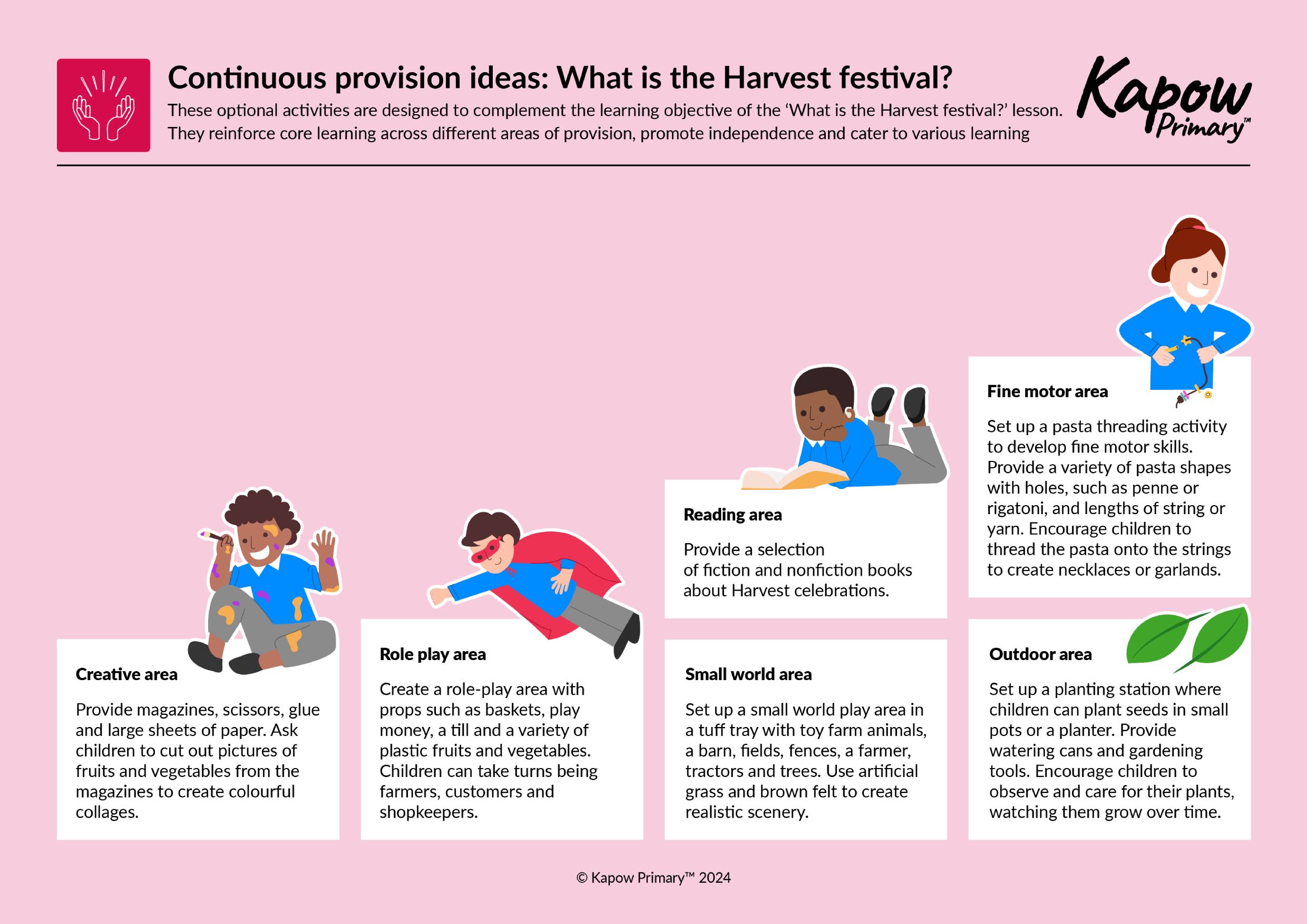
Continuous provision ideas – R&W EYFS: What is the Harvest festival?
Continuous provision activities to complement the EYFS lesson 'What is the Harvest Festival?'
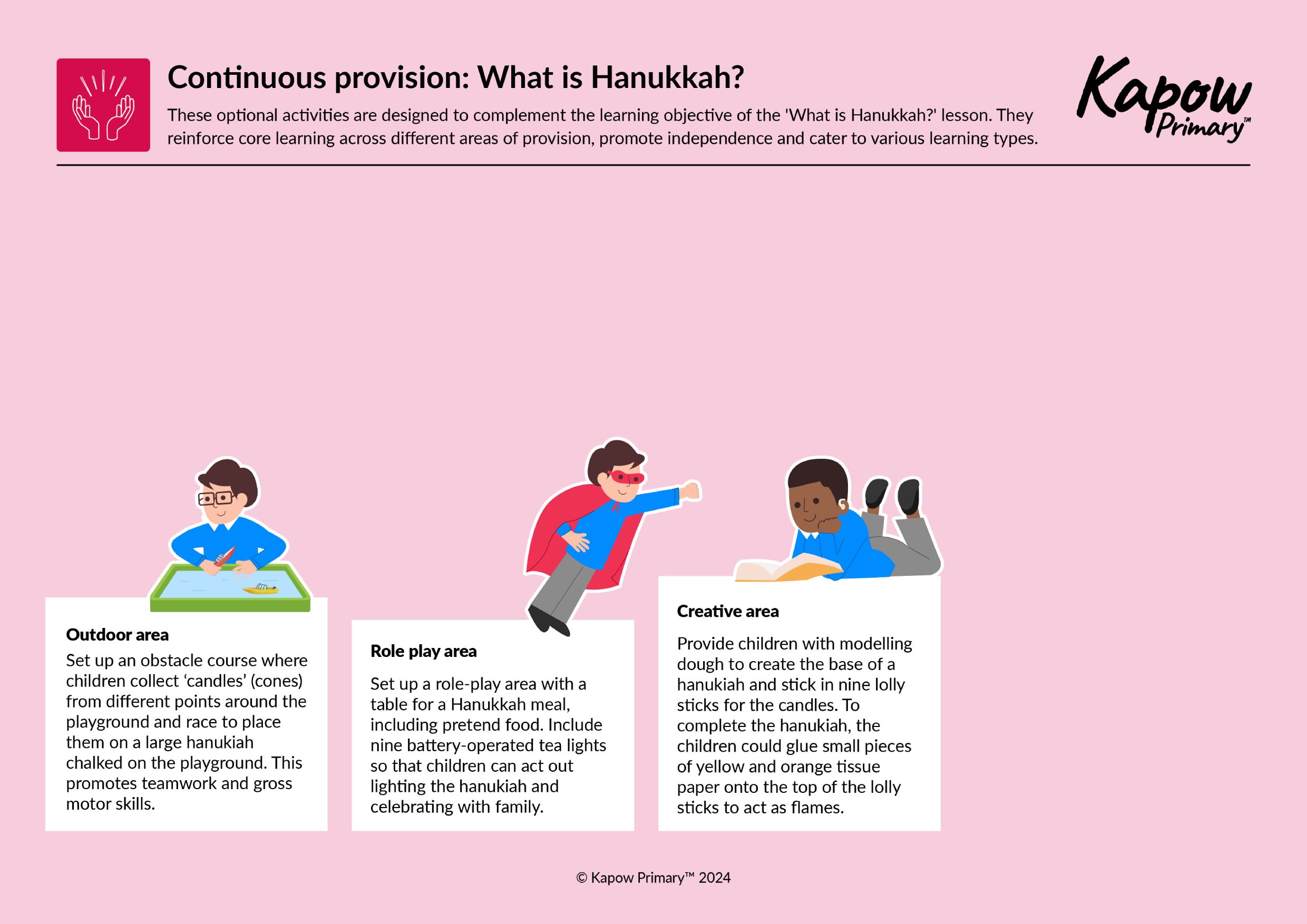
Continuous provision ideas – R&W EYFS: What is Hanukkah?
Continuous provision activities to complement the EYFS lesson 'What is Hanukkah?'
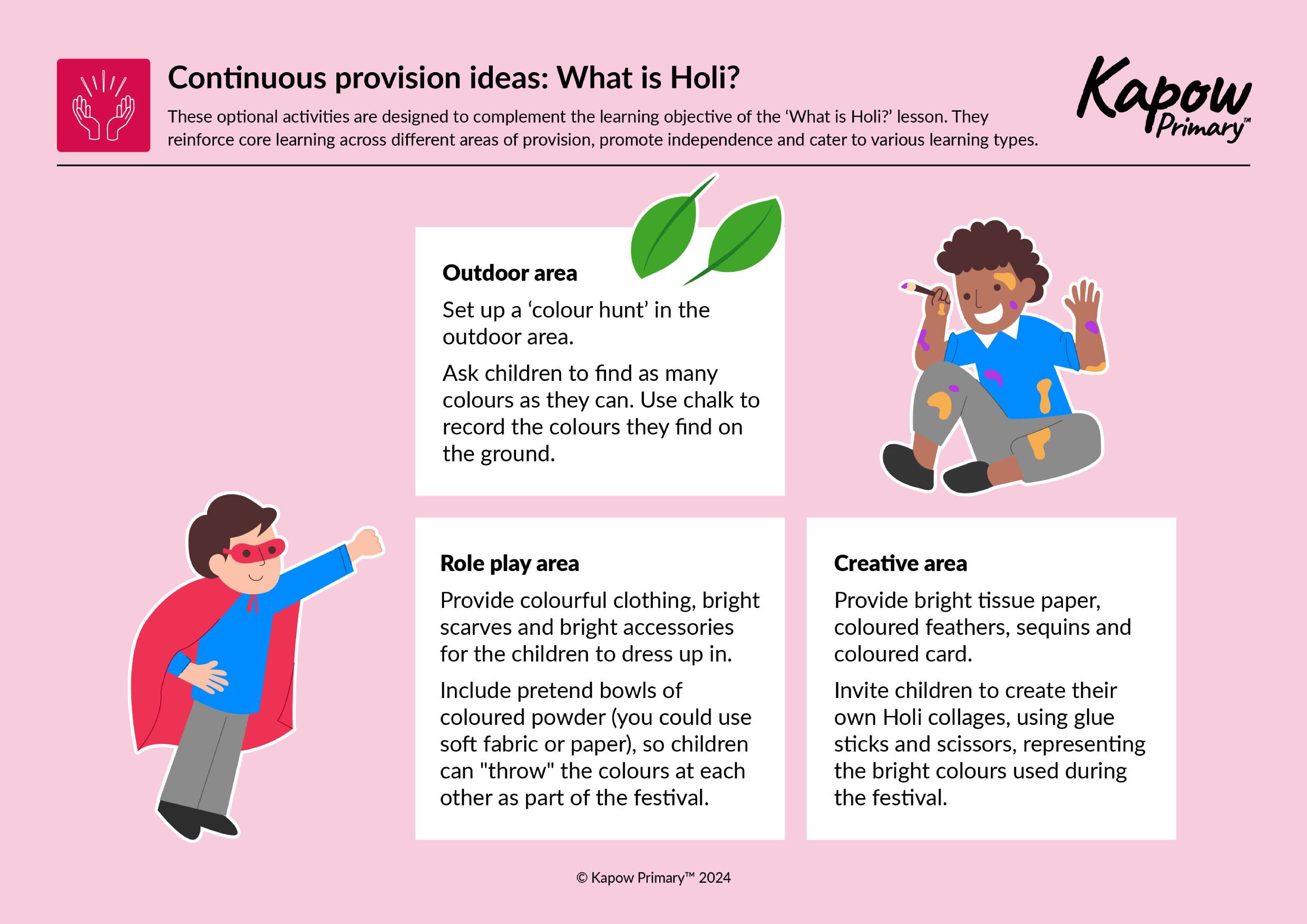
Continuous provision ideas – R&W EYFS: What is Holi?
Continuous provision activities to complement the EYFS lesson 'What is Holi?'
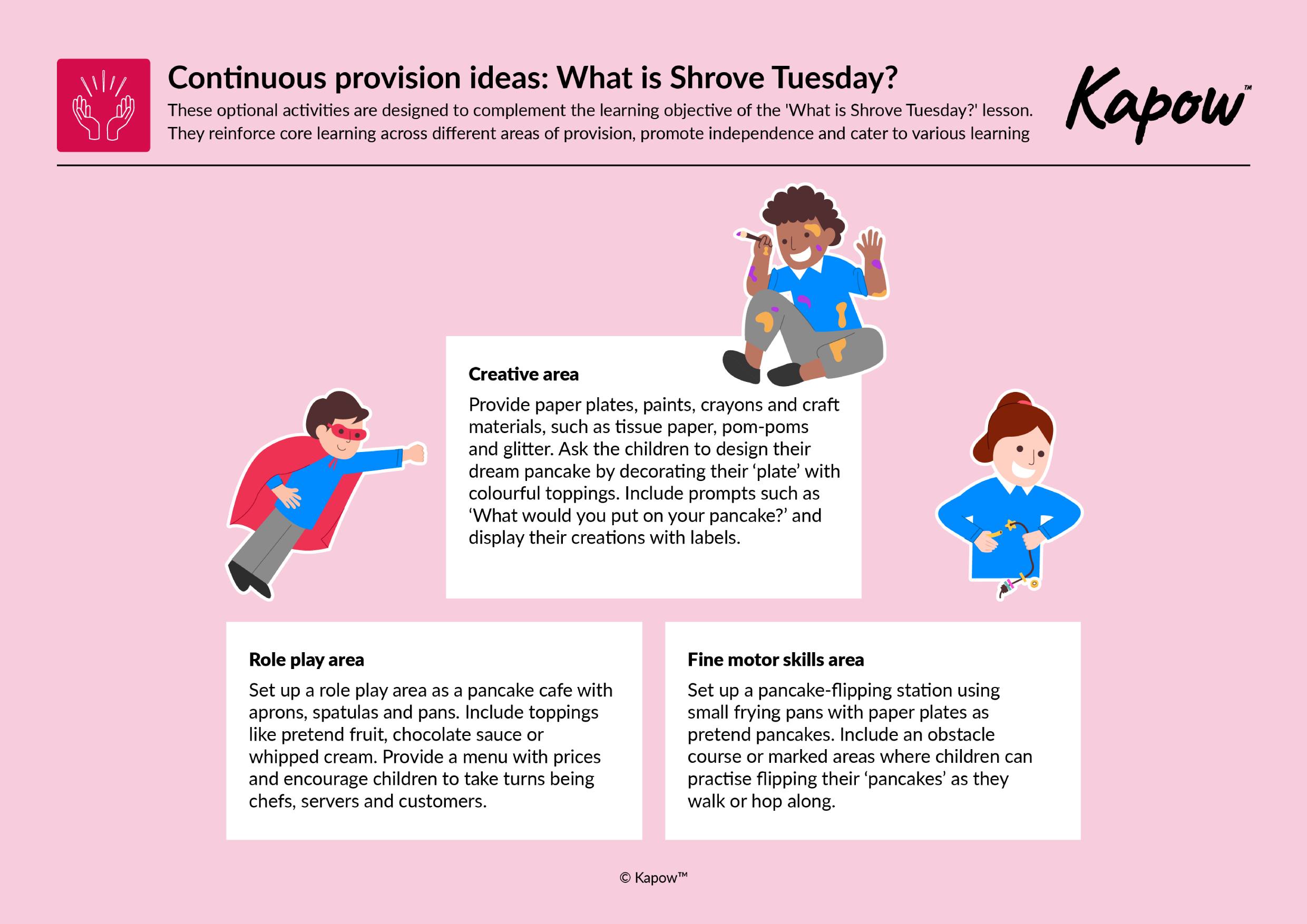
Continuous provision ideas – R&W EYFS: What is Shrove Tuesday?
Continuous provision activities to complement the EYFS lesson 'What is Shrove Tuesday?'
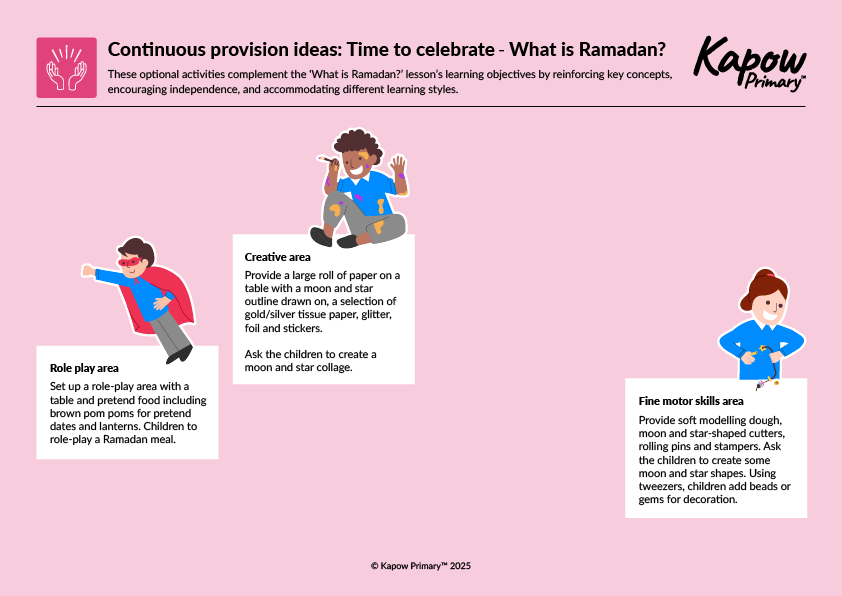
Continuous provision ideas – R&W EYFS: What is Ramadan?
Continuous provision activities to complement the EYFS lesson 'What is Ramadan?'.
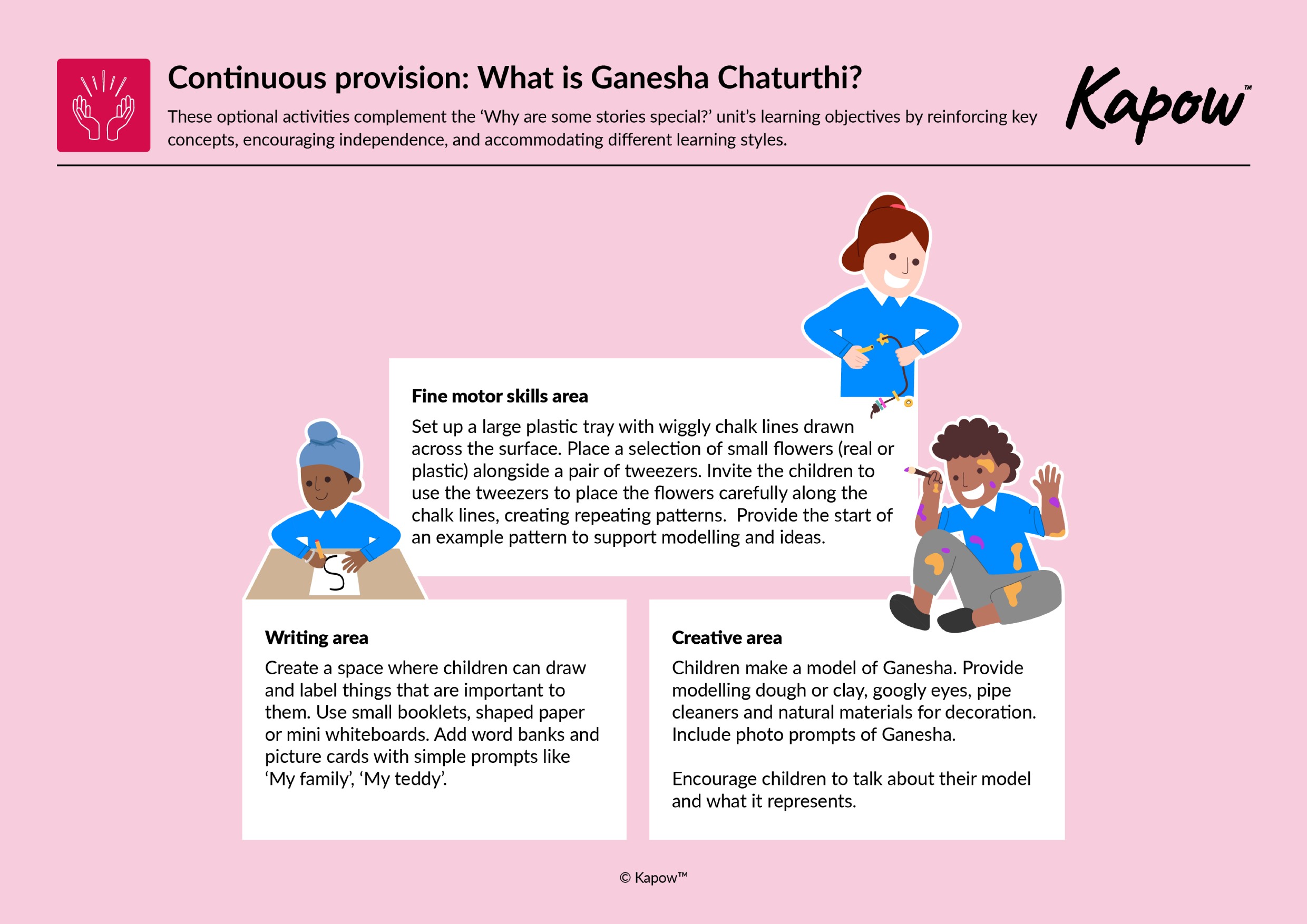
Continuous provision ideas – R&W EYFS: What is Ganesha Chaturthi?
Continuous provision activities to complement the EYFS lesson 'What is Ganesha Chaturthi'?
Subject resources
This content is for subscribers only. Join for access today.
Build on the learning
What are special times?
Get started
