




Unit outcomes
Pupils who are secure will be able to:
- Identify what actions might be seen as wrong and why.
- Identify what Christians believe about forgiveness from Bible stories.
- Describe how Jesus teaches forgiveness through his actions and words.
- Make simple links between Christian beliefs and actions such as prayer, repentance, and forgiving others.
- Describe similarities and differences between Christian and Humanist ideas about forgiveness and saying sorry.
- Make simple links between beliefs about God’s judgement and Jewish practices such as prayer, fasting, or giving Tzedakah.
- Recognise that many Muslims believe God judges people by both their actions and their intentions.
- Explain why some Hindus choose to live morally and make good choices.
Suggested prior learning
Is scripture central to religion?
Get started
Teacher video: What happens if we do wrong?

Lessons
Lesson 1: When people do wrong, who decides the consequences?
Lesson 2: Why is forgiveness important to many Christians?
Lesson 3: How do Christians believe they can make things right?
Lesson 4: How do some Jewish people seek forgiveness?
Lesson 5: How do some Muslim people seek forgiveness?
Lesson 6: What do some Hindu people believe about karma?

Optional: What can Easter teach about forgiveness?
Key skills
- Disciplinary
- Asking questions about what

This content is for subscribers only. Join for access today.
Key knowledge
Substantive
To know:
- Some people believe
This content is for subscribers only. Join for access today.
Key vocabulary
eternal
forgiveness
This content is for subscribers only. Join for access today.
Equipment list
Equipment needed across all lessons in this unit.
This list does not include equipment which is usually readily available in the classroom (e.g pencils, A4 paper etc)
 Download
Full equipment list for the subject
Quantities marked × will update. Items without quantities are unaffected
- Wonder box ×1
-
Sugar paper and markers
×8 -
Green pencils or pens
×30 -
Watercolour palettes
×15 - Paintbrushes ×30
-
Sponge
1 -
Bowl of water
1
This content is for subscribers only. Join for access today.
Related content
Unit resources


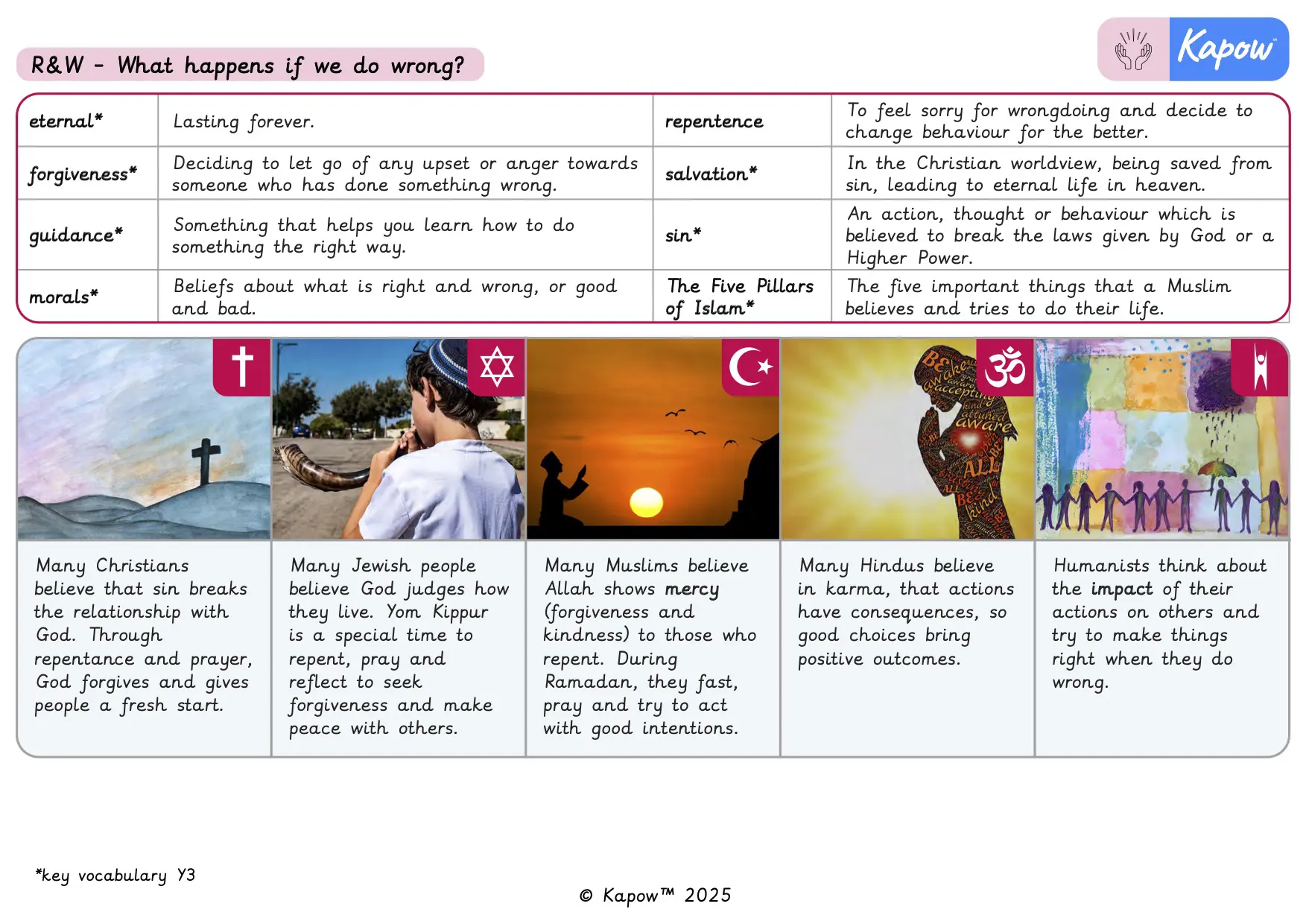
Knowledge organiser – R&W Y3: What happens if we do wrong?
Vocabulary display – R&W Y3: What happens if we do wrong?
A display version of the vocabulary from the 'What happens if we do wrong?' unit.
Subject resources
This content is for subscribers only. Join for access today.
Cross-curricular opportunities
English: Spoken language.
RSE: Respectful relationships.
British Values: Tolerance of different cultures and religions, Mutual respect.
Build on the learning
Why is water symbolic?
Get started
