• Pricing
  • Join
Free trialLogin
  • Art and design
  • Computing
  • Design and technology
  • French
  • Geography
  • History
  • Music
  • Religion and worldviews
  • RSE & PSHE
  • Science
  • Spanish

Start using Kapow for free

No credit card required

Free trial
Children celebrating in a school hall
  • BESA Awards 2025 Winner badge in gold.
  • ERA 2024 Winner badge with bold letters and a black-and-white illustrated face.
  • UK Digital Growth Awards 2024 Winner badge in white text on a black background.
  • ERA 2025 Finalist badge with bold letters and a black-and-white illustrated face.
  • Geographical Association Publishers’ Award 2024 Silver badge.
  • BESA Awards 2024 Finalist badge in silver.
  • Teacher Tapp Gold Recommendation Award 2024 badge with a gold trophy.
  • EdTech Impact badge for Top Teacher Knowledge Tool 2025, as rated by users.
  • Teach Primary Awards 2023 badge stating “Highly Commended.”
  • EdTech Impact Recommended badge with three blue stars, dated November 2024.
  • Circular badge stating “250 reviews on EdTech Impact.”

Sign up to our newsletter

Receive news and resources directly to your inbox.

Subjects

  • Art and design
  • Computing
  • Design and technology
  • French
  • Geography
  • History
  • Music
  • RSE & PSHE
  • Religion & worldviews
  • Science
  • Spanish
  • Archive

Company

  • Our Story
  • Blog
  • Webinars
  • Careers
  • Artsmark support
  • Contact
  • Specialists
  • FAQs
  • Accessibility
  • Sustainability
[email protected]0204 634 9025

©2026 Kapow. Website Design & Development by SoBold

  • Terms of use
  • Privacy
  • Cookies

Registered office: Staverton Court Staverton Cheltenham Gloucestershire GL51 0UX VAT: GB 337 0474 07 Company number 09640574 Postal address: PO Box 79904 London SE1 3JW

  1. Subjects
  2. Geography
  3. Key stage 2
  4. Year 5
  5. Why do oceans matter?
  6. Optional sustainability lesson: What is fast fashion and why is it a problem?

Optional sustainability lesson: What is fast fashion and why is it a problem?

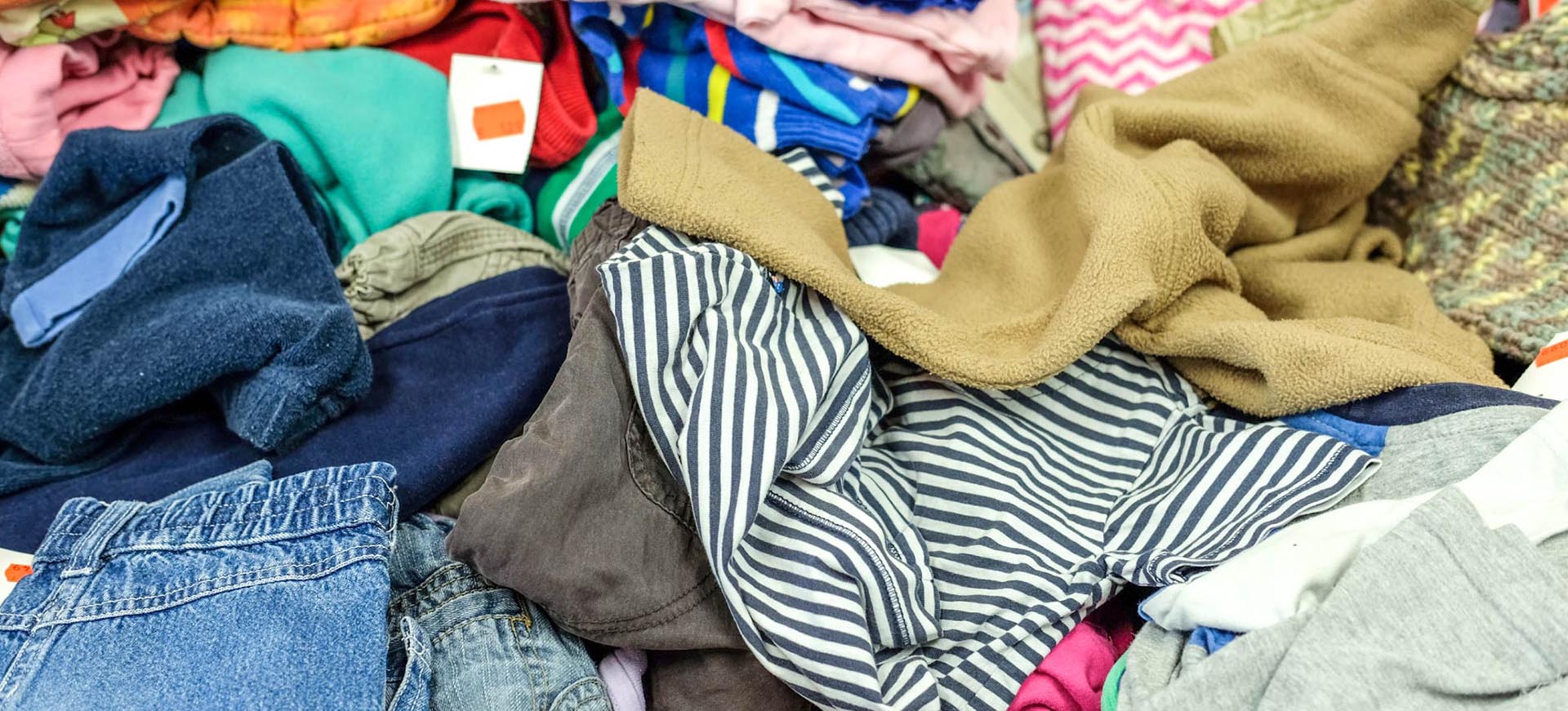
Exploring the impact of fast fashion by discussing sustainability and the waste hierarchy; evaluating ways to reduce textile waste through reuse, recycling and upcycling; creating a sustainable fashion project, such as a clothes swap or upcycling activity.
Jump to:CPD video in this lesson
  • Key information
  • Before the lesson
  • Lesson plan
  • Adaptive teaching & vocabulary definitions
CPD video in this lesson

Learning objective

  • To explore sustainable fashion by working in a team to plan a clothes swap or upcycling project.

Success criteria

  • I can explain what fast fashion is and why it harms the environment.

  • I can describe how reusing and recycling clothes and shoes helps reduce waste.

  • I can plan a sustainable fashion project.

Before the lesson

Watch

  • 602 views

Watch

  • 602 views

Lesson plan

Jump to:
  • Recap and recall
  • Attention grabber
  • Main event
  • Wrapping up

Display the Presentation: Agree or disagree? Ask the children to discuss the statement on the slide with a partner.

Display the Presentation: Agree or disagree? Ask the children to discuss the statement on the slide with a partner.

Presentation: Agree or disagree?

Take feedback, ensuring the children justify their answers.

Display the Presentation: Sustainability and fashion and read through each slide.

Display the Presentation: Sustainability and fashion and read through each slide.

Presentation: Sustainability and fashion

Make presentation full-screen
  • What are the three Rs? (Reduce, Reuse, Recycle.)
  • Why are the three Rs ordered Reduce, Reuse, Recycle? (The children may suggest: reduce comes first because using less creates less waste and pollution; reuse comes second because using things again saves resources and reduces the need for new products; recycle comes last because it still uses energy and resources, so it should be the final option after reducing and reusing.)

Arrange the children into pairs and hand out the whiteboards and pens. Ask the children to draw a line down the centre of their whiteboard and title the columns Sustainable and Unsustainable.

Display slide 1 of the Presentation: Sustainable fashion.

Presentation: Sustainable fashion

Make presentation full-screen

Ask the children to sort the images into two groups: sustainable fashion and unsustainable fashion.

Take feedback, dragging and dropping the images onto the sliding scale. Ensure the children justify their choices. For the sustainable choices, ask them to decide which of the three Rs (Reduce, Reuse or Recycle) makes it sustainable.

Play the Pupil video: Fast fashion, pausing at 1:17.

Use sticky tack to fix the scrap paperto the wall of the classroom, with 'Positive' at one end, 'Negative' at the other and 'It’s complicated' in the middle.

Arrange the children into pairs and give each pair a statement from the Activity: Fashion statements. Ask the children to discuss their statements with their partners and decide where on the continuum they think their statements should be placed.

Invite the pairs to stand along the continuum. Once all the class is in position, ask each pair to read their statement. Give the other children the opportunity to challenge where they are standing and allow the pairs to move if they are swayed by their peers’ arguments.

Slide with a yawning cat under the heading Introduction.
Full-screen slides, ready for your classroom, chosen by you.
Teach in presentation mode

Success criteria

  • I can explain what fast fashion is and why it harms the environment.

  • I can describe how reusing and recycling clothes and shoes helps reduce waste.

  • I can plan a sustainable fashion project.

Was this lesson effective?

Example work

Brushwood Junior School, Chesham

Brushwood Junior School, Chesham

Brushwood Junior School, Chesham

Brushwood Junior School, Chesham

Brushwood Junior School, Chesham

Brushwood Junior School, Chesham

Explore more pupil work on our gallery

Open gallery

We value your feedback

We welcome your feedback to help make our resources even better
Please rate this content
1=poor  5=excellent

As a subscriber you have read and agree to our Privacy Policy

For general enquiries not relating specifically to this subject, please contact us

In this unit

  • Assessment – Geography Y5: Why do oceans matter?

    View assessment
  • Lesson 1: How do we use our oceans?

    View lesson
  • Lesson 2: What is the Great Barrier Reef?

    View lesson
  • Lesson 3: Why are our oceans suffering?

    View lesson
  • Lesson 4: What can we do to help our oceans?

    View lesson
  • Lesson 5: How littered is our marine environment? – Data collection

    View lesson
  • Lesson 6: How littered is our marine environment? – Findings

    View lesson
  • Current lesson

    Optional sustainability lesson: What is fast fashion and why is it a problem?

Created by: Kapow Primary Team | Maintained by: Kapow team
Last update: 8 May 2026
Meet the specialists

Related content

Drawings on blackboard of people holding yellow stars
GeographyYear 5

Assessment – Geography Y5: Why do oceans matter?

Assessment quiz and Knowledge catcher for use at the start and/or end of the unit to assess pupil progress.

View lesson
Sunset at the beach
GeographyYear 5

Lesson 1: How do we use our oceans?

Explaining why the ocean is important, how it is used and its significance in the water cycle.

View lesson
Coral
GeographyYear 5

Lesson 2: What is the Great Barrier Reef?

Locating Australia on a map and identifying its physical and human features. Researching the benefits and threats to the Great Barrier Reef.

View lesson
Use presentation mode

Share lessons with your friends and colleagues for free.

  • Join
  • Free trialLogin

    Start using Kapow for free

    No credit card required

    Free trial
    Children celebrating in a school hall

    Used in 8,390 schools!