




- Subjects >
- Geography >
- Key stage 2 >
- Year 3 >
Unit outcomes
Pupils who are secure will be able to:
- Name all four layers of the Earth in the correct order, stating one fact about each layer.
- Explain one or more ways a mountain can be formed.
- Give a correct example of a mountain range and its continent.
- Describe a tectonic plate and know that mountains occur along plate boundaries.
- Correctly label the features of shield and composite volcanoes and explain how they form.
- Name three ways in which volcanoes can be classified.
- Describe how volcanoes form at tectonic plate boundaries.
- Explain a mix of negative and positive consequences of living near a volcano.
- State whether they would or would not want to live near a volcano.
- State that an earthquake is caused when two plate boundaries move and shake the ground.
- Explain that earthquakes happen along plate boundaries.
- List some negative effects that an earthquake can have on a community.
- Observe, digitally record and map different rocks using a symbol on a map.
- Identify rock types and their origins based on collected data.
Lesson 6 involves fieldwork on the school grounds. It is important to risk-assess the proposed route taking into account any relevant school risk assessment policies and procedures. Refer to the Before the lesson section in Lesson 6 to prepare for this lesson. Please be aware this lesson may take longer than 1 hour.
Lessons 3 and 6 require a device (one per pair).
Suggested prior learning
What is it like to live by the coast?
Get started
Lessons
Lesson 1: How is the Earth constructed?
Lesson 2: Where are mountains found?
Lesson 3: Why and where do we get volcanoes?
Lesson 4: What are the effects of a volcanic eruption?
Lesson 5: What are earthquakes and where do we get them?
Lesson 6: Where have the rocks around school come from?
Key skills
- Locating some

This content is for subscribers only. Join for access today.
Key knowledge
- To know
This content is for subscribers only. Join for access today.
Key vocabulary
active volcano
climate change
This content is for subscribers only. Join for access today.
Equipment list
Equipment needed across all lessons in this unit.
This list does not include equipment which is usually readily available in the classroom (e.g pencils, A4 paper etc)
 Download
Full equipment list for the subject
Quantities marked × will update. Items without quantities are unaffected
- Sticky notes
- A4 medium-weight card ×30
- Glue sticks ×30
- Atlases ×15
- Laptops, computers, tablets ×15
-
Digital copy of an aerial map of your school labelled with features
×15 - A selection of rocks ×8
- A device that takes photographs ×8
The equipment below is optional
- Clipboards ×15
- Magnifying glasses ×30
This content is for subscribers only. Join for access today.
Related content
Unit resources


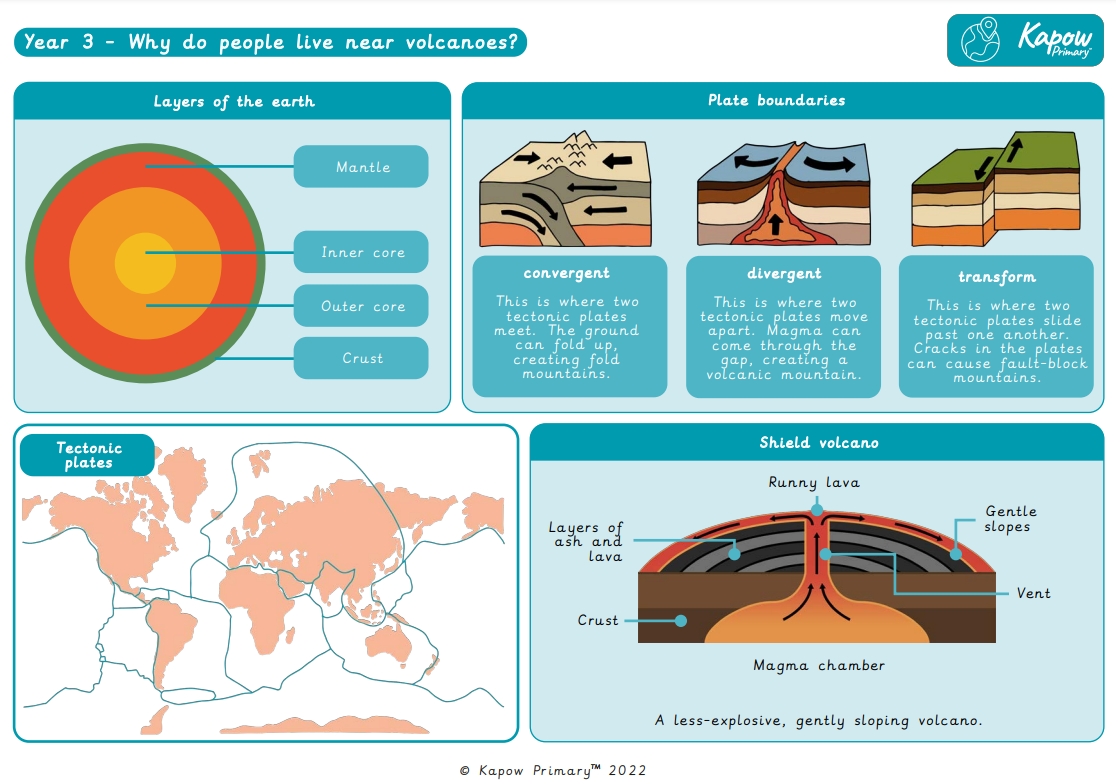
Knowledge organiser: Geography – Y3 Why do people live near volcanoes?
Aimed at pupils, three pages providing key facts and definitions from the unit "Why do people live near volcanoes?".
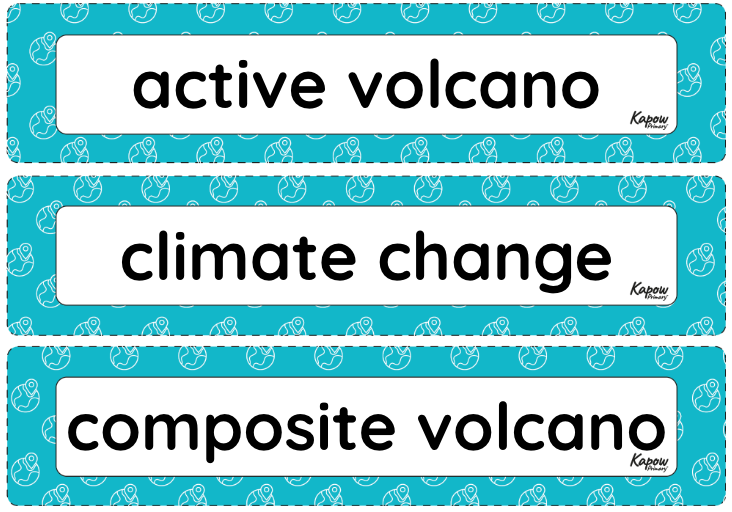
Vocabulary display: Why do people live near volcanoes?
A display version of the vocabulary from the unit 'Why do people live near volcanoes?'
Subject resources
This content is for subscribers only. Join for access today.
Cross-curricular opportunities
- English: Spoken language: discussing and justifying ideas about rocks, volcanoes and earthquakes.
- English: Reading – comprehension: retrieving information from non-fiction texts about volcanoes.
- Science: States of matter: understanding that the Earth’s crust changes state when exposed to extreme heat.
- Science: Rocks: exploring how rocks change over time and comparing rocks based on their appearance and properties.
- Science: Living things and their habitats: recognising how volcanic activity can affect habitats and living things.
- Science: Forces: understanding that earthquakes occur because of forces at tectonic plate boundaries.
- Art and design: practising control of materials when crafting a model of the Earth.
- Computing: using search technologies effectively when researching volcano classifications.
- Physical education: taking part in an outdoor adventurous activity during geology fieldwork.
Build on the learning
Who lives in Antarctica?
Get started
