




- Subjects >
- Music >
- Key stage 2 >
- Year 4 >
Important update!
The Key stage 2 Music units have been updated for 2026–2027. Both updated and previous versions will remain available, allowing flexibility to choose between them.
Explore the Music, Long-term plan for 2026–2027 to preview updated units. Additional units will be added as they become available.
Unit outcomes
Pupils who are secure will be able to:
- Suggest suitable words to describe their time outdoors, changing the sounds of their words to match their meanings.
- Recognise, name and describe the effect of the interrelated dimensions of music.
- Select instruments and sounds which match their vocabulary.
- Work as a group to create a piece of music.
- Perform a piece of music as part of a group.
Suggested prior learning
Changes in pitch, tempo and dynamics (Theme: Rivers)
Get started
Lessons
Lesson 1: Describing blossom
Lesson 2: Sounds of blossom
Lesson 3: Blossom haiku
Lesson 4: Haiku melodies
Lesson 5: Haiku performance
Key skills
- Recognising, naming and explaining

This content is for subscribers only. Join for access today.
Key knowledge
- To know that a
This content is for subscribers only. Join for access today.
Key vocabulary
col legno
composing
This content is for subscribers only. Join for access today.
Equipment list
Equipment needed across all lessons in this unit.
This list does not include equipment which is usually readily available in the classroom (e.g pencils, A4 paper etc)
 Download
Full equipment list for the subject
Quantities marked × will update. Items without quantities are unaffected
- Clipboards ×30
- Tuned and untuned percussion Instruments
Below is optional
- Invite students to bring in instruments they play
This content is for subscribers only. Join for access today.
Related content
Unit resources


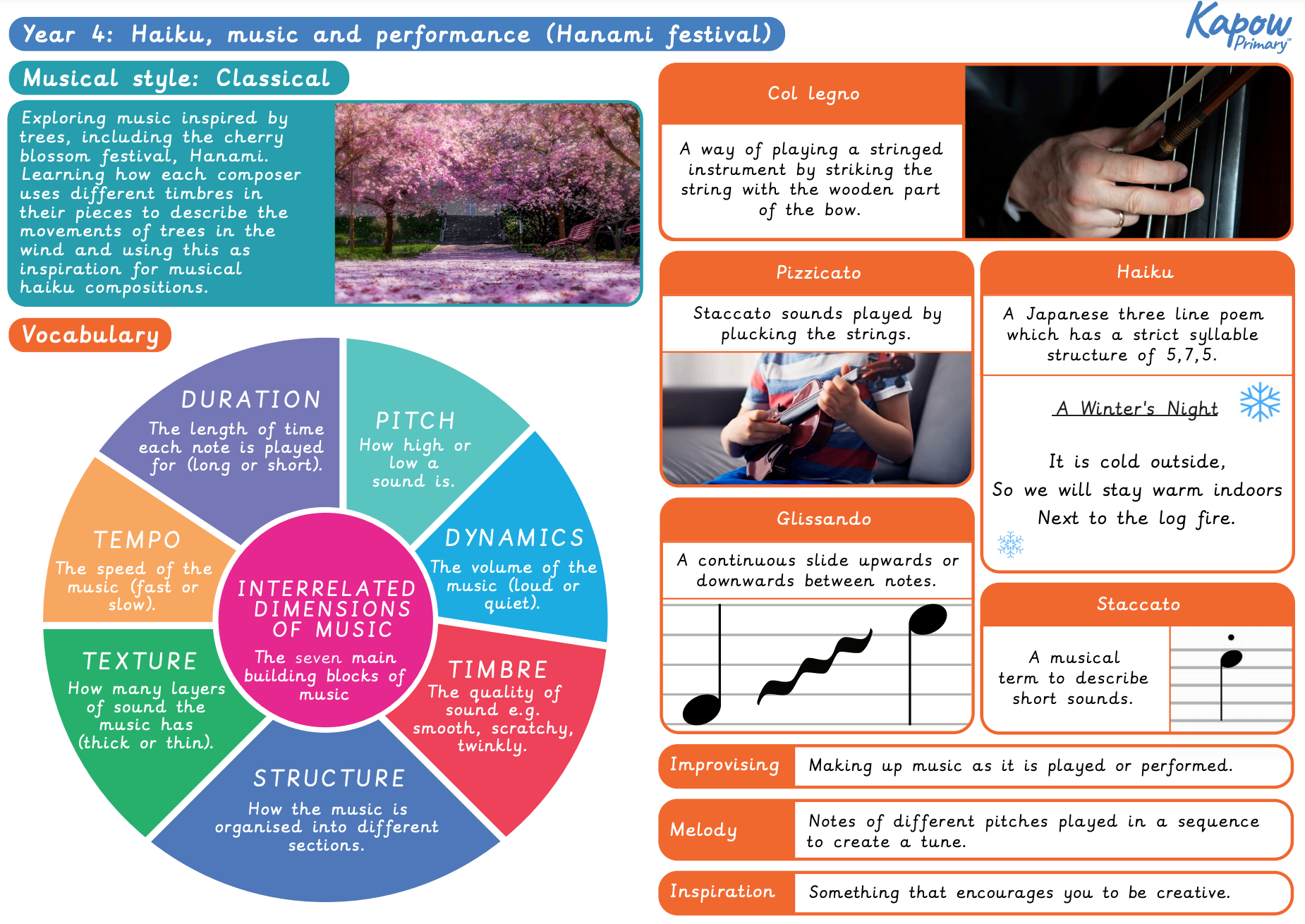
Knowledge organiser: Music – Y4 Haiku, music and performance (Hanami Festival)
Aimed at pupils, a single page which gives key facts and definitions from the unit "Year 4 Haiku, music and…
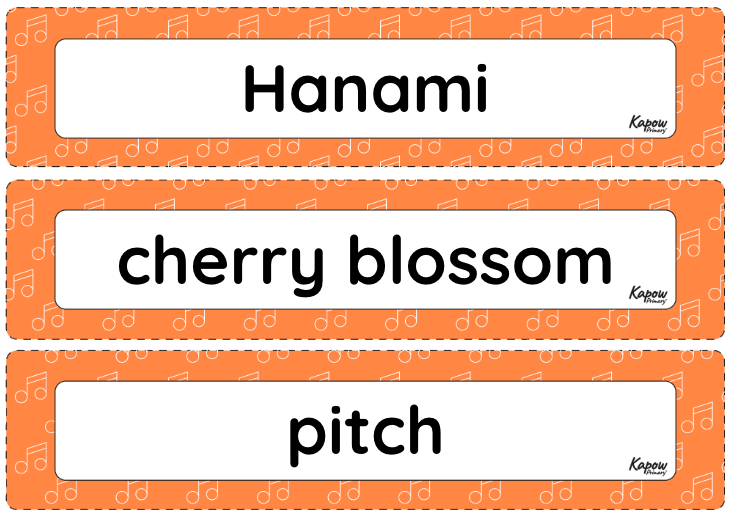
Vocabulary display: Haiku, music and performance
A display version of the vocabulary from the unit Haiku, music and performance.
Subject resources
This content is for subscribers only. Join for access today.
Cross-curricular opportunities
English
‘Pupils should be taught to:
- draft and write by: composing and rehearsing sentences orally (including dialogue), progressively building a varied and rich vocabulary’
Build on the learning
Samba and carnival sounds and instruments (Theme: South America)
Get started
