




Display the Presentation: Making connections.
Learning objective
- To explore ways Jesus’ birth is celebrated at Christmas using the symbol of light.
Success criteria
- I can identify the symbols of light used to celebrate Christmas.
- I can explain why light is important in the Christmas story.
- I can describe how some Christians use light to remember Jesus at Christmas.
Religious Education Council Curriculum Framework for RE in England (non-statutory guidance):
- A1. Recall and name different beliefs and practices, including festivals, worship, rituals and ways of life, in order to find out about the meanings behind them.
- A2. Retell and suggest meanings to some religious and moral stories, exploring and discussing sacred writings and sources of wisdom and recognising the traditions from which they come.
- A3. Recognise some different symbols and actions which express a community’s way of life, appreciating some similarities between communities.
- B1. Ask and respond to questions about what individuals and communities do, and why, so that pupils can identify what difference belonging to a community might make.
See REC Curriculum Framework for RE in England (non-statutory guidance) – Religious Education Council of England & Wales.
Cross-curricular links
Art and design
Pupils should be taught:
- To use drawing, painting and sculpture to develop and share their ideas, experiences and imagination.
See National curriculum - Art - Key stages 1 and 2.
English
Spoken language
Pupils should be taught to:
- Maintain attention and participate actively in collaborative conversations, staying on topic and initiating and responding to comments.
See National curriculum - English - Key stages 1 and 2.
RSE
Respectful relationships
Pupils should know:
- The importance of respecting others, even when they are very different from them (for example, physically, in character, personality or backgrounds), or make different choices or have different preferences or beliefs.
See RSE Statutory guidance – contains public sector information licensed under the Open Government Licence v3.0.
British values
- Mutual respect.
- Tolerance of those with different faiths and beliefs.
See Promoting fundamental British values as part of SMSC in schools (non-statutory advice) – contains public sector information licensed under the Open Government Licence v2.0.
Before the lesson
Watch
Watch
- Presentation: Making connections.
- Presentation: Christmas lights.
- Presentation: Christingles.
- Presentation: Wrapping up words.
- A pre-made Christingle (optional – see Main event).
- Sticky tape.
- Colouring pencils (one set between two).
- Scissors (one between two).
- Glue sticks (one between two).
- A4 paper (one each).
- Items to make a Christingle (optional – see Main event):
- large oranges (one between two);
- toothpicks (four between two);
- red ribbon (enough to go around the orange, one between two);
- 8 small sweets or dried fruit (one set between two);
- small candles (one between two);
- glow sticks (one between two as an alternative to the candle);
- sticky tape;
- a small square of foil (optional).
- Link: Assessment – Religion and worldviews: Why and how do people celebrate Christmas? (optional – see Wrapping up).
Check all images, videos, links and presentation slides are suitable for your class.
Prepare this lesson in presentation mode
Choose what to show your class.
Print in advance of the lesson.
Activity: Christingle (one each).

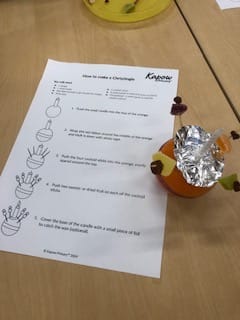
Resource: How to make a Christingle (one teacher copy).
Resource: Knowledge organiser: Why and how do people celebrate Christmas? (optional - one each).
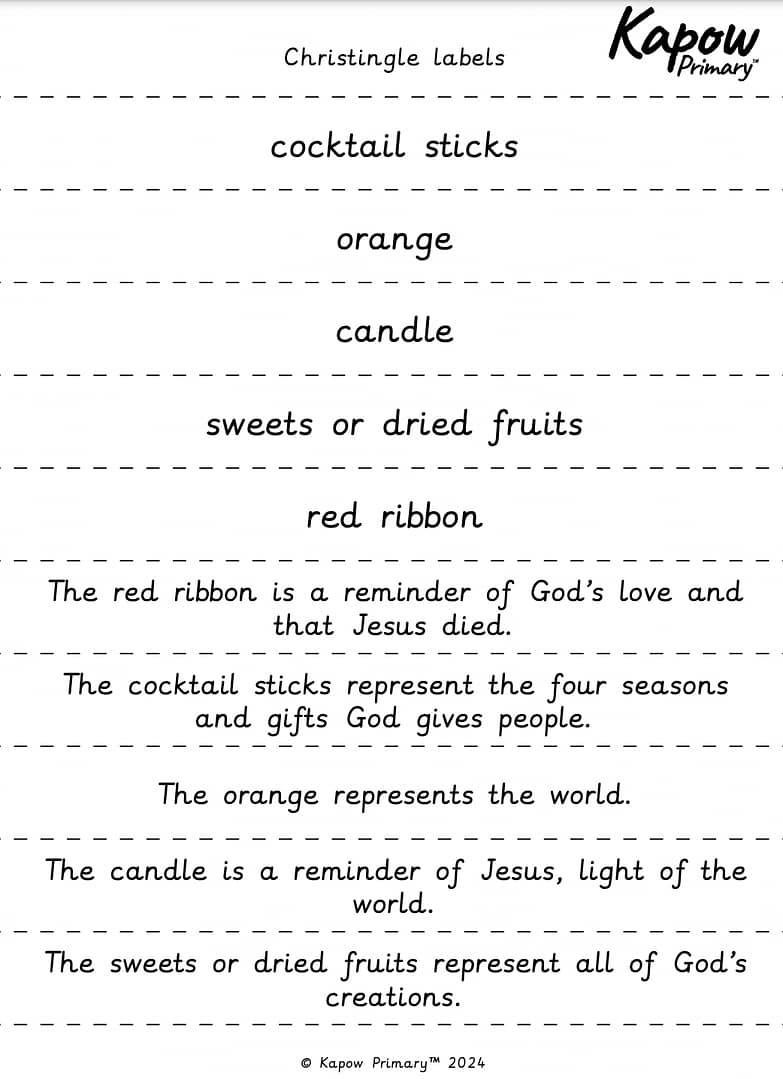
Activity: Christingle labels (optional - see Main event).
Resource: Unit vocabulary (optional - one class set for display).
Resource: Knowledge catcher - Why and how is Christmas celebrated? (one each, see Wrapping up).
The Knowledge organiser provides a visual summary of the key facts and vocabulary for the unit. The children can use it throughout the unit to check keyword meanings or spellings and to help them remember important information when completing an activity. Find further ideas for using the Knowledge organiser to support adaptive teaching here.
The pages have relevant information for each of the Key stages. As knowledge builds from year to year, it is recommended for Key stage 2 that the Knowledge organiser for the previous Key stage is printed on the reverse.
Misconceptions
The children may believe that:
- ‘Only Christians celebrate Christmas’ – it is important to explain that while Christmas is a significant holiday for Christians, many people from different worldviews celebrate it in various ways (e.g. spending time with family, exchanging gifts and enjoying the festive season) even if they do not celebrate it as a religious event.
Lesson organisation
- Work with one small group of children at a time to make their Christingles to allow for better supervision, especially when using sharp toothpicks and candles or glow sticks.
- While one group is making Christingles, the rest of the class can work on the Activity: Christingle.
Optional: invite local community members who follow the Christian worldview to discuss how they celebrate Christmas. For further guidance, see the link: Teacher guidance: External visitors.
If you know a child has specific issues, consider discussing the lesson with them in advance and adapting it as needed. They might benefit from adult support. If problems emerge during the lesson, consult your Senior Leadership Team. It is the teacher’s responsibility to check all resources and lesson content to ensure it is suitable for their class setting.
Sensitivities
- This lesson discusses the Christmas story and how many Christians believe Jesus is the son of God and God on Earth.
- Some religious groups may discourage or even prohibit using religious images and depictions of the human form.
- The use of such images in teaching materials might make some children uncomfortable.
- If appropriate, explain that the images are intended for educational purposes and not for worship.
Health and safety
- When making the Christingles, demonstrate safe handling of sharp items, such as toothpicks, ensuring children are careful not to poke themselves or others.
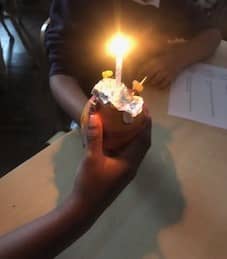
- If using candles, only adults should light the candles and supervise the flame carefully.
- Glow sticks can be used as a safer alternative to candles. They still represent light and children can activate them by bending the sticks to make them glow.
- Explain to children they must use the glow sticks safely and not put them in their mouths or chew on them.
Lesson plan
1: Recap and recall
Presentation: Making connections
Ask the children to discuss how the words and pictures are connected to explain what light can mean at Christmas.
The children may suggest:
- Some Christians describe Jesus as the light of the world.
- Some people light candles during Advent.
- Some people decorate their homes with lights to celebrate Christmas.
2: Attention grabber
Display slide 1 of the Presentation: Christmas lights showing images of Christmas lights at home and in a church.
Presentation: Christmas lights
In pairs, ask the children to discuss which images show what happens in some churches at Christmas and what happens in some people’s homes.
Invite children to drag and drop the images into the boxes. Discuss that some of these such as the advent wreath and Christingle may be used both at church and at home.
- Where can you see lights in the pictures? (Various suggestions may include: Christmas tree lights, Christmas street lights, advent wreath candles and Christingles.)
- Why do you think people use lights to decorate at Christmas?
- How do lights help people feel during Christmas time?
- What might light remind people of?
3: Main event
Display the images on the Presentation: Christmas story and remind the children that these pictures are from the story of Jesus‘ birth found in the Christian Bible. Another name for the Christmas story is the Nativity.
Presentation: The Christmas story
Explain that the first image shows a prophet (people who shared messages from God) called Isaiah. Many Christians believe he was one of the prophets who told people about the birth of God’s son, Jesus, long before it happened.
- What does Immanuel mean? (God is with us.)
- Who called Jesus Immanuel? (Isaiah.)
- Why might Isaiah have told people that the baby will be called Immanuel which means ‘God is with us’? (Because Christian people believe God came to Earth as Jesus.)
As a class, drag and drop the pictures on the Presentation: The Christmas story in the correct order.
Ask the children to work in pairs to tell the Christmas story using the images as a prompt.
Optional – play the Pupil video: The Christmas story to check that the children retold the story correctly.
Pupil video: The Christmas story
- Why is light important in the Christmas story? (Children may suggest: the light from the bright star helped the wise men find baby Jesus.)
Display slide 1 of the Presentation: Christingle and if available, show the children a pre-made one.
Presentation: Christingle
Ask the children:
- Have you seen one of these before?
- Do you know what it is called?
Click the arrow button and explain the following:
- The object is a Christingle.
- A Christingle is a type of decorated candle that some Christians make during Christmas to help them remember Jesus.
- The candles are lit in church services to remember the belief of some Christians that Jesus is the light of the world.
- Some churches collect money for charity during Christingle services to help people.
- Why might people use Christingles to remember Jesus’ birth? (The children may suggest: it is a symbol of light that represents the belief that Jesus is the light of the world.)
Making a Christingle picture
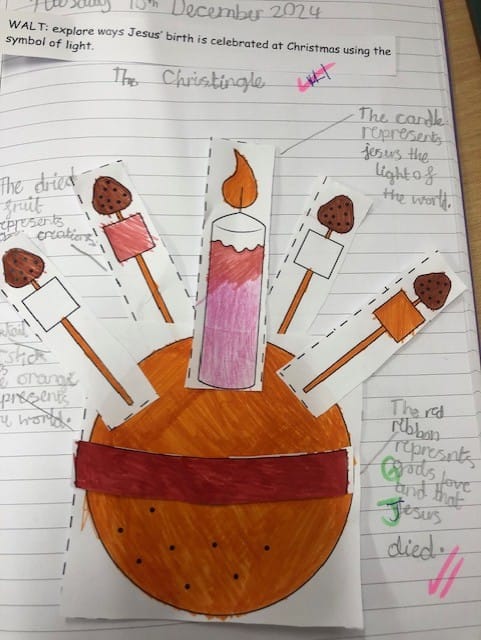
Explain that each part of the Christingle has a special meaning.
Display slide 2 and read aloud what each part of the Christingle represents. Invite children to come up and drag and drop the correct meaning onto each part of the Christingle. Click to reveal the answers.
Hand out the Activity: Christingle (one each), A4 paper, scissors, glue sticks and colouring pencils. Ask the children to cut out each part of the Christingle and stick them onto the A4 paper to create a Christingle.
Making a Christingle (optional)
Hand out the oranges, ribbons, toothpicks, sweets or dried fruit and candles or glowsticks (one set between two).
Model how to make a Christingle using the Resource: How to make a Christingle (one teacher copy). Instruct the children to work in pairs to make their Christingle.
- How is each part of the Christingle connected to Christian beliefs about Jesus?
4: Wrapping up
Provide each child with a copy of the Resource: Knowledge catcher: Why and how is Christmas celebrated?
Ask the children to answer the questions thinking about what they believe and others might believe.
Take feedback.
Presentation: Wrapping up words
- Why and how is Christmas celebrated? (Answers may include: many Christians celebrate the birth of Jesus at Christmas; some people might go to church, spend time with family, give people presents, eat a special meal and decorate their homes.)
Optional: provide each child with the Quiz – pupil answer sheet and display the Unit quiz (see link: Assessment – Religion and worldviews: Why and how do people celebrate Christmas?).
Read the relevant questions aloud and allow the children time to answer. Reveal the answers and ask them to self- or peer-mark their answer sheets.
Extended-mode explainer videos
How to extend your display to view the lesson page and presentation mode simultaneously. Choose your operating system below to watch the video
If you need further support with extending your display,
please contact [email protected].
Extended-mode explainer video: For Mac
Extended-mode explainer video: For Windows
Adaptive teaching
Pupils needing support
Should use the Resource: How to make a Christingle with images when making the Christingle; could only label each part of the Christingle using the Activity: Christingle labels; could have the pieces of the Activity: Christingle pre-cut.
Pupils working at greater depth
Could write a label for the Christingle explaining what each part means; could suggest how the Christingle links with Christian beliefs about Jesus.
Assessing progress and understanding
Pupils with secure understanding indicated by: identifying that light is used to celebrate Christmas; explaining why light is important in the Christmas story; describing how Christians might use light to remember Jesus at Christmas with Christingles.
Pupils working at greater depth indicated by: explaining that light is used to celebrate Christmas by people with different beliefs; explaining why some Christians believe light is important at Christmas and linking this to the meaning of the different parts of a Christingle.
Vocabulary definitions
-
charity
Helping others by giving them what they need.
-
church
A special place where Christians gather for prayer, learning, celebrations and community events.
-
Christian
A person who believes the Bible to be God’s word and follows the teaching and example of his son Jesus.
-
Christian Bible
Scripture believed by many Christians to be the word of God.
-
Christingle
A special type of decorated candle made at Christmas that helps some Christians remember Jesus.
-
Christmas
The Christian celebration of Jesus' birth.
-
God
A powerful, non-human being.
-
Immanuel
A Hebrew name meaning 'God with us'.
-
Jesus
The man Christians believe to be God's son.
-
Nativity
Another name for the Christmas story.
-
religion
A set of beliefs and teachings a person might follow.
-
prophet
Someone who receives messages from or speaks to God, often about the future.
In this unit
Assessment - R&W Y2: Why is light important people?

Lesson 1: Why are lights used at special times?
Lesson 2: Who were Rama and Sita?
Lesson 3: Why and how are lights used during Diwali?
Lesson 4: How are candles used during Advent?
Lesson 5: What do candles symbolise at Hanukkah?
Lesson 6: Why are lights used symbolically?
Year 2: What can light mean at Christmas?

Maintained by: Kapow Primary team
Last update: 18th March, 2026
Religion and worldviews
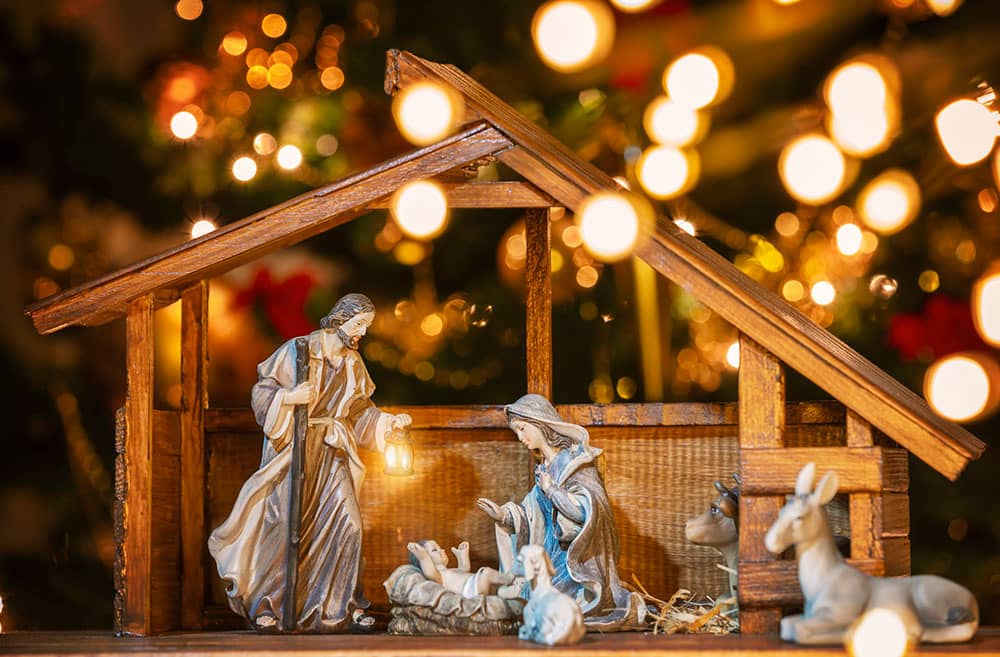
Lesson 4: Why do many Christians celebrate Christmas?
Investigating why many Christians celebrate Christmas by exploring the story of Jesus’ birth.
Religion and worldviews
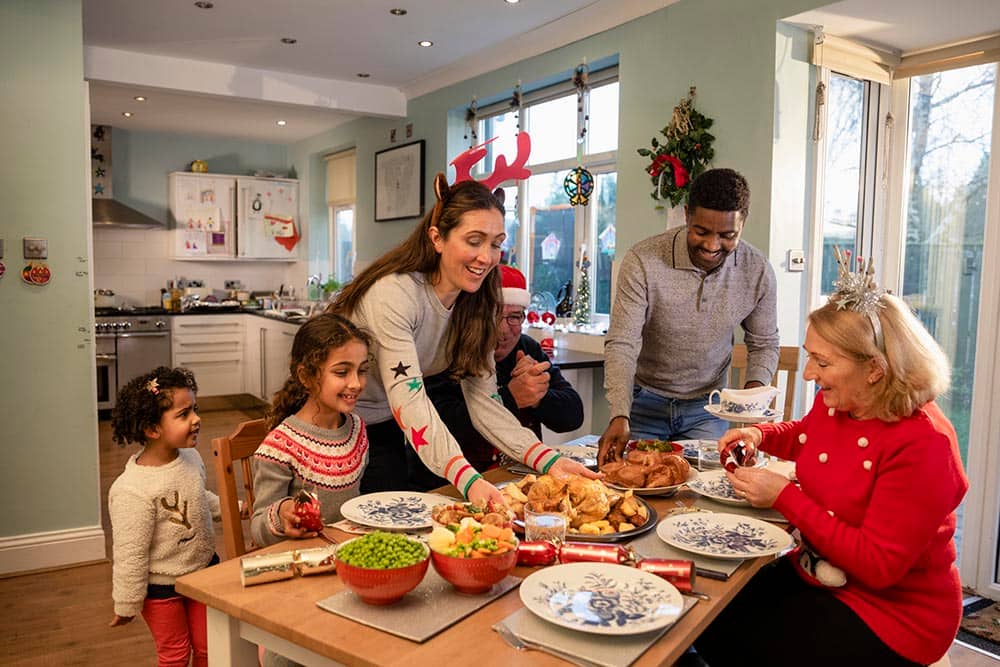
Lesson 5: How do some Christian people celebrate Christmas?
Discussing how some Christians celebrate Christmas by making links to the story.
Art and design
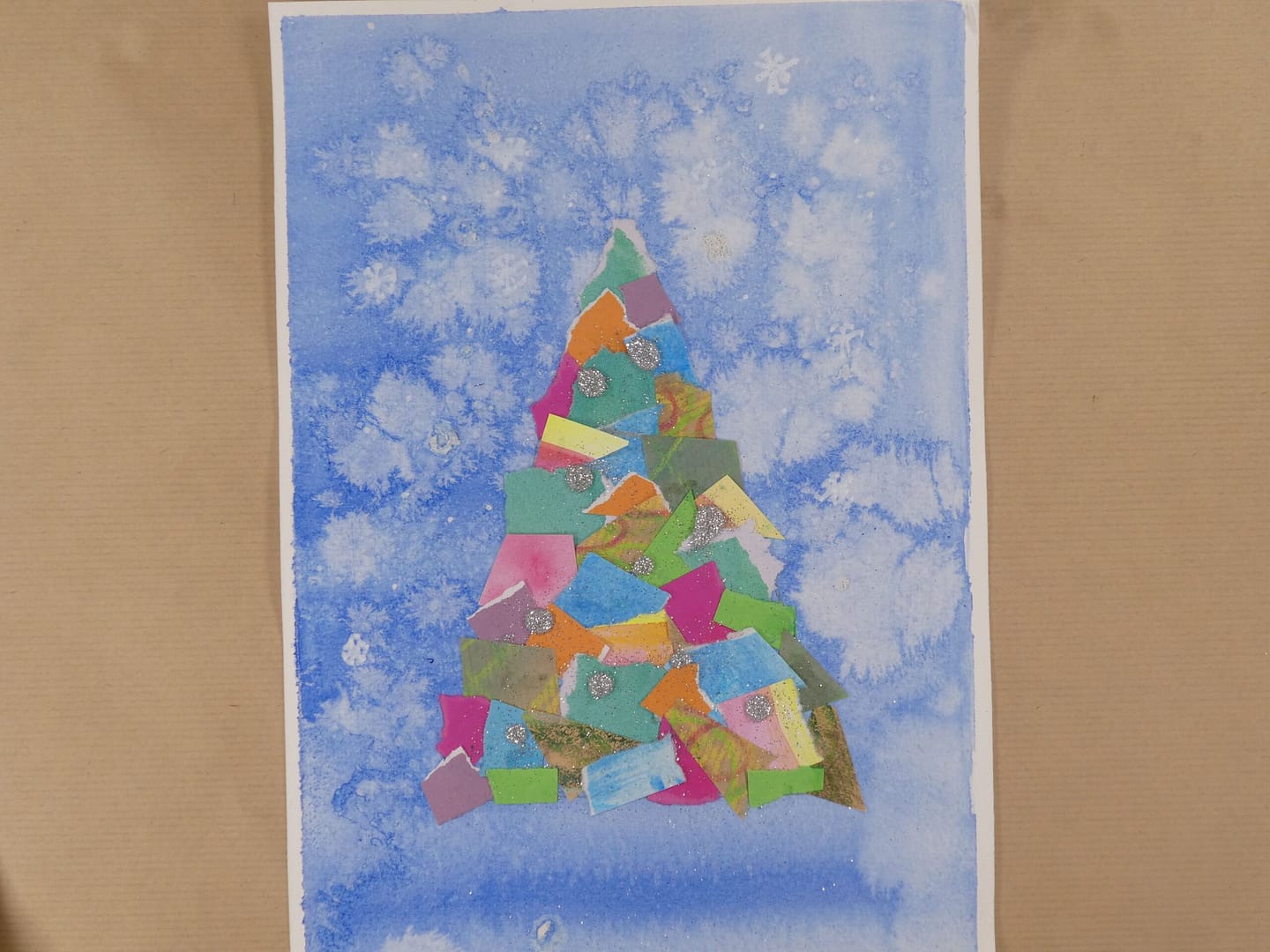
Lesson 4: Collage creation – Christmas themed
Composing and arranging collage materials to create Christmas themed artwork.
