




Learning objective
- To explore the similarities and differences between two physical environments.
Success criteria
- I can identify the differences between

This content is for subscribers only. Join for access today.
National curriculum
Geography
Locational knowledge
Pupils should
This content is for subscribers only. Join for access today.
Cross-curricular links
Computing
Pupils should be
This content is for subscribers only. Join for access today.
Before the lesson
This content is for subscribers only. Join for access today.
Lesson plan
Recap and recall
Display the Presentation: Using the Knowledge organiser and use the activity to recap learning from the previous lesson.
This content is for subscribers only. Join for access today.
Extended-mode explainer videos
How to extend your display to view the lesson page and presentation mode simultaneously. Choose your operating system below to watch the video
If you need further support with extending your display,
please contact [email protected].
Extended-mode explainer video: For Mac
Extended-mode explainer video: For Windows
Adaptive teaching
Pupils needing extra support
Could input their ideas into a Venn diagram to clearly see the similarities and differences between the two locations.
Pupils working at greater depth
Should consider the settlement patterns they can observe using Google Earth (linear, nucleated or dispersed) and describe the land use with terminology learnt in previous units (recreational, residential, transport, agricultural and commercial).
This content is for subscribers only. Join for access today.
Assessing progress and understanding
Pupils with secure understanding indicated by: identifying characteristics of two
This content is for subscribers only. Join for access today.
Vocabulary definitions
-
climate
Long-term weather conditions in a specific region.
-
comparison
To find the similarities and differences between two or more things.
This content is for subscribers only. Join for access today.
Example work
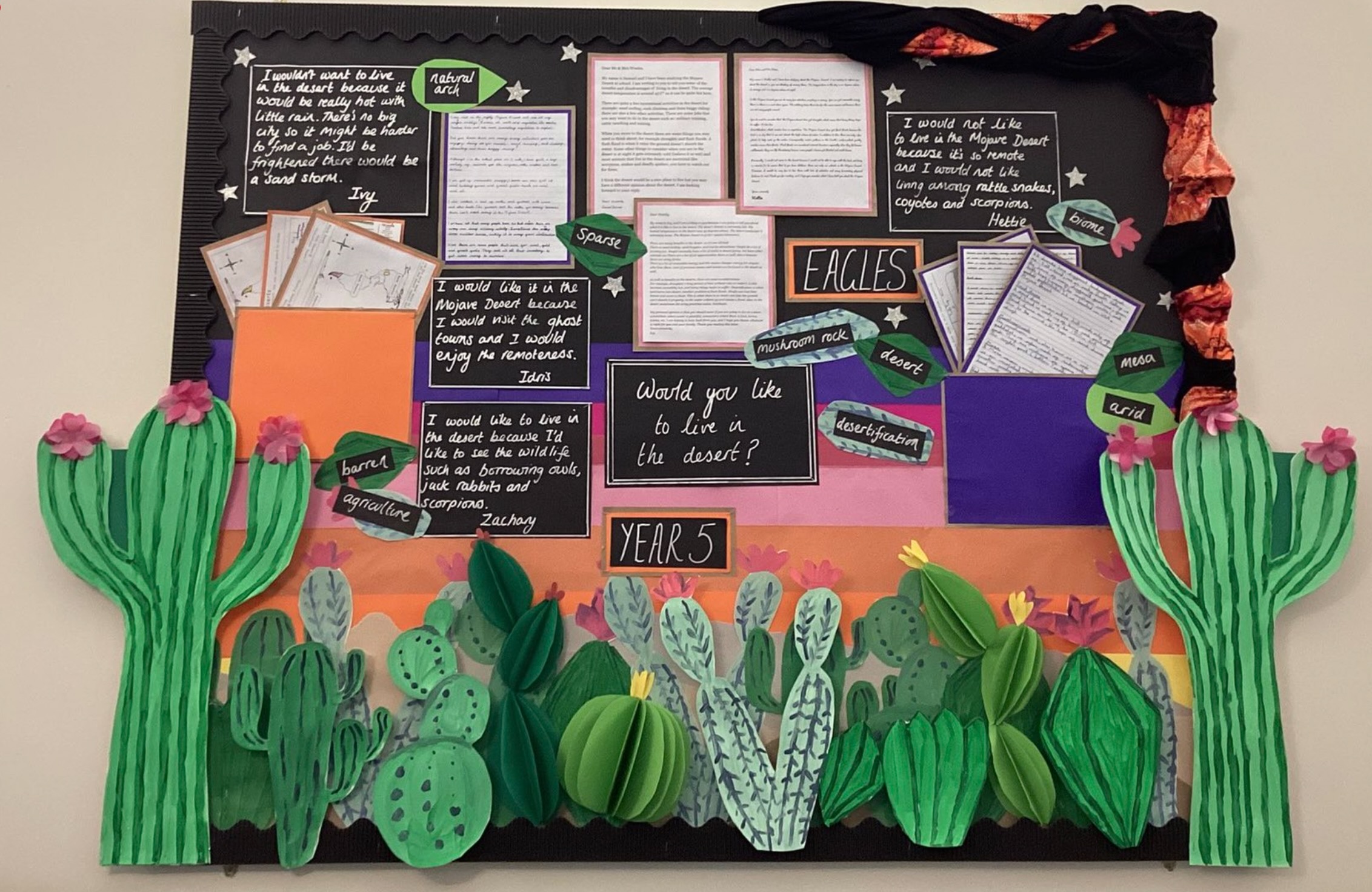
Sissinghurst Church of England primary School, Cranbrook
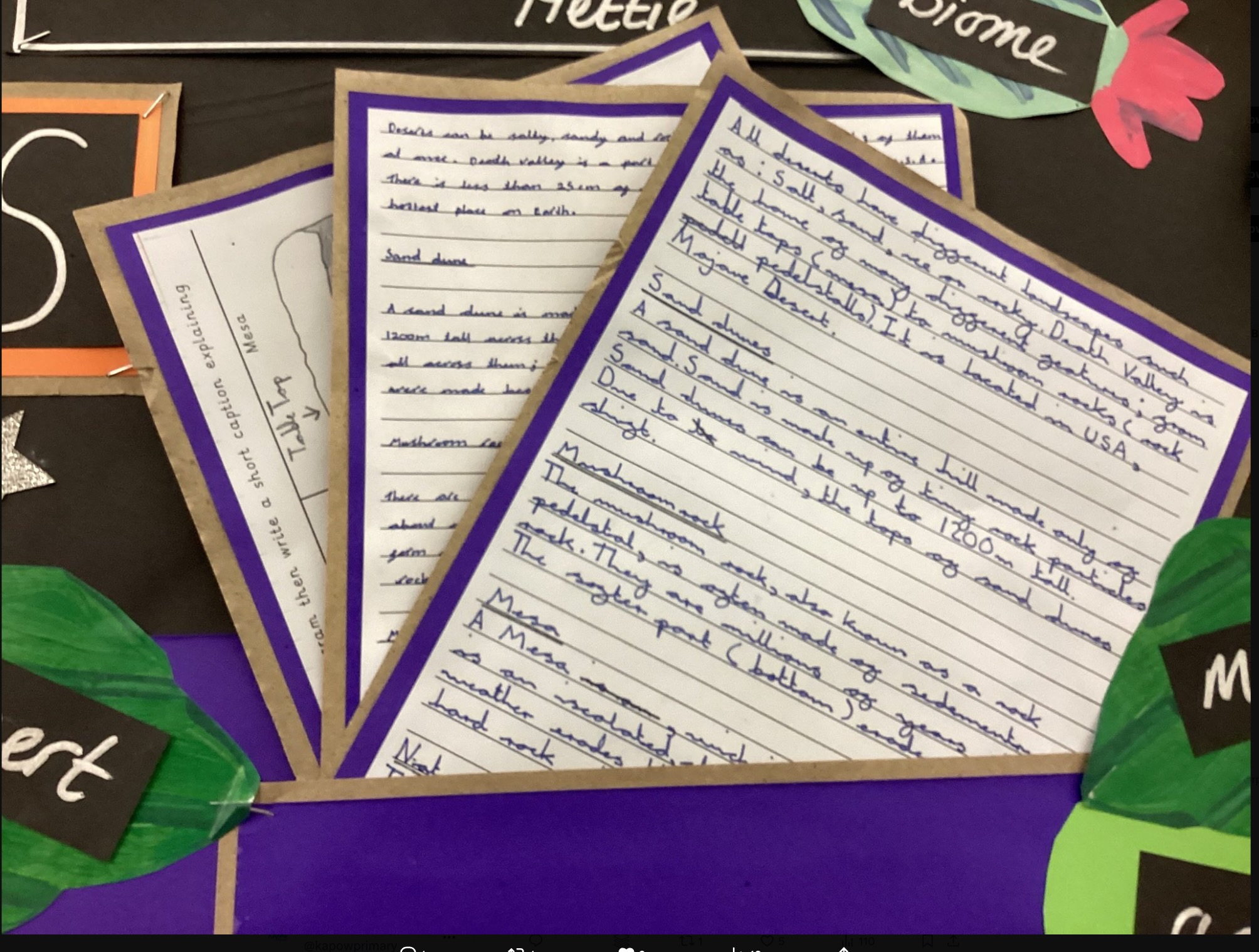
Sissinghurst Church of England primary School, Cranbrook
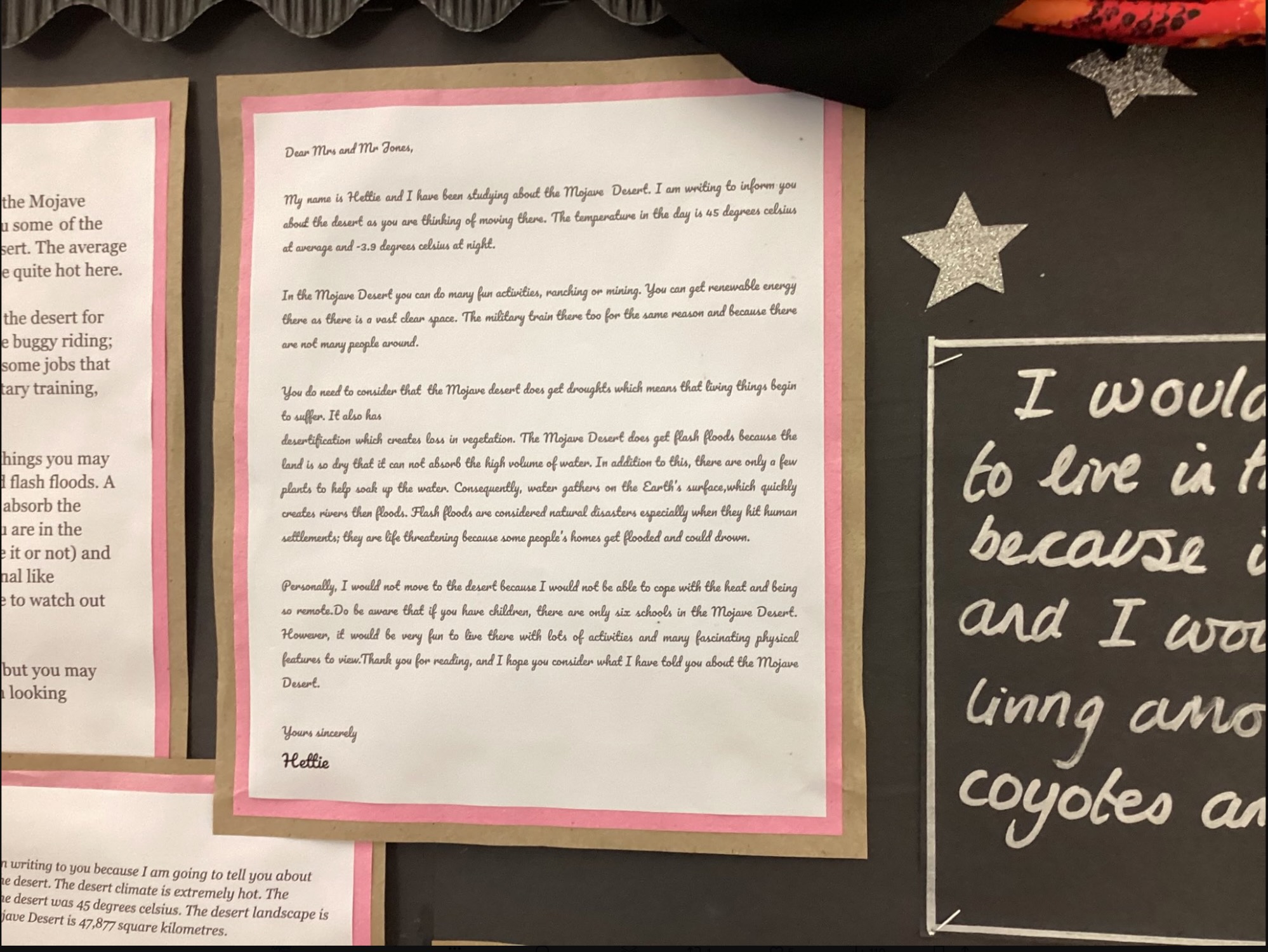
Sissinghurst Church of England primary School, Cranbrook
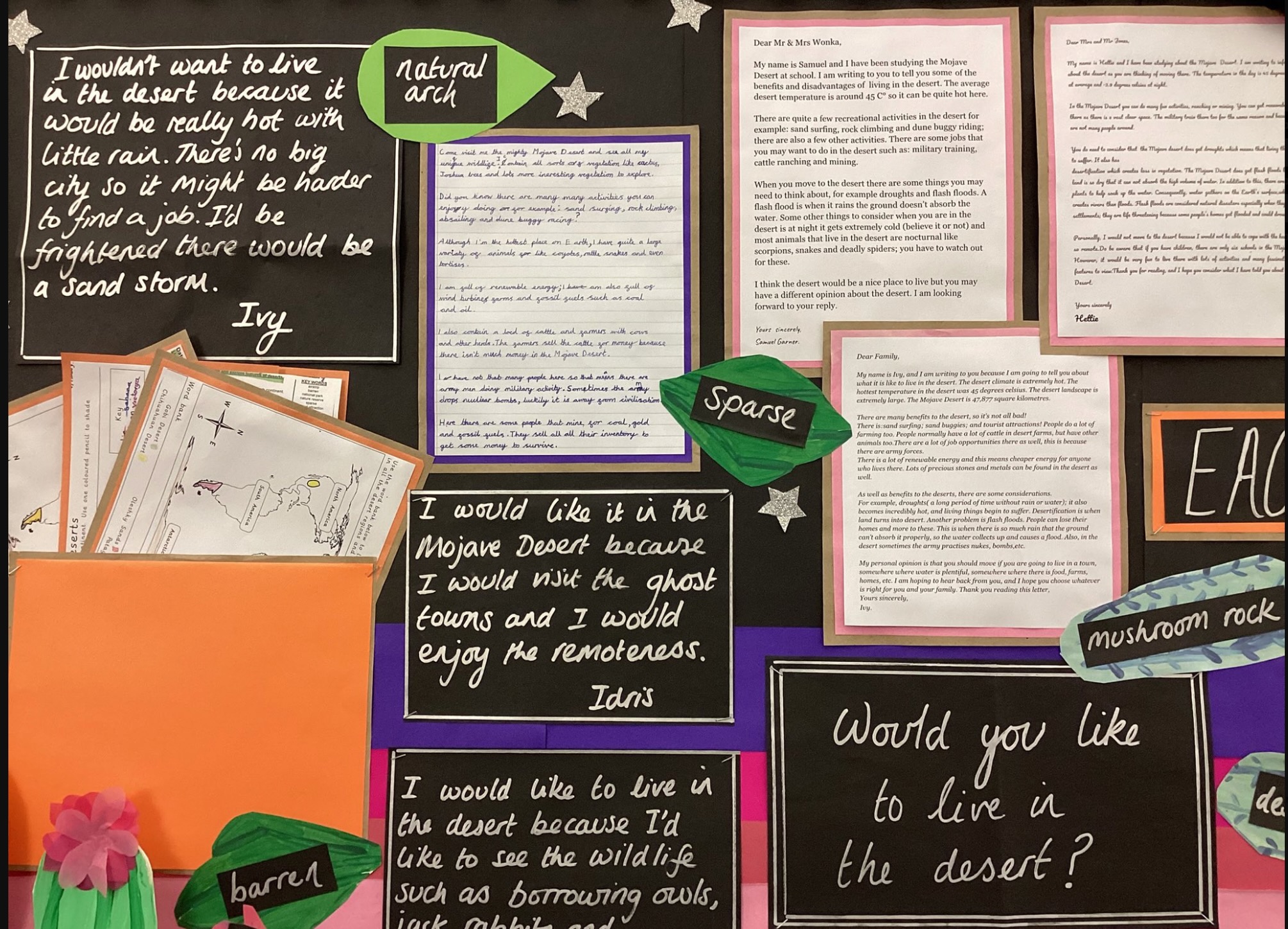
Sissinghurst Church of England primary School, Cranbrook
This content is for subscribers only. Join for access today.
In this unit
Assessment - Geography Y5: Would you like to live in the desert?

Lesson 1: What is a hot desert biome?
Lesson 2: Where are deserts located?
Lesson 3: What physical features are found in a desert?
Lesson 4: How can people use deserts?
Lesson 5: What are the threats to deserts?
Lesson 6: Would you like to live in the desert?
Maintained by: Kapow Primary team
Last update: 1st January, 2026
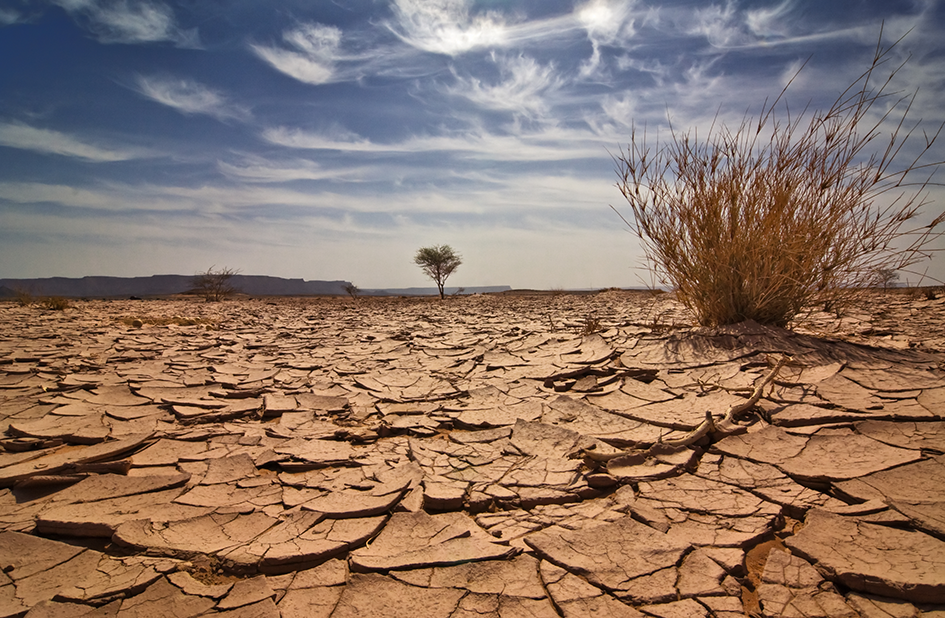
Lesson 1: What is a hot desert biome?
Locating and describing hot desert biomes.
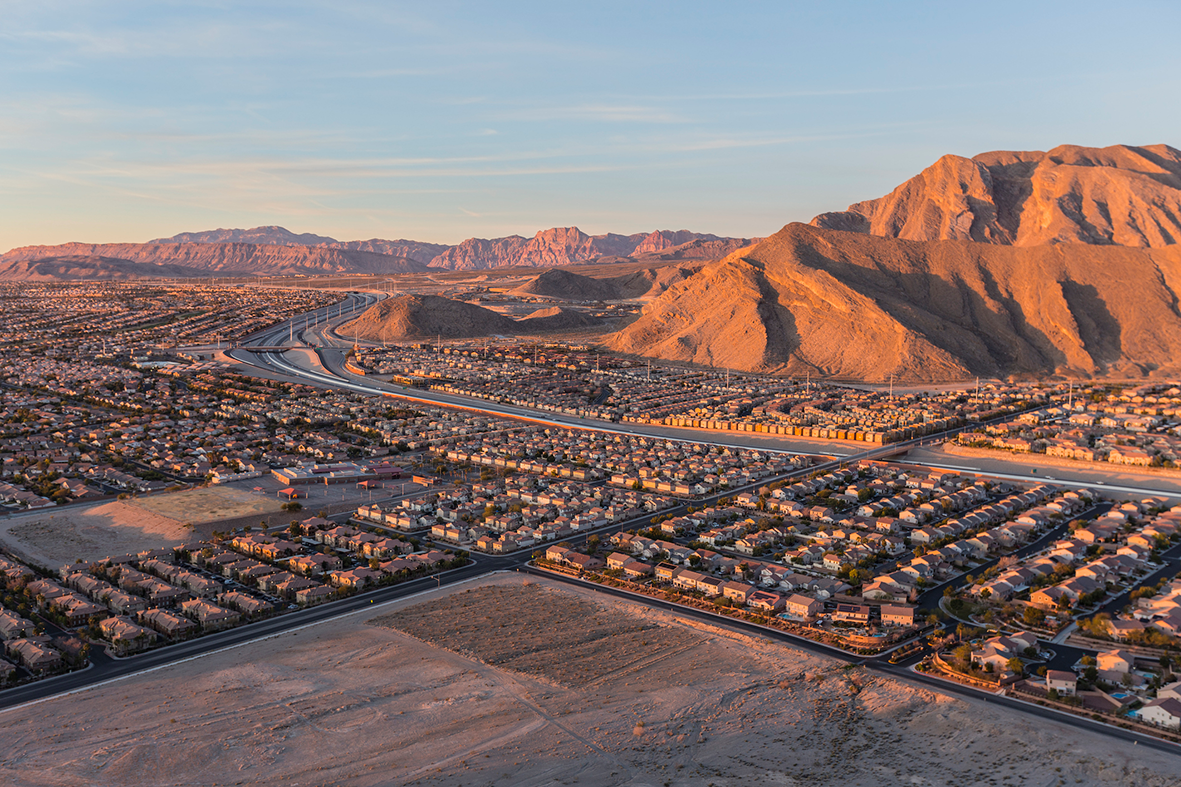
Lesson 4: How can people use deserts?
Exploring how humans use the Mojave Desert.
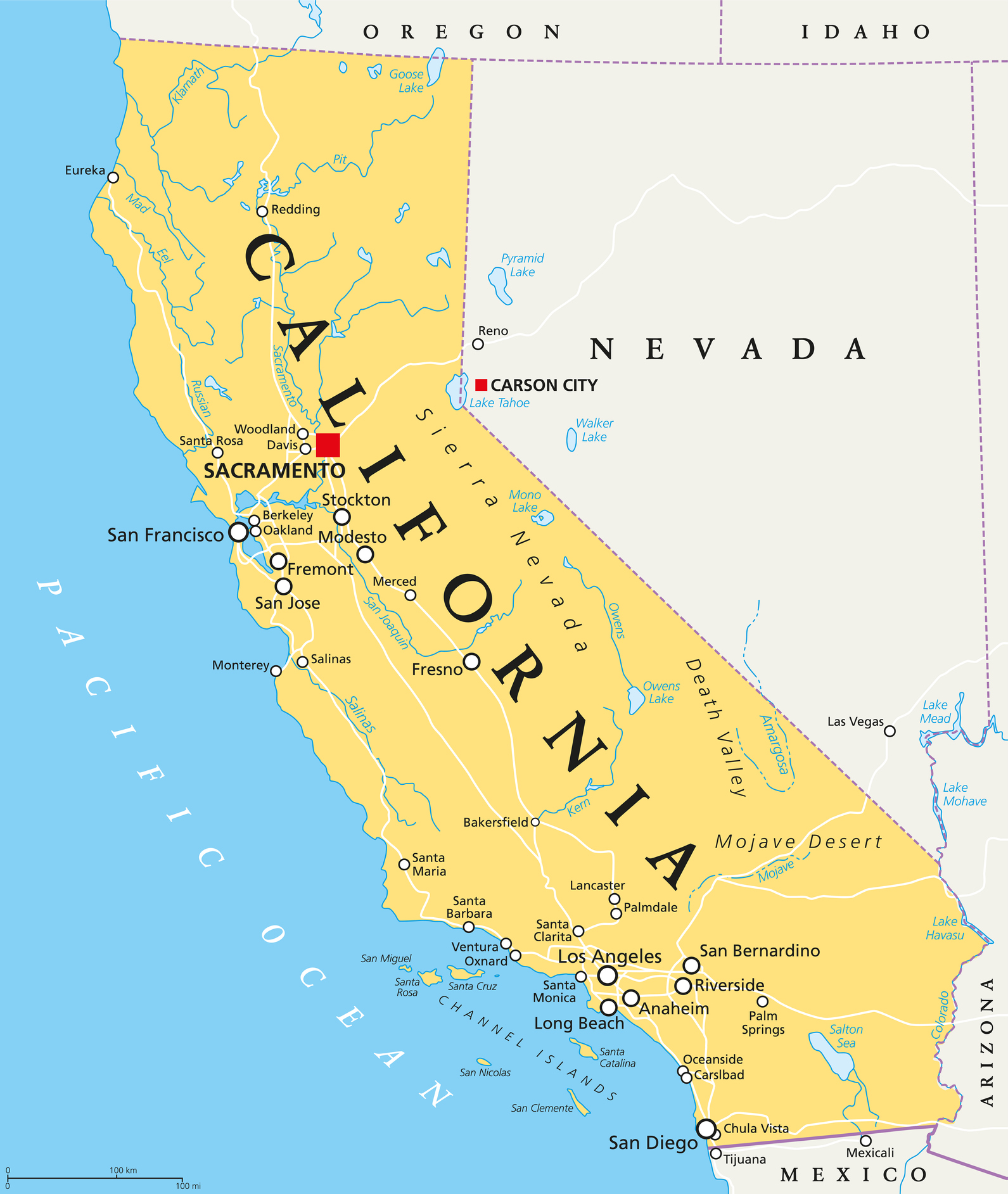
Lesson 2: Where are deserts located?
Locating global deserts with a closer look at the location and features of the Mojave...

Assessment – Geography Y5: Would you like to live in the desert?
Assessment quiz and Knowledge catcher for use at the start and/or end of the unit...
