




- Subjects >
- Science >
- Key stage 2 >
- Year 4 >
Introducing 'Making connections' in Science

Unit outcomes
Pupils who are secure will be able to:
- Recall key knowledge from previous units.
- Apply knowledge in new contexts.
When working scientifically, pupils who are secure will be able to:
- Carry out a full scientific enquiry.
For more information about this unit, please see the Teacher video: Making connections – How does the flow of liquids compare? in Lesson 1: Investigating liquids – Planning.
Suggested prior learning
This unit revises and builds on learning from the previous Year 4 Science units.Lessons
Lesson 1: Investigating liquids – Planning
Lesson 2: Investigating liquids – Gathering data
Lesson 3: Investigating liquids – Analysing, concluding and evaluating
Lesson 4: Investigating liquids – Extending
Lesson 5: Investigating liquids – Presenting
Key skills
This unit revisits the

This content is for subscribers only. Join for access today.
Key knowledge
This unit revises the
This content is for subscribers only. Join for access today.
Key vocabulary
bar chart
battery/cell
This content is for subscribers only. Join for access today.
Equipment list
Equipment needed across all lessons in this unit.
This list does not include equipment which is usually readily available in the classroom (e.g pencils, A4 paper etc)
 Download
Full equipment list for the subject
Quantities marked × will update. Items without quantities are unaffected
-
Examples of solids (e.g. a rubber, a marble, a metal pencil sharpener, etc.)
×8 -
Examples of liquids in plastic cups (water, milk, vinegar, vegetable oil, cream, maple syrup, honey, double cream and washing-up liquid)
×8 -
An example of a gas (a balloon labelled as ‘air’)
×8 -
Plastic or paper bowl filled with water
×8 -
Plastic toy animals
×8 -
Sunflower oil mixed with black food colouring
×8 -
Cleaning materials (sponges, paper towels, cotton wool, washing up liquid, droppers or spoons)
×8 -
Food colouring
×8 -
Plastic trays
×8 -
Yellow sticky notes
×15 - Highlighters ×30
- Permanent markers ×30
-
Plastic pipette droppers
×8 - Paper towels ×30
- Poster paper ×30
- Flipchart ×1
- Books
-
Stopwatches
×8 - Online timer ×8
- Calculator ×30
-
A device that can record slow-motion video
×8
This content is for subscribers only. Join for access today.
Related content
Unit resources


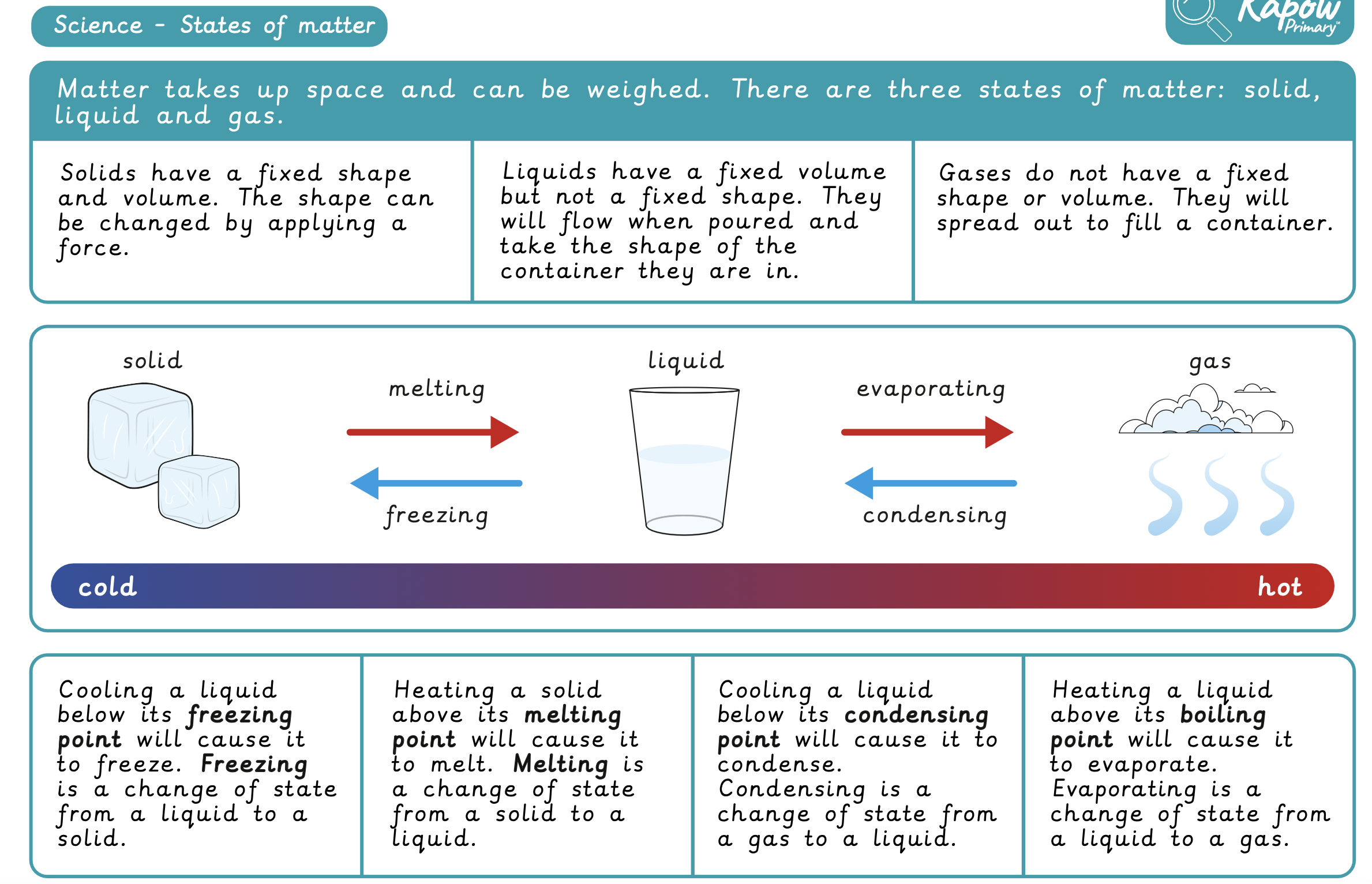
Y4 Science knowledge organisers
A complete collection of the Year 4 Knowledge organisers referred to in this unit. The Making connections units do not…
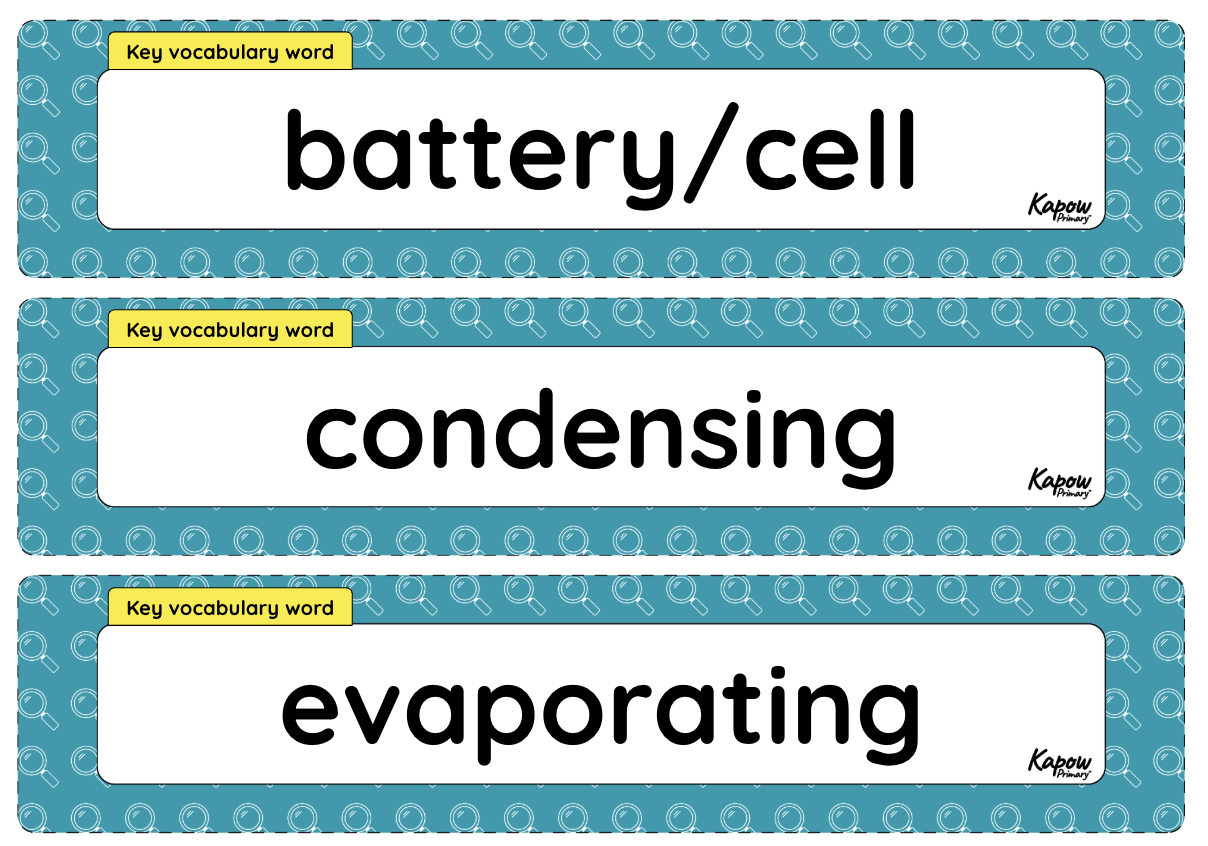
Vocabulary display: Making connections: How does the flow of liquids compare?
A display version of the key vocabulary from the Making connections: How does the flow of liquids compare? unit.
Subject resources
This content is for subscribers only. Join for access today.
Cross-curricular opportunities
English: Reading, Writing – composition.
Maths: Measurement, Statistics, Number (fractions).
British values: Mutual respect.
Build on the learning
Materials: Mixtures and separation
Get started
