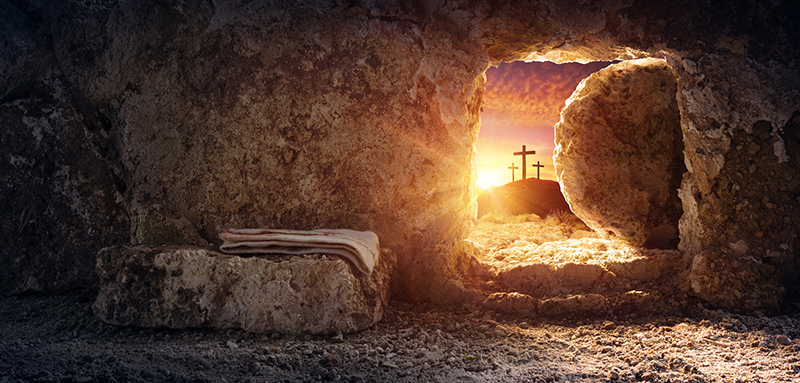
Optional Easter lesson: What might the Easter story suggest about life after death?
A Year 5 optional lesson exploring the symbolism of Jesus’ resurrection to consider beliefs about death.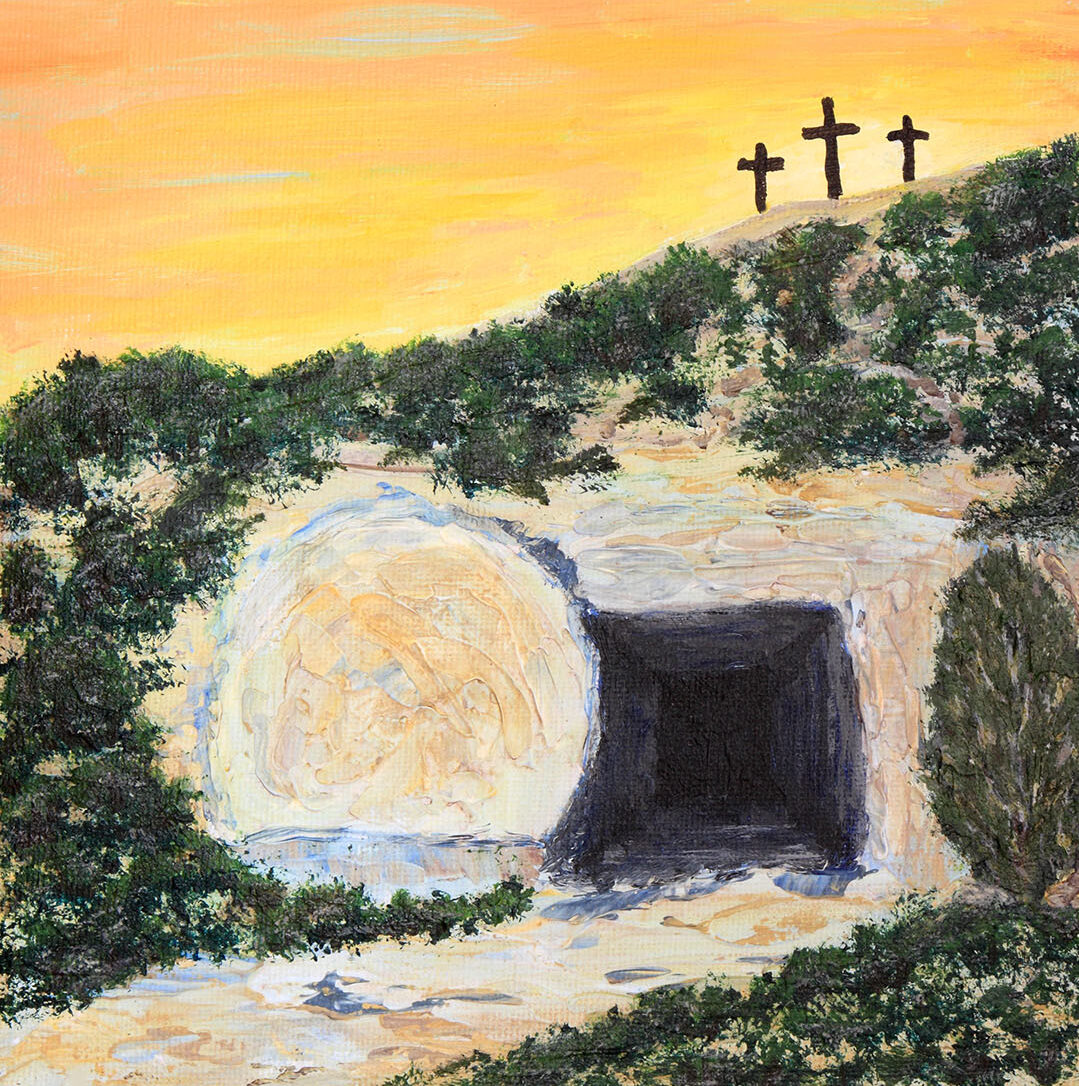
Learning objective
- To compare Jesus’ resurrection and beliefs about eternal life by exploring Bible passages.
Success criteria
- I can discuss the significance of Jesus’ death and resurrection in the Easter story.
- I can identify some Christian beliefs about life after death.
- I can describe how these beliefs can influence Christian life.
Before the lesson
Check all images, videos, links and presentation slides are suitable for your class.
- Presentation: Easter quiz.
- Presentation: Reconnecting with God.
- Presentation: Eternal life.
- Presentation: Wrapping up words.
Highlighters (two per group of four).
A flipchart.
Sticky tack (see Main event).
Christian Bibles (optional - see Adaptive teaching).
The Knowledge organiser provides a visual summary of the key facts and vocabulary for the unit. The children can use it throughout the unit to check keyword meanings or spellings and to help them remember important information when completing an activity.
Find further ideas for using the Knowledge organiser to support adaptive teaching here.
The pages have relevant information for each of the Key stages. As knowledge builds from year to year, it is recommended that the Knowledge organiser for the previous key stage be printed on the reverse for Key stage 2.
Subject knowledge
Easter
Jesus died on the cross on a day called Good Friday and was resurrected (came back to life) on Easter Sunday as part of God’s plan to save humanity from sin (salvation).
The Easter story is a crucial part of this belief.
The resurrection of Jesus is remembered at Easter, and it celebrates victory over sin and death, offering believers hope of eternal life.
Prophecies and the 'divine voice'
In biblical prophecy, it is common for the prophets to speak in the first person present tense as it conveys the authority and certainty of the message.
This is often called the ‘divine voice’.
The use of tense implies that the events have already happened rather than saying they will happen in the future.
The Last Supper
- In English translations of the Bible, it explains how Jesus shared bread with his disciples at the Passover meal.
- According to Jewish law, leavened food (food made with a raising agent such as yeast) would not have been eaten at Passover so it is likely that this was an unleavened bread similar to flatbread or crackers.
- In the Pupil video: Holy week just the word bread is used reflecting the language used in English translations of the Bible.
Misconceptions
The children may believe that:
‘Easter is about chocolate eggs and bunnies’ - it is important to explain that while Easter is celebrated in different ways across cultures, its religious significance for many Christians focuses on the death and resurrection of Jesus. The symbols of eggs and new life are often used to represent the Christian message of hope.
‘Easter is only celebrated by Christians’ - it is helpful to explain that while Easter is an important religious festival for many Christians, some people with different worldviews also participate in cultural or family traditions during this season, such as egg hunts or spring-themed celebrations.
‘Jesus stayed on Earth after coming back to life’ - explain that many Christians believe Jesus returned to Heaven to be with God.
‘If you are Christian, you will be resurrected and come back to life’ - explain that many Christians believe Jesus is special because he is God’s son and most believe that after death, rather than the physical body, a person’s soul will be reunited with God, therefore having eternal life.
Lesson organisation
External visitors
Members of a local Christian community could be invited to share their thoughts on how Easter relates to the concept of death and what it means for them.
- For further guidance, see the link: Teacher guidance: External visitors.
If you know a child has specific issues, consider discussing the lesson with them in advance and adapting it as needed. They might benefit from adult support.
If problems emerge during the lesson, consult your Senior Leadership Team.
It is the teacher's responsibility to check all resources and lesson content to ensure it is suitable for their class setting.
Sensitivities
Death
This lesson explores Jesus' crucifixion, death and resurrection.
When teaching these themes, present them sensitively and age-appropriately, avoiding graphic details about death and punishment. Focus instead on the broader message of hope and new life.
Death can be a sensitive topic that may personally affect some children. It is important to approach this topic with compassion and consideration for everyone's experiences and emotions.
Remind the children that these are Christian beliefs held by some people and that different cultures and religions have their own interpretations of death and the afterlife.
Explain the importance of respecting all views, even those that differ from their own or that they do not agree with.
The wonder box
Remind children that they can use the wonder box if they have questions or concerns they would rather not share in front of the class.
The wonder box gives the children the opportunity to share questions they may not feel comfortable asking in class. More challenging questions can be researched and additional time can be given to consider them. Children who may find writing questions challenging could either use a recording device or ask an adult to scribe for them.
- See: Teacher video: The wonder boxfor information on how to create and use this resource.
Lesson plan
Display the Presentation: Easter quiz.
Read the questions aloud and ask the children to answer the questions on their mini whiteboards.
Optional: Play the Pupil video: Holy week if children are not familiar with or cannot remember the events.
Stick or pin the words from the Resource: Concept words in different areas around the classroom.
Ask children to move to the word around the room that best represents their ideas of death. Invite some children to share why they chose it.
Then ask the children to move to the word around the room that best represents what they think a Christian's ideas of death might be.
As a class, discuss the following question:
- How might parts of the Easter story influence some Christians' ideas about death? (The children may suggest: Jesus died and returned to God like some Christians believe will happen when they die; Jesus forgave everyone before he died and many Christians believe in forgiveness and judgement.)
Display the Presentation: Reconnecting with God and read out the quote from a member of a Christian community.
- What do you think 'eternal life' might mean?
Explain that many Christians believe 'eternal life' means that after someone dies, their soul will live with God in heaven forever. Ensure the children understand that this does not mean they will never die or that their body will come back to life after death.
Display the Presentation: Eternal life showing images of Jesus’ resurrection and later ascension.
Remind the children that because there are no known descriptions of Jesus from his time, all images of Jesus are based on later artists’ ideas and interpretations of how they believe events may have looked at the time.
Ask the children to discuss what is happening at this point in the Easter story.
Take feedback and explain that the images show artists' interpretations of Jesus' crucifixion and his resurrection. Ensure the children understand that 'crucifixion' refers to being nailed or tied to a cross as a form of execution and 'resurrection' refers to the act of coming back to life.
- What do you think this might suggest about the way some Christians view death?
Take feedback and explain that many Christians believe Jesus’ death and resurrection are proof of eternal life after death.
Divide the children into groups of four and hand out a copy of the Activity: Eternal life and a couple of highlighters to each group.
Explain that in their groups, they will read through different Bible passages and quotes to find out what eternal life might mean to some Christians and what the Easter story might suggest about life after death.
Take feedback using the following questions to guide the discussion:
- How might the idea of eternal life be comforting to some Christians? (The children may suggest: they may feel comforted knowing they will be safe and with God when they die or knowing they will be reunited with loved ones one day.)
- How could the events of Holy Week influence how some Christians live their life? (Answers include: it might help them to be forgiving, kind and show mercy to others as Jesus did; it may help them to be positive and know things will all be okay in the end through hope; they may want to be part of a community and make others feel welcome and safe.)
Explain to the children that at Easter time, Christians celebrate the day Jesus died on Good Friday. Ask them to discuss in pairs why they think a day about the death of someone is named ‘good’ and take feedback.
Use slides 2–6 of the Presentation: Eternal life to explain that many Christians believe Jesus' death and the events of Holy Week fulfilled ancient prophecies.
- Why might many Christians believe these prophecies support the idea that Jesus' death was 'good'? (The children might suggest: it showed them that he was God and his death was part of God's plan; it showed them God's power; they understood that Jesus had to die to save them.)
Explain that for many Christians, Jesus' death on Good Friday symbolises sacrifice, restoring humanity’s relationship with God, hope and forgiveness.
Remind the children that for forty days after his resurrection, Christians believe Jesus spent time on Earth with his disciples before returning to God in heaven. Ask them to discuss what he might have said to them in pairs and take feedback.
Hand out the Activity: Messages (one each) and ask the children to write down a message Jesus may have shared with his disciples.
Encourage the children to think about different parts of Holy Week, the symbolism of different events and what might be comforting for them to know.
Display the Resource: Jesus' messages on the flipchart and invite some children to share their ideas and stick them around the image.
Optional - create a display in the shape of a cross with the children's messages, categorising them into messages about death and returning to God, if applicable.
Display the Presentation: Wrapping up words.
Ask the children to discuss in pairs:
- Based on the Easter story, what might some Christians think about life after death? (Answers may include: some Christians may believe they will also live forever with God after they die; knowing Jesus returned to God may help some Christians to not be afraid of dying; the Easter story may suggest that souls live on with God; some Christians may feel comfort knowing they will be reunited with loved ones again in heaven.)
Full-screen slides, ready for your classroom, chosen by you.
- To compare Jesus’ resurrection and beliefs about eternal life by exploring Bible passages.
We value your feedback
We welcome your feedback to help make our resources even better
In this unit