




Unit outcomes
Pupils who are secure will be able to:
- Give a brief explanation of the digital revolution and/or remember key examples.
- Suggest a feature from the virtual micro:bit that is suitable for the product.
- Write a program that initiates a flashing LED panel, or another pattern, on the virtual micro:bit when a button is pressed.
- Identify errors, if testing is unsuccessful, by comparing their code to a correct example.
- Explain the basic functionality of their finished program.
- Suggest key features for a way to attach the product to the user, with some consideration for the overall theme and the user.
- Create annotated diagrams to help illustrate how their product is worn.
- Describe what is meant by ‘point of sale display’ with an example.
- Follow basic design requirements using computer-aided design, drawing at least one shape with a text box and bright colours, following a demonstration.
- Evaluate their design using a focus group.
Suggested prior learning
Electrical systems: Electric poster
Get started
Lessons
Lesson 1: Evaluating wearable technology
Lesson 2: Light-up wearables
Lesson 3: Programming wearable technology
Lesson 4: Product concept
Lesson 5: Point of sale displays
Lesson 6: Focus groups
Key skills
- Problem solving

This content is for subscribers only. Join for access today.
Key knowledge
- To understand
This content is for subscribers only. Join for access today.
Key vocabulary
analogue
analyse
This content is for subscribers only. Join for access today.
Equipment list
Equipment needed across all lessons in this unit.
This list does not include equipment which is usually readily available in the classroom (e.g pencils, A4 paper etc)
 Download
Full equipment list for the subject
Quantities marked × will update. Items without quantities are unaffected
- Tablet/cameras ×15
- A toy car ×8
- Wearable technology examples ×1
- Non-digital and digital technology examples ×1
The equipment below is optional
- BBC micro:bits with battery packs of MI:power coin cell boards ×15
- Micro usb cables ×15
This content is for subscribers only. Join for access today.
Related content
Unit resources


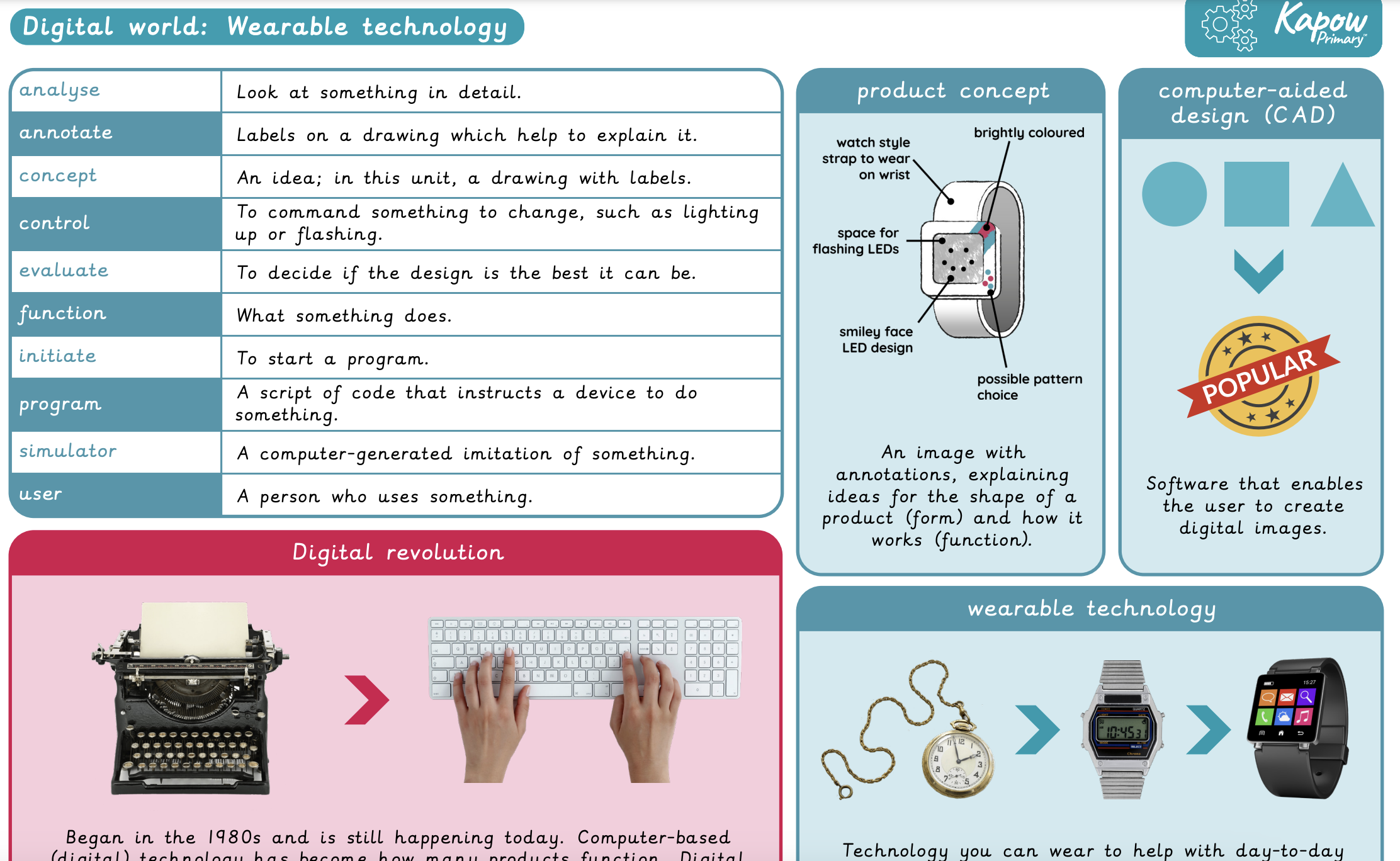
Knowledge organiser – D&T Y3: Digital world: Wearable technology
A visual summary document to support pupils' learning in the Y3 Wearable technology unit.
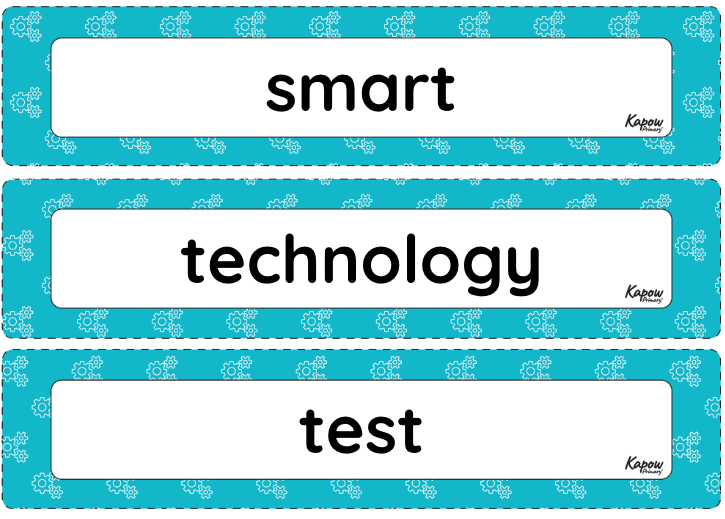
Vocabulary display – D&T Y3: Digital world: Wearable technology
A display version of the vocabulary from the unit 'Wearable technology'.
Subject resources
This content is for subscribers only. Join for access today.
Cross-curricular opportunities
History: Changes within living memory.
Computing: Design, write and debug programs that accomplish specific goals.
Build on the learning
Digital world: Mindful moments timer
Get started
Popular content
- Design and technology: Curriculum portal
- Design and technology: Curriculum information
- Y3 > Structures: Constucting a Castle > Lesson 3: Nets and Structures
- Y3 > Mechanical Systems: Pneumatic Toys > Lesson 1: Exploring Pneumatics
- Y4 > Textiles: Fastenings > Lesson 2: Designing my Book Sleeve
- Y4 > Electrical Systems: Torches > Lesson 3: Torch Design
