




- Subjects >
- Geography >
- Key stage 2 >
- Year 4 >
Unit outcomes
Pupils who are secure will be able to:
- Identify water stores and processes in the water cycle.
- Describe the three courses of a river.
- Name the physical features of a river.
- Name some major rivers and their location.
- Describe different ways a river is used.
- List some of the problems around rivers.
- Describe human and physical features around a river.
- Identify the location of a river on an OS map.
- Make a judgement on the environmental quality in a river environment.
- Make suggestions on how a river environment could be improved.
Lesson 6 involves fieldwork in a river or similar marine environment (e.g. a large lake or canal). It is important to risk-assess the proposed route taking into account any relevant school risk assessment policies and procedures. Refer to the Before the lesson section in Lesson 6 to prepare for this lesson. Please be aware this lesson may take longer than 1 hour.
Suggested prior learning
Where does our food come from?
Get started
Lessons
Lesson 1: What is the water cycle?
Lesson 2: How is a river formed?
Lesson 3: Where can we find rivers?
Lesson 4: How are rivers used?
Lesson 5: What can we find out about our local river?
Lesson 6: What features does our local river have?
Key skills
- Locating some

This content is for subscribers only. Join for access today.
Key knowledge
- To know
This content is for subscribers only. Join for access today.
Key vocabulary
condensation
delta
This content is for subscribers only. Join for access today.
Equipment list
Equipment needed across all lessons in this unit.
This list does not include equipment which is usually readily available in the classroom (e.g pencils, A4 paper etc)
 Download
Full equipment list for the subject
Quantities marked × will update. Items without quantities are unaffected
- Sticky notes
- Colouring pencils
-
Sealable plastic bags
×15 - Pens ×15
- Sticky tape
- A variety of materials for the class to build a river model (for example, scissors, glue, sellotape, aluminium foil to represent water, tissue paper in green, brown, and blue, recycled and washed plastic containers, recycled cardboard boxes, construction toys such as Lego, wool, string, rope, and foil containers). ×8
- Stickers ×30
- Atlas ×15
- A2 sugar paper ×8
- Felt tip pens ×30
- Clipboards ×30
The equipment below is optional
- Food dye As needed
This content is for subscribers only. Join for access today.
Related content
Unit resources


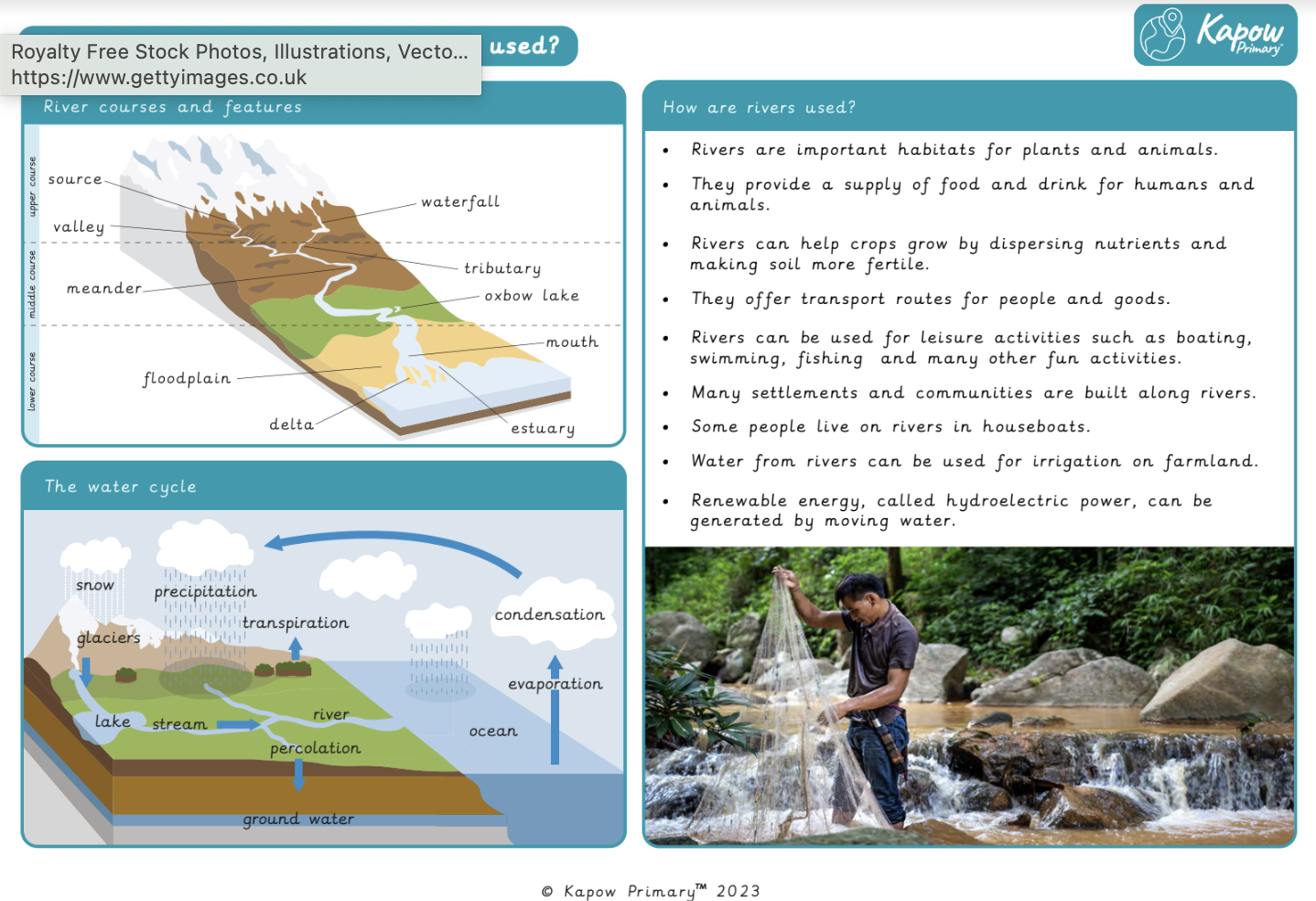
Knowledge organiser: Geography – Y4 What are rivers and how are they used?
Aimed at pupils, a single page which gives key facts and definitions from the unit "What are rivers and how…
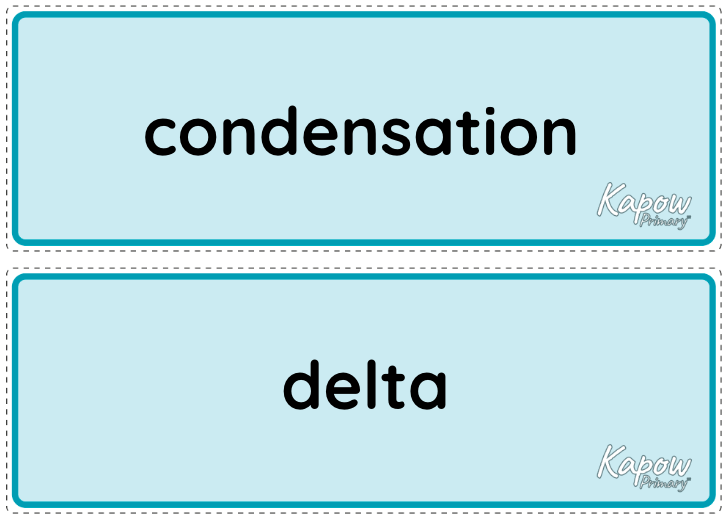
Vocabulary display: What are rivers and how are they used?
A display version of the vocabulary from the unit 'What are rivers and how are they used?'
Subject resources
This content is for subscribers only. Join for access today.
Cross-curricular opportunities
English: Spoken language
Science: States of matter
Design and technology: Make
P.E
Art and design
Build on the learning
What is life like in the Alps?
Get started
