




- Subjects >
- History >
- Key stage 1 >
- Year 1 >
Unit outcomes
Pupils who are secure will be able to:
- Order three photographs correctly on a simple timeline.
- Use the terms ‘before’ and ‘after’ when discussing their timelines.
- Talk about three memories and place one of them on a timeline.
- Explain why memories are special and name four events that they celebrate throughout the year.
- Think of three ways they celebrate their birthday.
- Ask a visitor one question about childhood in the past.
- Know a similarity and a difference between childhood now and in the past.
- Add three ideas to a time capsule about themselves.
- Use key vocabulary to compare the present, the past and possible changes in the future.
Suggested prior learning
Adventures through time
Get started
Lessons
Lesson 1: What is my history?
Lesson 2: How can I find out more about myself?
Lesson 3: How are special events remembered?
Lesson 4: What was it like for children in the past?
Lesson 5: What have I learnt about childhood in the past?
Lesson 6: How am I making history?
Optional Remembrance lesson: What does the poppy mean and why do people wear it?
Key skills
- Sequencing three or four

This content is for subscribers only. Join for access today.
Key knowledge
- To know
This content is for subscribers only. Join for access today.
Key vocabulary
change
different
This content is for subscribers only. Join for access today.
Equipment list
Equipment needed across all lessons in this unit.
This list does not include equipment which is usually readily available in the classroom (e.g pencils, A4 paper etc)
 Download
Full equipment list for the subject
Quantities marked × will update. Items without quantities are unaffected
- Ask parents to email two photographs of the children or send in photographs (as a baby, on their first day of school, or any other life events such as getting a new pet) and send in any medals, tickets or anything that reminds the children of a special memory. ×1
- A collection of additional photographs of key events in Year 1 so far (this could be a recent photograph and one from earlier in Year 1). ×1
- Pegs 10
- String
- One shoebox or one for each child. ×1
- Sticky notes
-
Container suitable to store items such as a large jar or bottle.
×1 -
Items for a time capsule e.g. coins, newspapers, and school photographs etc.
×8
The equipment below is optional
- An example memory box with photographs or other memories to show the children ×1
This content is for subscribers only. Join for access today.
Related content
Unit resources


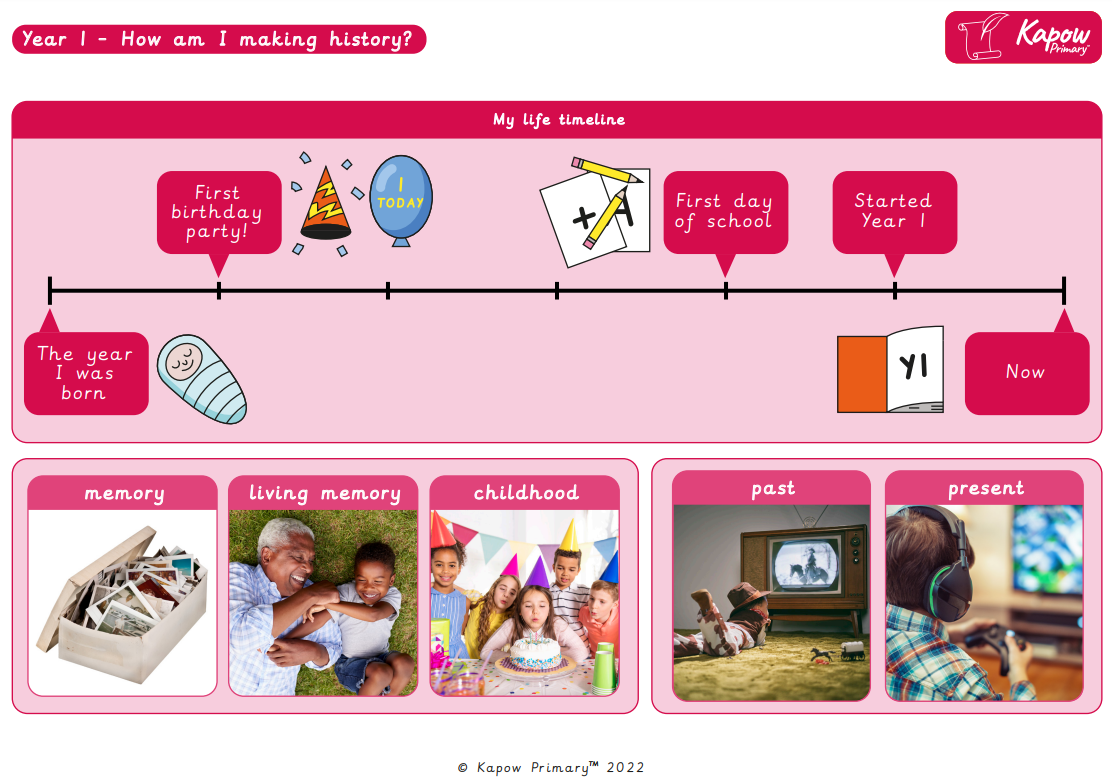
Knowledge organiser – History Y1: How am I making history?
Aimed at pupils, a single page document that gives key facts and definitions from the 'How am I making history?'…
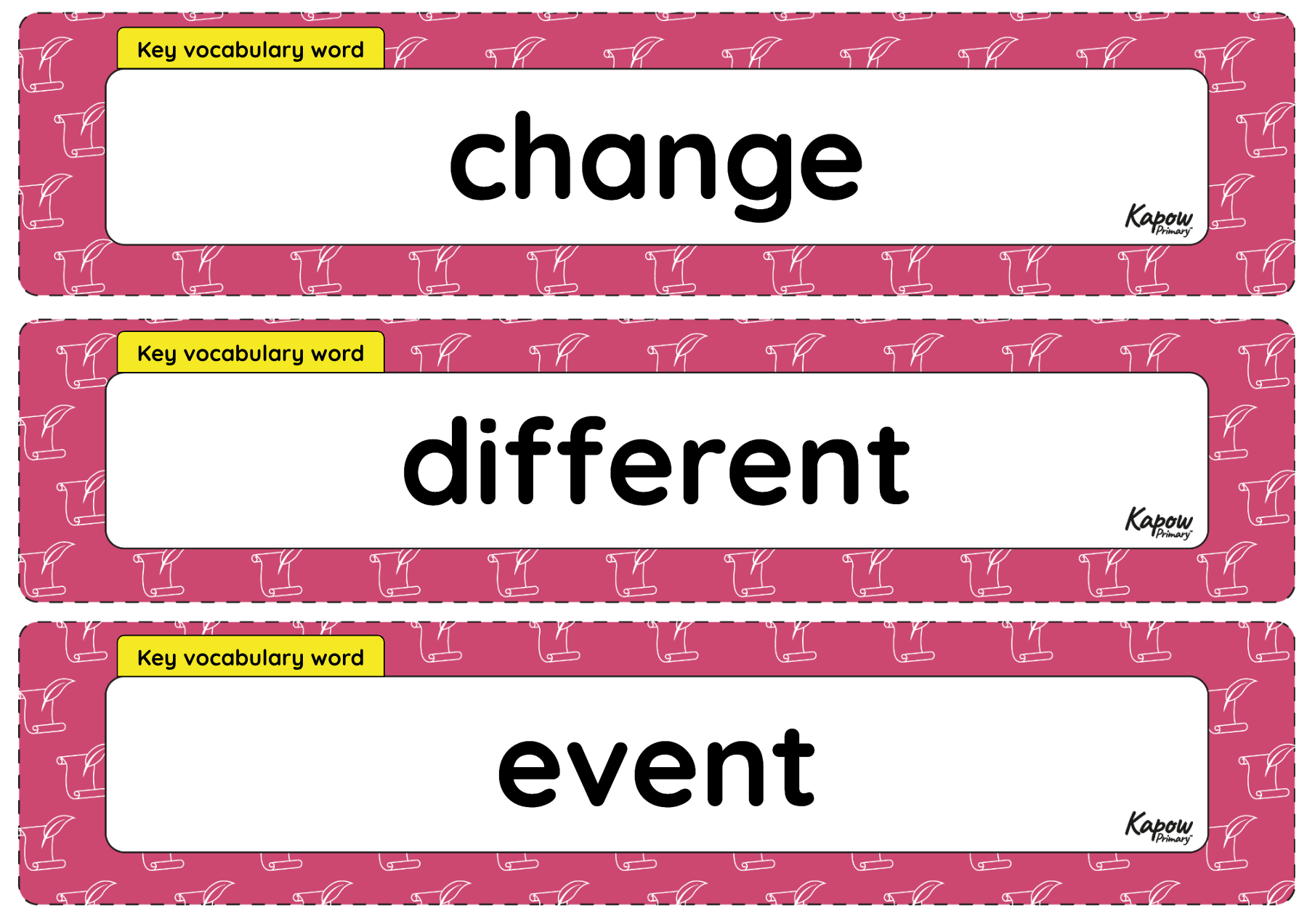
Vocabulary display – History Y1: How am I making history?
A display version of the key vocabulary from the 'How am I making history?' Year 1 unit.
Subject resources
This content is for subscribers only. Join for access today.
Cross-curricular opportunities
RSE & PSHE
‘Pupils should know:
- that families are important for children growing up because they can give love, security and stability.’
See PSHE Association guidance.
Art and design
‘Pupils should be taught:
- to use drawing, painting and sculpture to develop and share their ideas, experiences and imagination.’
See National curriculum - Art and design key stages 1 to 2.
Mathematics
‘Pupils should be taught to:
- recognise and use language relating to dates, including days of the week, weeks, months and years.’
See National curriculum - Mathematics key stages 1 to 2.
English
‘Pupils should be taught to:
- ask relevant questions to extend their understanding and knowledge.’
See National curriculum - English key stages 1 to 2.
British values: Tolerance of different faiths and beliefs.
Build on the learning
How have toys changed?
Get started
