




Unit outcomes
Pupils who are secure will be able to:
- Discuss some key developments in lighting technology and why they help us.
- Describe the form and function of a wearable product.
- Identify who the product is for and why they might use it.
- Create design criteria that list what the product must do or be like.
- Use the words program, code and control to describe how their product would work.
- Use code to control LEDs, including the use of the light sensor.
- Test and explain whether my code works as I want it to.
- Use computer-aided design to show design ideas for a product.
- Label the key features of the product.
- Describe the choices I have made to make my product more successful.
Keep the sketches and the class design criteria created in Lesson 2: Developing design criteria for use in Lesson 5: Communicating ideas using computer-aided design.
Keep the printed Resource: Pictures of light-up wearable technology from Lesson 1: Analysing wearable technology for children to refer to during Lesson 5: Communicating ideas using computer-aided design.
Suggested prior learning
This is the first unit in the Digital world strand so there is no specific prior learning.Teacher video: Wearable technology unit overview

Lessons
Lesson 1: Analysing wearable technology
Lesson 2: Developing design criteria
Lesson 3: Using code to control LEDs
Lesson 4: Programming the light sensor
Lesson 5: Communicating ideas using computer-aided design
Key skills
Design
- Noticing simple problems or

This content is for subscribers only. Join for access today.
Key knowledge
Design
To know:
- A problem or
This content is for subscribers only. Join for access today.
Key vocabulary
code (Y3)
computer-aided design (Y3)
This content is for subscribers only. Join for access today.
Related content
Unit resources


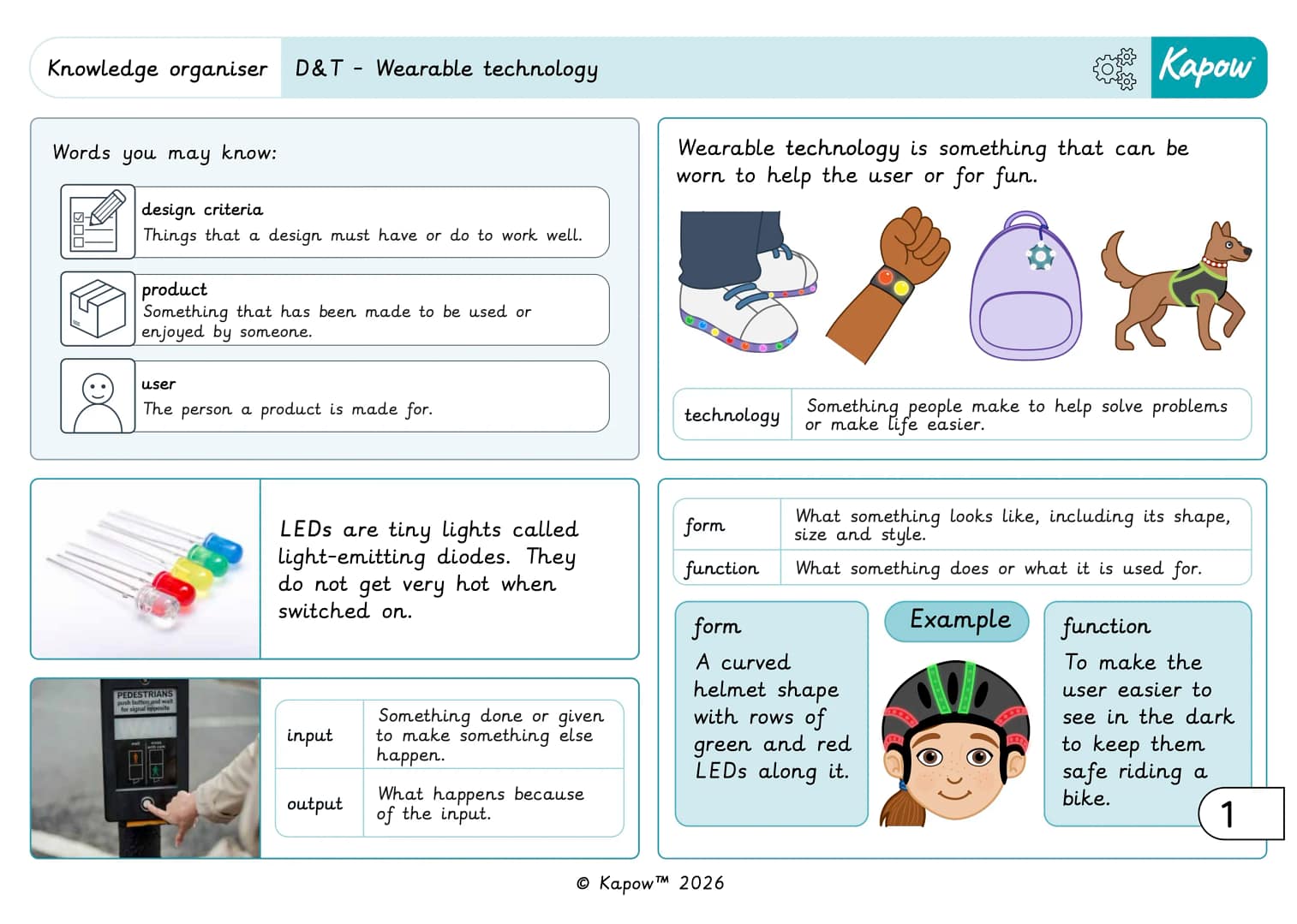
Knowledge organiser – D&T Y3: Digital world: Wearable technology
Aimed at pupils, two pages giving key facts and definitions from the unit ‘Wearable technology’.
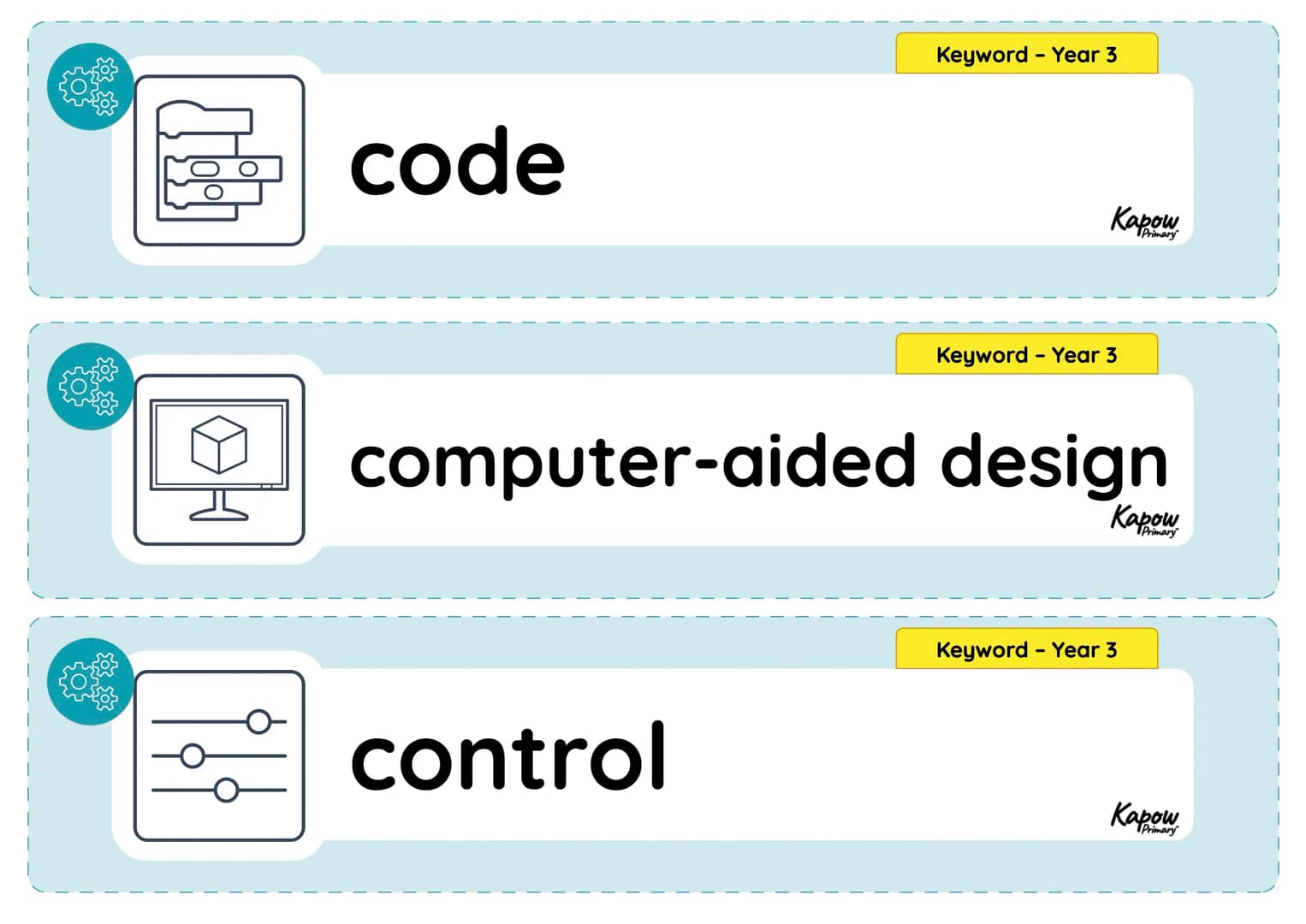
Vocabulary display– D&T Y3: Digital world: Wearable technology
A display version of the vocabulary from the unit 'Wearable technology'.
Subject resources
This content is for subscribers only. Join for access today.
Cross-curricular opportunities
Build on the learning
Digital world: Mindful moments timer
Get started