



Note: The latest progression information can now be found in the Computing curriculum portal.
year: Year 6
French: Key skills and knowledge by unit
Note: The latest progression information can now be found in the French curriculum portal.
Knowledge organiser: KS2 Instrumental Music: Indonesia
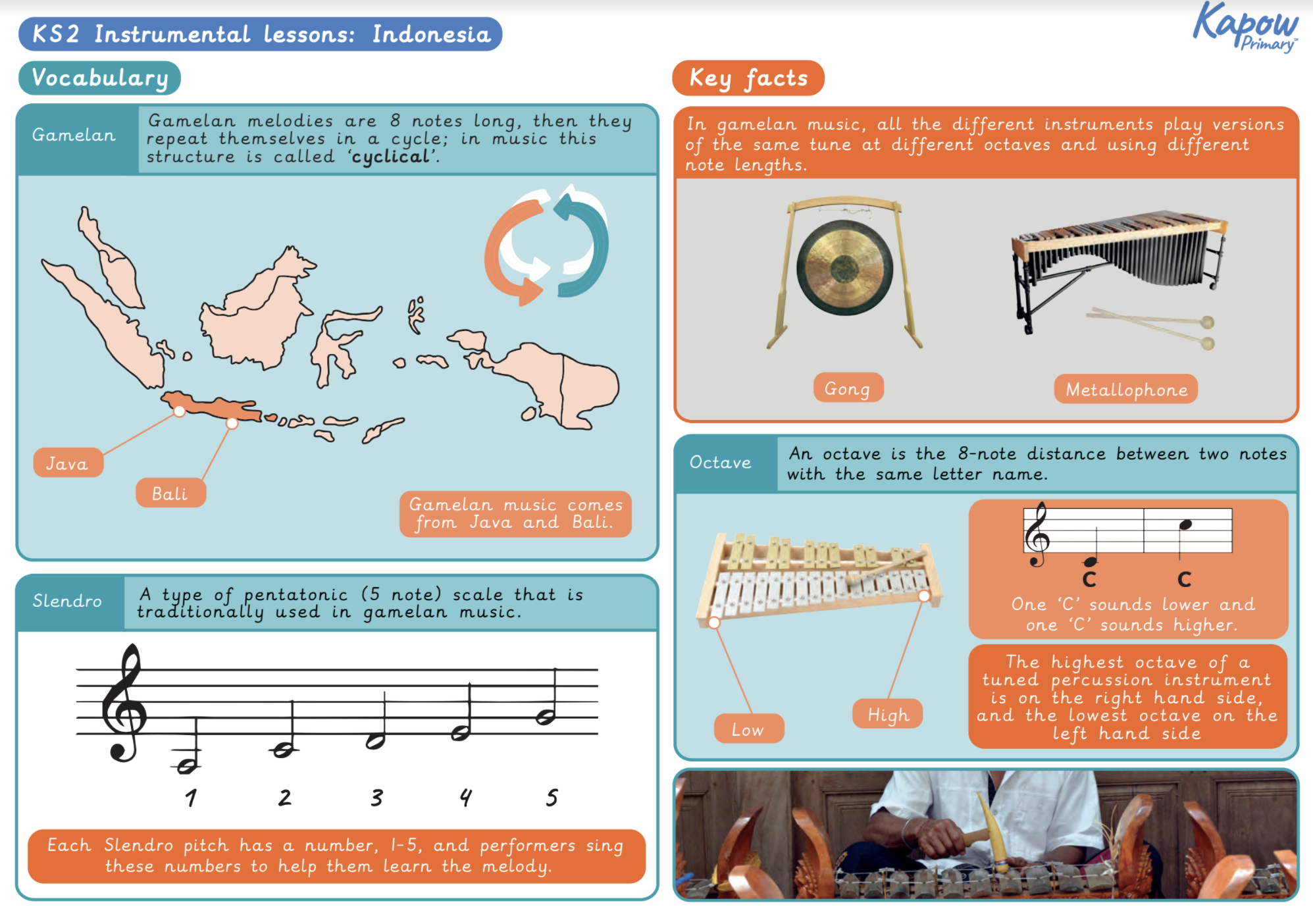
A Knowledge Organiser that captures the essential knowledge and skills learnt throughout the unit Music, KS2, Instrumental Lessons: Indonesia.
This resource is designed to support pupils as they explore traditional Indonesian gamelan music through instrumental practice. It introduces key musical vocabulary including gamelan, gong, metallophone, slendro, and octave, and explains how gamelan melodies follow a cyclical 8-note pattern. Pupils learn about the slendro scale—a pentatonic system where each pitch is numbered 1 to 5—and how different instruments play variations of the same tune using varying octaves and rhythms. This organiser also supports visual learning with labelled images of gamelan instruments and maps showing the musical origins in Java and Bali, helping pupils build cultural and musical awareness through hands-on experience.
French: Progression of skills and knowledge — condensed
Note: The latest progression information can now be found in the French curriculum portal.
French: Progression of skills and knowledge — mixed-age
Note: The latest progression information can now be found in the French curriculum portal.
French: Long-term plan — condensed
Computing: Progression of skills and knowledge – Condensed

Note: The latest progression information can now be found in the Computing curriculum portal.
Computing: Progression of skills and knowledge

Note: The latest progression information can now be found in the Computing curriculum portal.
Computing: Key skills and knowledge by unit
Note: The latest progression information can now be found in the Computing curriculum portal.
