




Unit outcomes
Pupils who are secure will be able to:
- Consider different responses to suffering.
- Explore their own views and responses to suffering.
- Acknowledge that many Buddhists accept that suffering is a part of everybody’s lives.
- Explaining what Hukam means and how it links to suffering.
- Share reasons why many Sikhs live good lives despite the belief that God has a plan for them.
- Explain some Shinto beliefs about kami.
- Rank ideas to show their personal responses.
- Consider how their learning has reflected or developed their own views about suffering.
In Lesson 1, the children begin adding to the Activity: Positivity pots. Keep these for future lessons in the unit.
Teacher video: Why is there suffering? (Part 2) unit overview

You may wish to watch the unit video for Religion and worldviews, Y5/6 (B): Why is there suffering? (Part 1) before teaching this unit.
Y5/6 (B): Lesson 1: What can suffering teach us about happiness?

Y5/6 (B): Lesson 2: What can cause suffering?
Y5/6 (B): Lesson 3: How do some people overcome suffering?
Y5/6 (B): Lesson 4: How can Hukam help in difficult times?
Y5/6 (B): Lesson 5: Who is the best at helping?
Y5/6 (B): Lesson 6: How can beliefs affect our understanding of suffering?
Key skills
Key skills
Disciplinary
- Asking challenging questions and

This content is for subscribers only. Join for access today.
Key knowledge
Substantive
To know:
- Free will means
This content is for subscribers only. Join for access today.
Key vocabulary
Hukam
personal
This content is for subscribers only. Join for access today.
Equipment list
Equipment needed across all lessons in this unit.
This list does not include equipment which is usually readily available in the classroom (e.g pencils, A4 paper etc)
 Download
Full equipment list for the subject
Quantities marked × will update. Items without quantities are unaffected
- Highlighters ×15
- Flipchart ×1
- Sticky tack ×1
- Sticky notes Per child: 6
- Scissors right- and left-handed options recommended. ×15
The equipment below is optional
- Wonder box ×1
- Devices with internet access ×15
This content is for subscribers only. Join for access today.
Related content
Unit resources


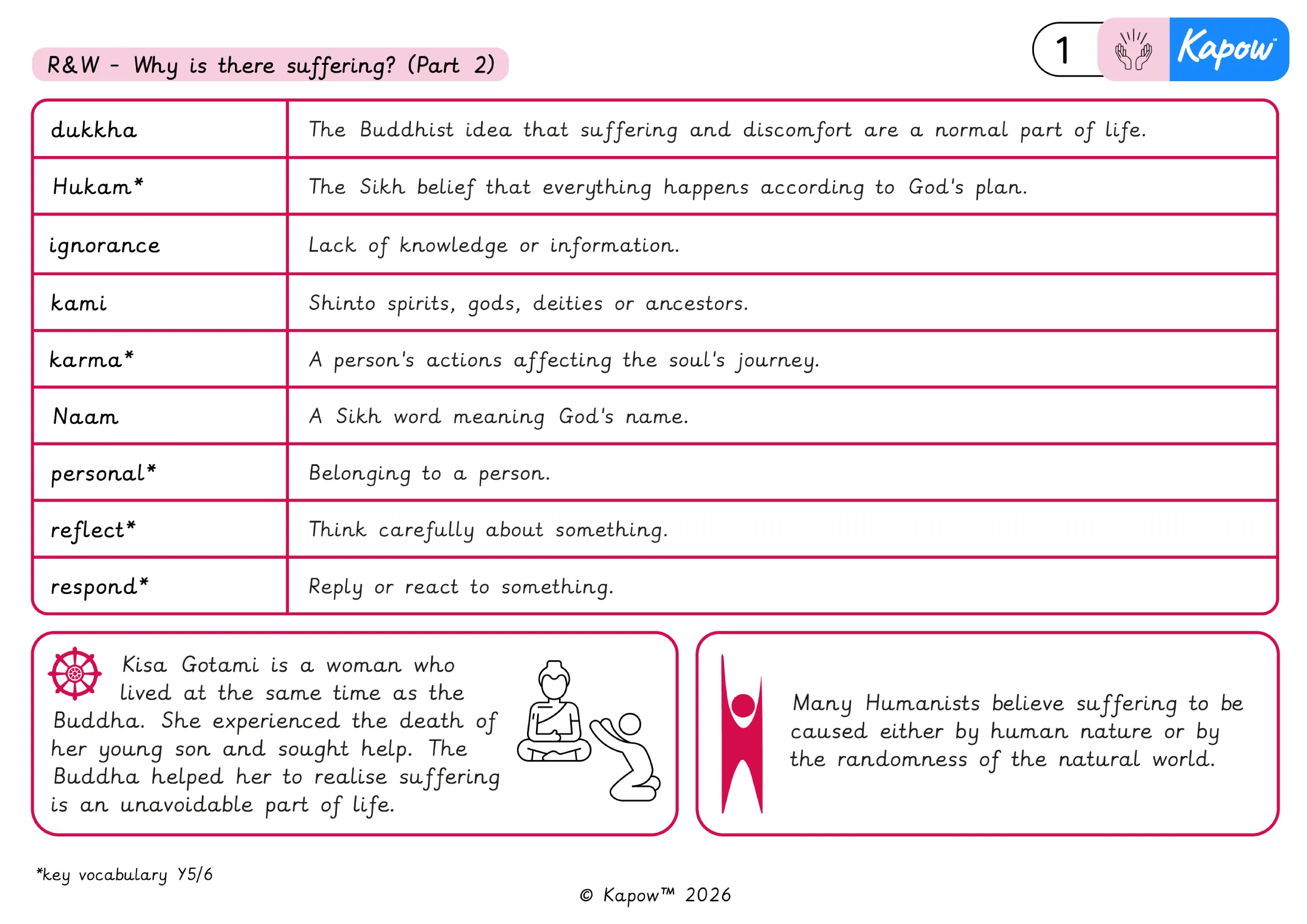
Knowledge organiser – R&W Y5/6 (B): Why is there suffering? (Part 2)
Aimed at pupils, a double page document that gives key facts and definitions from the mixed-age unit 'Why is there…
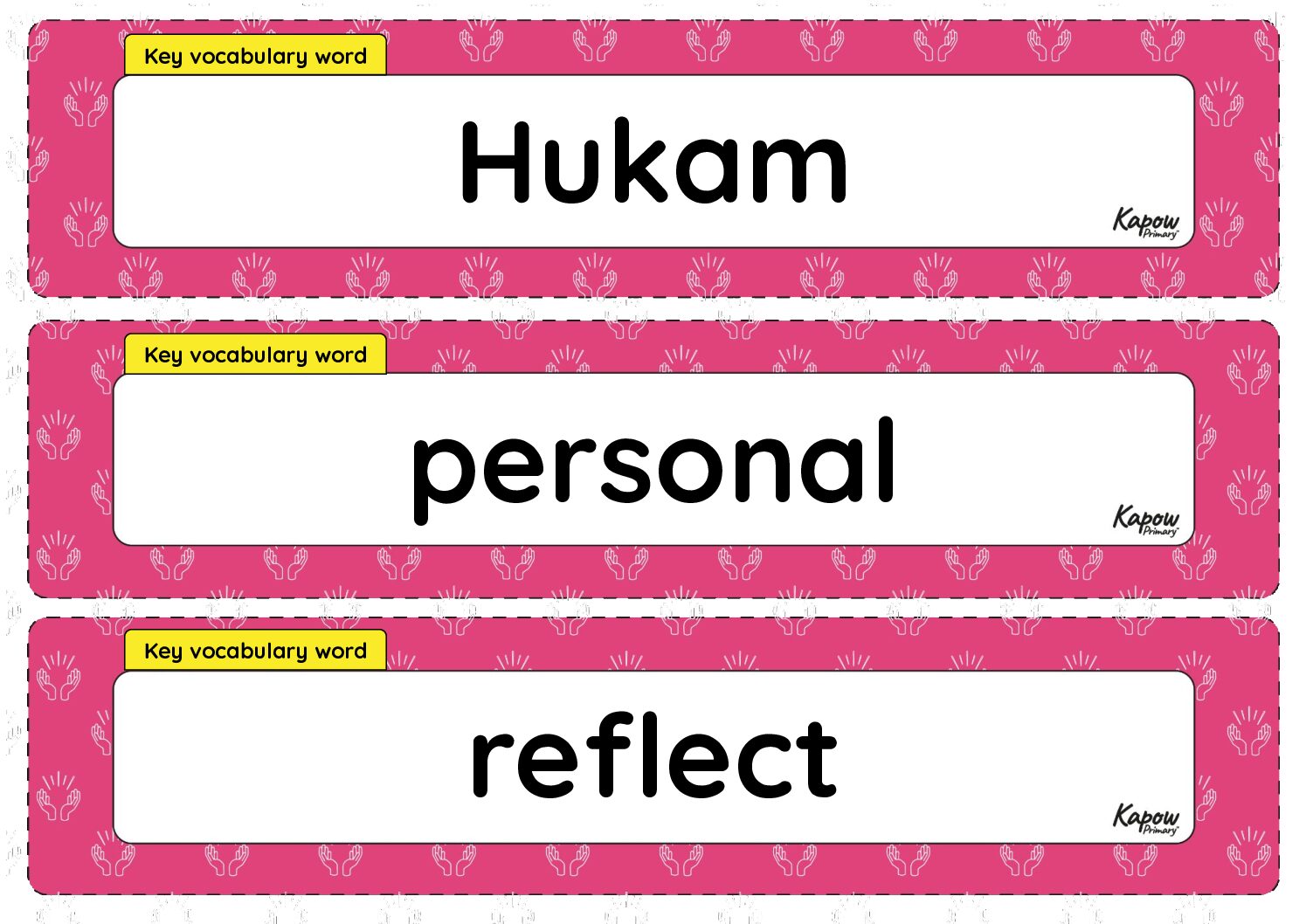
Vocabulary display – R&W Y5/6 (B): Why is there suffering? (Part 2)
A display version of the vocabulary from the unit 'Why is there suffering? (Part 2)'.
Subject resources
This content is for subscribers only. Join for access today.
Cross-curricular opportunities
English: Spoken language; Reading comprehension; Writing.
RSE: Respectful relationships.
British values: Mutual respect; Tolerance of those with different faiths and beliefs.
