




This unit is archived.
Unit outcomes
Pupils who are secure will be able to:
- To identify some features of mosques and their importance to some Muslims.
- To explain how the features of an Orthodox Christian church might help some people pray.
- To make connections between beliefs about the Trinity and Christian places of worship.
- To identify some features of a synagogue and discuss their importance.
- To recognise that community and equality are important values to many Sikh people.
- To explain what the similarities and differences between places of worship can tell us about some people’s beliefs.
These lessons explore places of worship within the Muslim, Christian, Jewish, Sikh and Alevi worldviews. You may wish to visit a place of worship to support the children’s learning. It is important to risk-assess the visit taking into account any relevant school risk assessment policies and procedures.
Please note
From March 2026, lessons and resources within this unit will be updated, focusing on pitch, lesson length and key vocabulary. The context, skills and knowledge covered and learning progression of the unit remain the same. This version of the unit will be available in the Archive area.
Teacher video: Where do some people talk to God?

Lesson 1: Why do some Muslim people pray in a mosque?

Lesson 2: What can Orthodox churches suggest about some Christians’ beliefs?
Lesson 3: What can we learn by exploring different Christian places of worship?
Lesson 4: Why do some Jewish people go to a synagogue?
Lesson 5: Why do some Sikh people visit a gurdwara?
Lesson 6: What makes a place important to believers?
Key skills
Disciplinary
- Asking questions about what

This content is for subscribers only. Join for access today.
Key knowledge
Substantive
To know:
- Prayer means communicating
This content is for subscribers only. Join for access today.
Key vocabulary
Alevi
church
This content is for subscribers only. Join for access today.
Related content
Unit resources


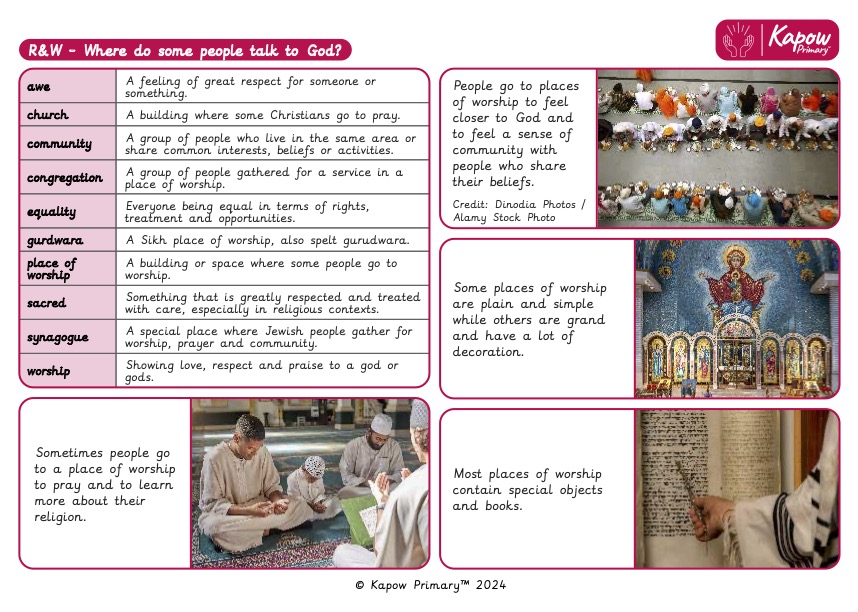
Knowledge organiser – R&W Y2: Where do some people talk to God?
Aimed at pupils, a single page document that gives key facts and definitions from the 'Where do some people talk…
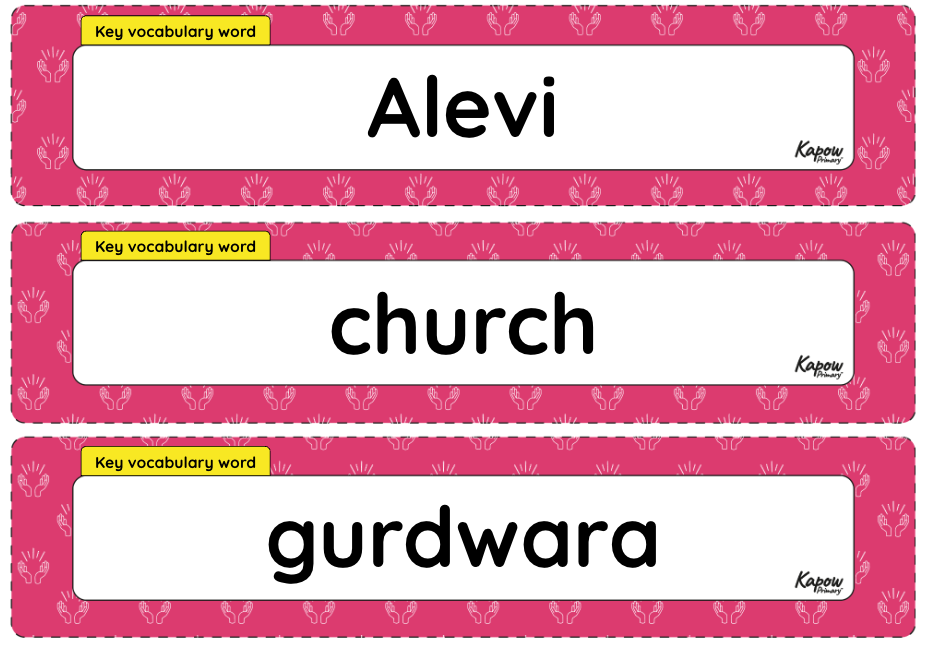
Vocabulary display – R&W Y2: Where do some people talk to God?
A display version of the key vocabulary for the 'Where do some people talk to God?' unit.
Cross-curricular opportunities
RSE: Respectful relationships.
British values: Tolerance of those with different faith and beliefs, mutual respect.
English: Participate in discussions and debates.
