




- Subjects >
- Science >
- Key stage 2 >
- Year 4 >
Unit outcomes
Pupils who are secure will be able to:
- Group animals in various ways, including vertebrates (mammals, birds, reptiles, amphibians, fish) and invertebrates.
- Group plants in various ways, including flowering and non-flowering plants.
- Recognise and describe different habitats and their inhabitants.
- Recognise the impact humans can have on habitats.
- Recognise the impact of natural disasters on habitats.
When working scientifically, pupils who are secure will be able to:
- Record data in different ways.
- Apply and create classification keys.
- Make careful observations.
- Make and use classification keys.
- Present information in different ways.
- Research using an information sheet.
Please note that Kapow Primary Science lessons are designed to be 1 hour and 30 minutes long to reflect the requirements of a core subject.
Suggested prior learning
Living things: Habitats
Get started
Lessons
Lesson 1: Grouping living things: Vertebrates and invertebrates
Lesson 2: Grouping living things: Plants
Lesson 3: Classification keys
Lesson 4: Habitats and seasonal change
Lesson 5: Human impacts on habitats
Lesson 6: Natural changes to habitats
Key skills
Observing
- Using their

This content is for subscribers only. Join for access today.
Key knowledge
To know:
-
This content is for subscribers only. Join for access today.
Key vocabulary
classification key
classify
This content is for subscribers only. Join for access today.
Equipment list
Equipment needed across all lessons in this unit.
This list does not include equipment which is usually readily available in the classroom (e.g pencils, A4 paper etc)
 Download
Full equipment list for the subject
Quantities marked × will update. Items without quantities are unaffected
- Flipchart ×1
- A1 paper ×30
-
Green and blue coloured pencils
×15 - Sticky notes ×1
- Sticky tack ×1
- Straws ×8
- Chalk ×8
- Stapler ×1
- PE hoops ×8
-
A pair of binoculars
×1 -
Tablets or devices with internet access and camera capabilities
×8 -
Access to a hall or outside space
×1 -
Access to trees
×1
This content is for subscribers only. Join for access today.
Related content
Unit resources


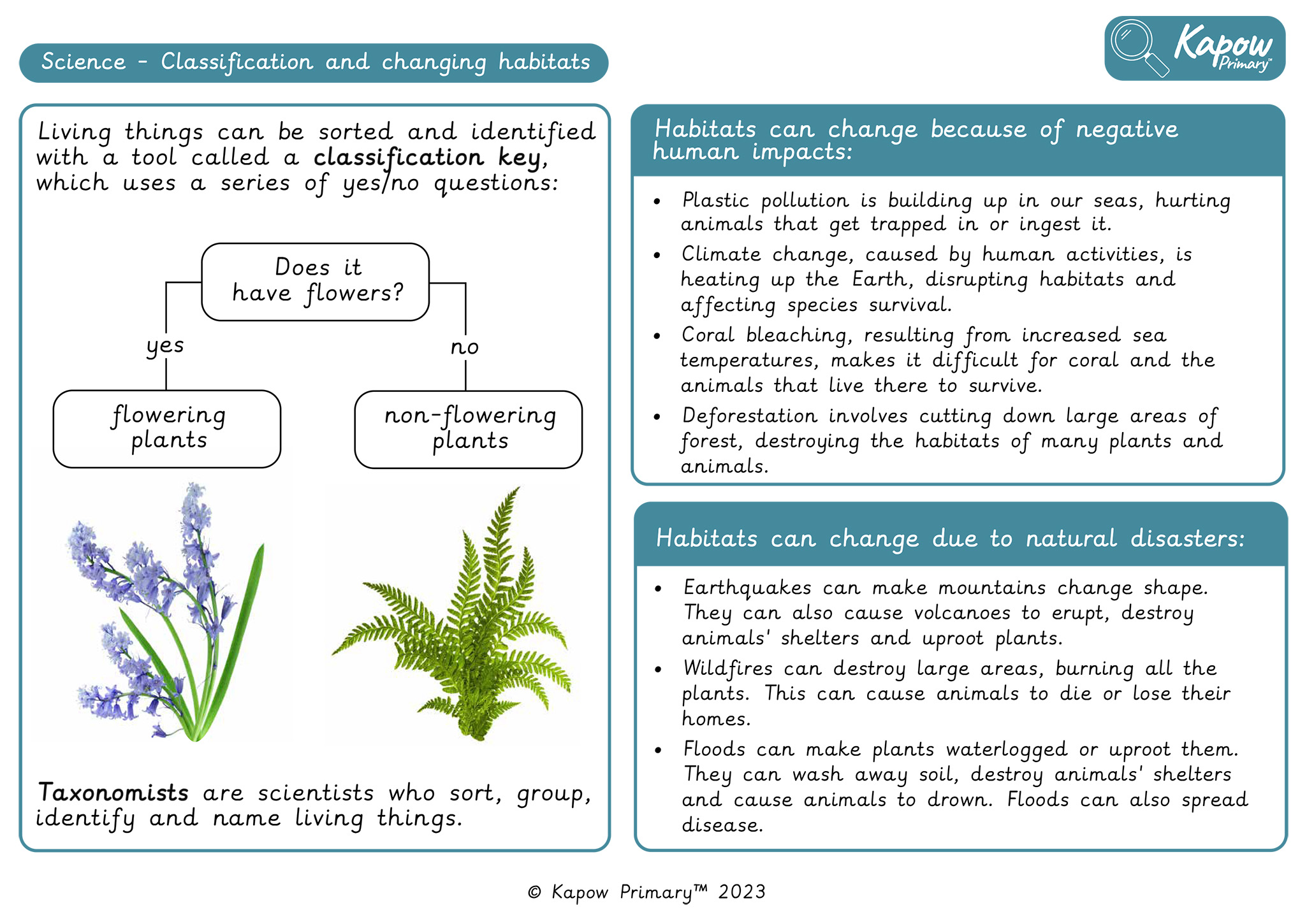
Knowledge organiser – Science Y4: Living things: Classification and changing habitats
Aimed at pupils, two pages which gives key facts and definitions from the unit 'Classification and changing habitats'.
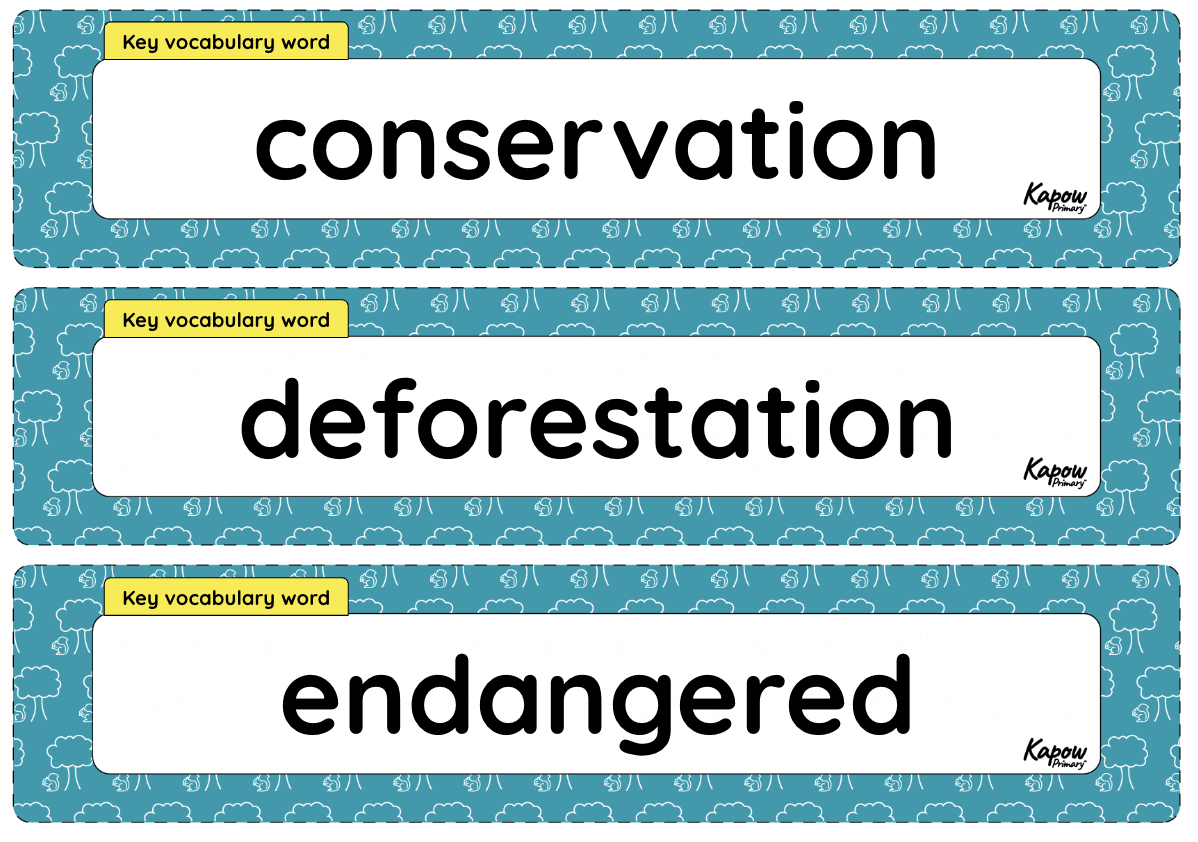
Vocabulary display – Science Y4: Living things: Classification and changing habitats
A display version of the vocabulary from the unit 'Classification and changing habitats'.
Subject resources
This content is for subscribers only. Join for access today.
Cross-curricular opportunities
Mathematics: Statistics
English: Reading – comprehension
British values: Mutual respect
Build on the learning
Living things: Classifying big and small
Get started
