




- Subjects >
- Science >
- Key stage 1 >
- Year 1 >
Unit outcomes
Pupils who are secure will be able to:
- Name objects and identify the materials they are made from.
- Recognise that objects are made from materials that suit their purpose.
- Recall that a property is how a material can be described.
When working scientifically, pupils who are secure will be able to:
- Sort objects based on the materials they are made from.
- Group objects based on their properties.
- Suggest ways to test materials for their properties.
- Make predictions and recognise whether they were accurate.
- Use their observations to answer questions.
- Begin to recognise if a test is fair.
Please note that Kapow Primary Science lessons are designed to be 1 hour and 30 minutes long to reflect the requirements of a core subject.
Suggested prior learning
Lessons
Lesson 1: Naming materials
Lesson 2: Material detectives
Lesson 3: Introduction to properties
Lesson 4: Is it absorbent?
Lesson 5: Is it waterproof?
Lesson 6: Is it tough?
Key skills
Posing questions
- Responding to suggestions

This content is for subscribers only. Join for access today.
Key knowledge
To know:
- Objects
This content is for subscribers only. Join for access today.
Key vocabulary
absorbent
fabric
This content is for subscribers only. Join for access today.
Equipment list
Equipment needed across all lessons in this unit.
This list does not include equipment which is usually readily available in the classroom (e.g pencils, A4 paper etc)
 Download
Full equipment list for the subject
Quantities marked × will update. Items without quantities are unaffected
-
Materials box with 30 everyday objects made from various materials (wood, plastic, glass, metal, rock and fabric)
×1 - Pe hoops 6
- A device that takes photographs ×8
-
Sticky notes (pink and green)
×30 -
Tea towel
1 -
Textured materials (e.g. corrugated cardboard, foil, bubble wrap, tissue paper, feathers, wool, small pom-poms and glitter)
×1 -
Shallow trays
×5 -
Teaspoons, 5 ml measuring spoons or 5 ml syringes
×5 - Pre-cut squares of absorbent, non-absorbent, waterproof and non-waterproof materials (e.g. cotton wool, paper towel, fabric, felt, plastic bag, foil, greaseproof paper and cling film). ×1
-
Selection of clothing
×1 -
Plastic cups or yoghurt pots
×30 - A selection of Elastic bands
- Paper towels ×30
- Sticky tack ×1
- Materials for testing toughness (e.g. plastic, denim, rubber, silicone, hessian, cotton wool, cardboard, felt and crayon).
This content is for subscribers only. Join for access today.
Related content
Unit resources


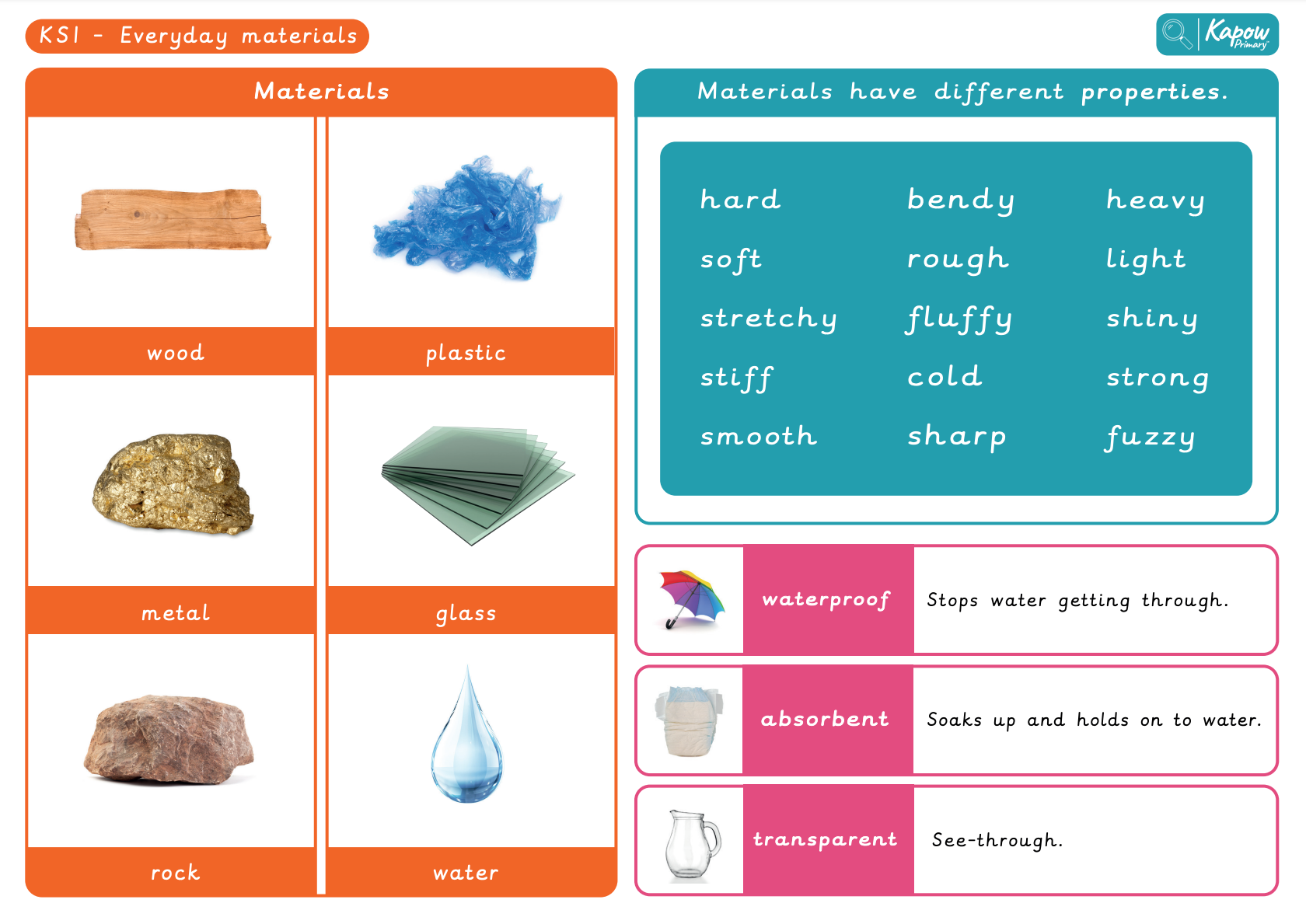
Knowledge organiser – Science Y1: Everyday materials
Aimed at pupils, a single page which gives key facts and definitions from the unit ‘Everyday materials.
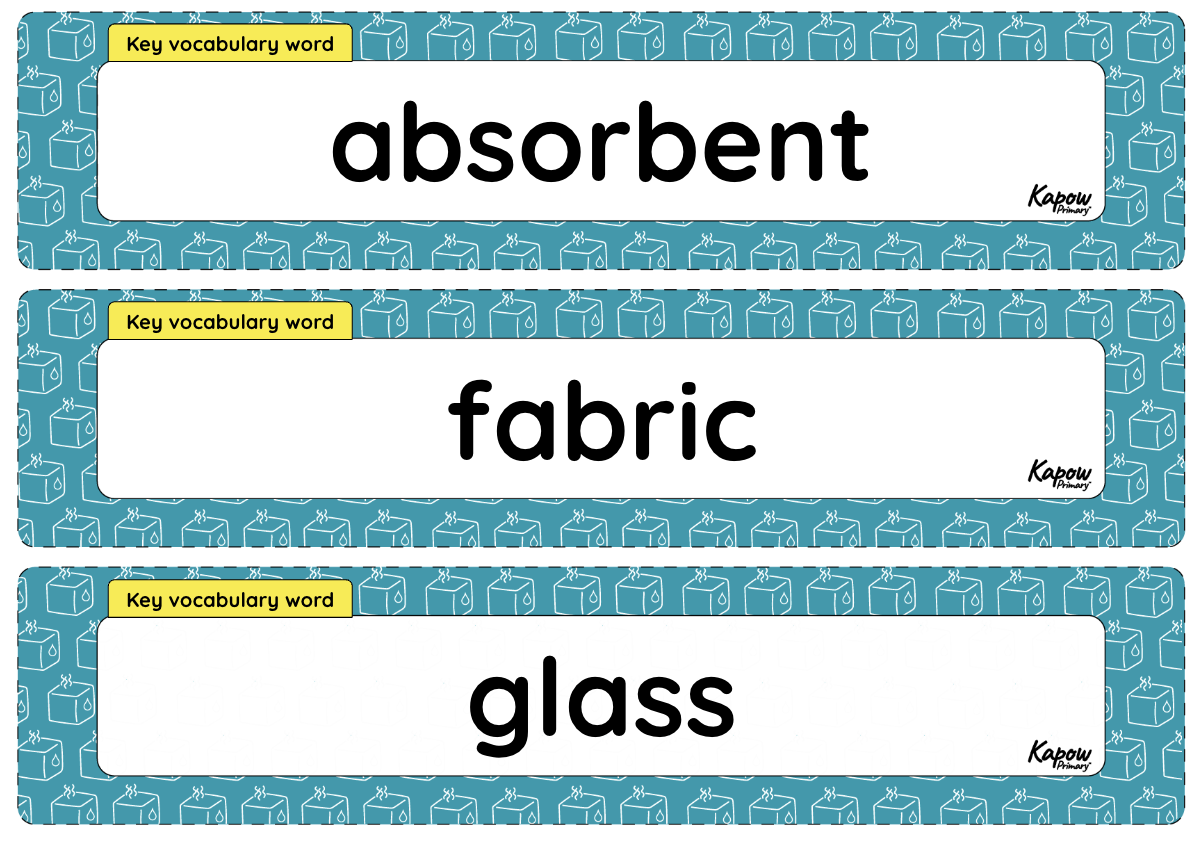
Vocabulary display – Science Y1: Everyday materials
A display version of the vocabulary for the unit 'Everyday materials'.
Subject resources
This content is for subscribers only. Join for access today.
Cross-curricular opportunities
English: pleasure in reading.
British values: mutual respect.
Build on the learning
Materials: Uses of everyday materials
Get started
