




- Subjects >
- French >
- Key stage 2 >
- Year 3 >
Unit outcomes
Pupils who are secure will be able to:
- Look carefully at the speaker and respond confidently with the appropriate gesture and phrase.
- Begin to recognise how some sounds (‘on’, ‘ou’, ‘et’ and ‘oi’) are represented in written form.
- Link actions or pictures to the new language, both in spoken and written form.
- Imitate the pronunciation of sounds.
- Take turns to speak and use appropriate intonation.
Lessons
Lesson 1: French greetings
Lesson 2: French greetings – day and night
Lesson 3: How are you feeling – in French?
Lesson 4: French finger rhymes
Key skills
Language comprehension
- Listening

This content is for subscribers only. Join for access today.
Key knowledge
Phonics
- To become
This content is for subscribers only. Join for access today.
Key vocabulary
bonjour
salut
This content is for subscribers only. Join for access today.
Equipment list
Equipment needed across all lessons in this unit.
This list does not include equipment which is usually readily available in the classroom (e.g pencils, A4 paper etc)
 Download
Full equipment list for the subject
Quantities marked × will update. Items without quantities are unaffected
- Large colourful hand puppet ×1
- A selection of finger puppets ×30
- Colouring pencils
- Scissors right- and left-handed options recommended. ×30
- Glue ×30
- Sellotape ×1
This content is for subscribers only. Join for access today.
Related content
Unit resources


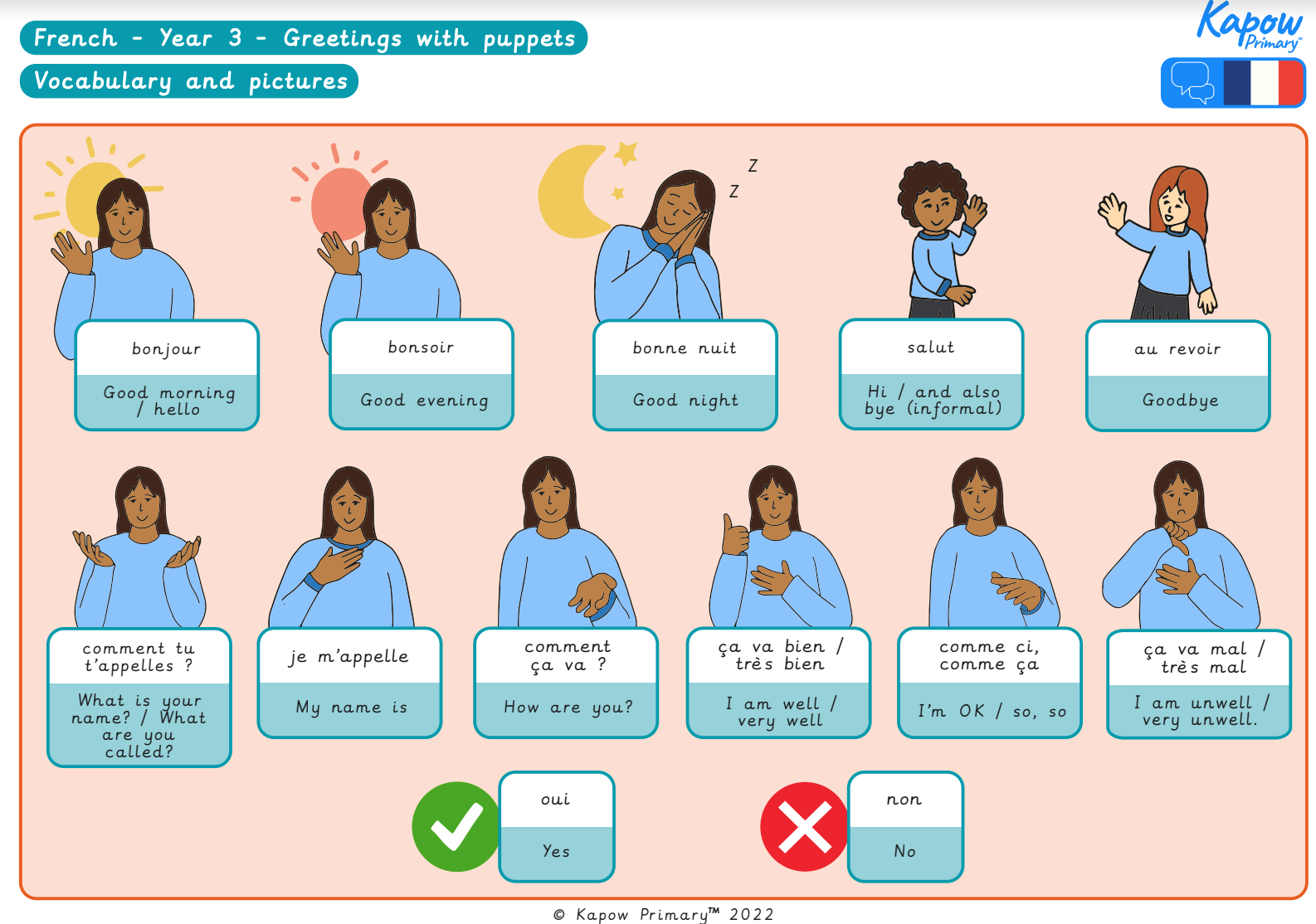
Knowledge organiser – French Y3: Greetings with puppets
Aimed at pupils, two pages which gives key facts and definitions from the unit 'Greetings with puppets'.

French phonics videos: Y3 Greetings with puppets
Phoneme practice for sounds used in this unit.
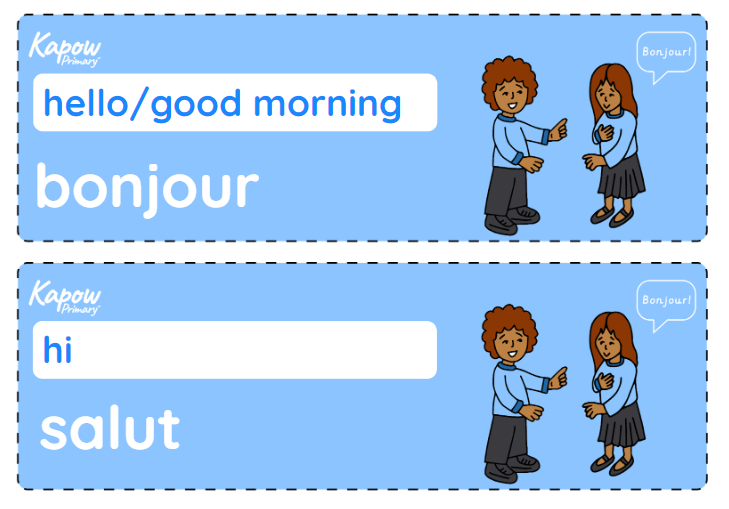
Vocabulary display: French greetings with puppets
A display version of the key vocabulary from the French greetings with puppets unit.
Subject resources
This content is for subscribers only. Join for access today.
Cross-curricular opportunities
Design & Technology
‘Pupils should be taught to:
- select from and use a wider range of tools and equipment to perform practical tasks [for example, cutting, shaping, joining and finishing], accurately
- select from and use a wider range of materials and components, including construction materials, textiles and ingredients, according to their functional properties and aesthetic qualities’
See 'National curriculum - Design & Technology key stages 1 and 2'.
Build on the learning
Unit 2: French adjectives of colour, size and shape
Get started
