




Unit outcomes
Pupils who are secure will be able to:
- Name the features of a banknote.
- Make inferences about a historical figure using a banknote.
- Research and explore the achievements of different historical figures.
- Make inferences about historical figures from sources.
- Describe the legacies of historically significant people
- Apply criteria to decide if a person is historically significant and explain why.
This unit prepares the children for the challenges of Key stage 3 history. It supports the development of historical skills including extracting information from sources, evaluating historical figures and the opportunity to decide the criteria for significance.
Suggested prior learning
Y5/6 (B): What is the legacy of the ancient Greek civilisation?
Get started
Lessons
Y5/6 (B): Lesson 1: Who features on banknotes and why?
Y5/6 (B): Lesson 2: Was Alfred the Great or Elizabeth I the more significant monarch?
Y5/6 (B): Lesson 3: How were Ellen Wilkinson and Betty Boothroyd historically significant?
Y5/6 (B): Lesson 4: Why is Mary Seacole historically significant?
Y5/6 (B): Lesson 5: Why are Lily Parr and Betty Snowball historically significant?
Y5/6 (B): Lesson 6: Who will be the face of the new £10 note?
Key skills

This content is for subscribers only. Join for access today.
Key knowledge
-
This content is for subscribers only. Join for access today.
Key vocabulary
alliance
legacy
This content is for subscribers only. Join for access today.
Equipment list
Equipment needed across all lessons in this unit.
This list does not include equipment which is usually readily available in the classroom (e.g pencils, A4 paper etc)
 Download
Full equipment list for the subject
Quantities marked × will update. Items without quantities are unaffected
- Devices with internet access ×15
- Sticky notes
The equipment below is optional
- Flipchart ×1
- Audio playback devices ×8
- Paper plates ×30
This content is for subscribers only. Join for access today.
Related content
Unit resources


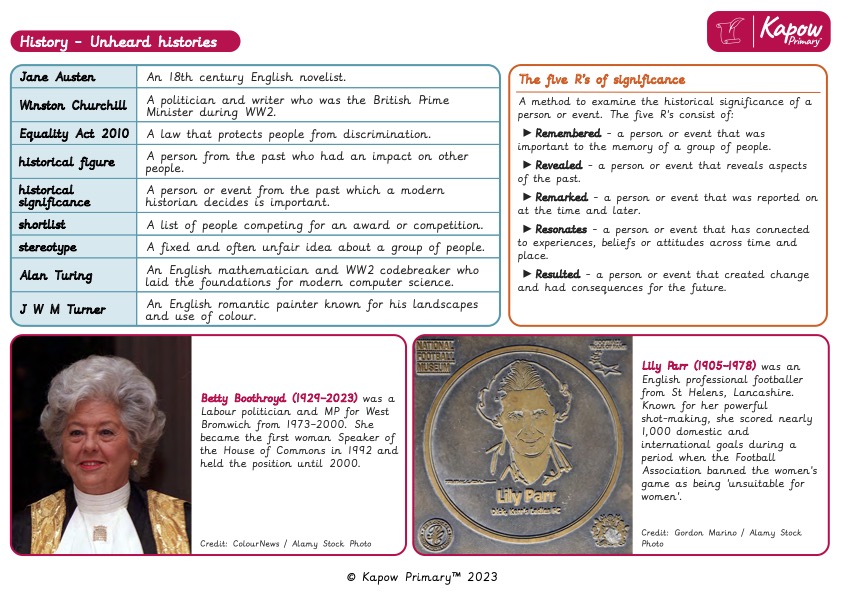
Knowledge organiser – History Y5/6 (B): Unheard histories: Who should go on the £10 banknote?
Aimed at pupils, two pages providing key facts and definitions from the unit.
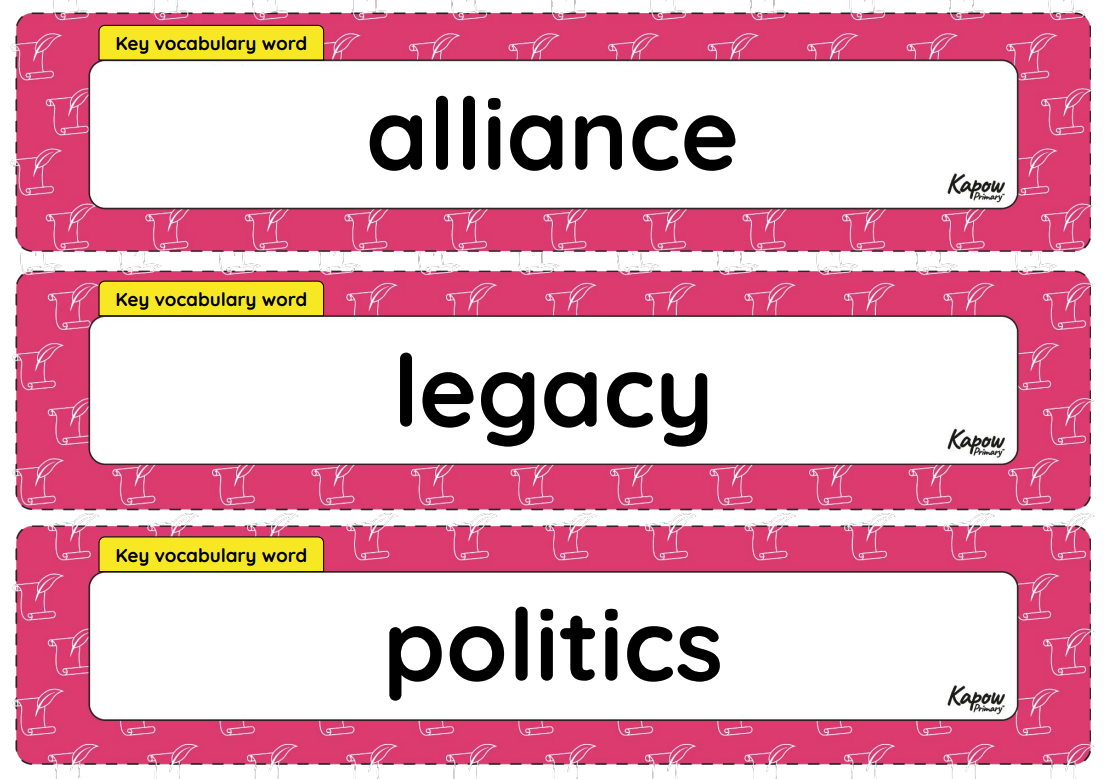
Vocabulary display – History Y5/6 (B): Unheard histories: Who should go on the £10 banknote?
A display version of the vocabulary from the mixed-age unit 'Unheard histories: Who should go on the £10 banknote?'
Subject resources
This content is for subscribers only. Join for access today.
Cross-curricular opportunities
Art and design.
Build on the learning
Y5/6 (B): What was the Sikh Empire?
Get started
Popular content

This resource is being accessed through your school’s Kapow licence.
Thank you for respecting the work of the teachers who create these materials.