


Children’s Mental Health Week Activities: Wellbeing Ideas for Primary Schools
Written by Kapow Primary's RSE Team
Published on 20th January 2025
Last Updated: 21st July 2026
Written by Kapow Primary's RSE Team
Published on 20th January 2025
Last Updated: 21st July 2026
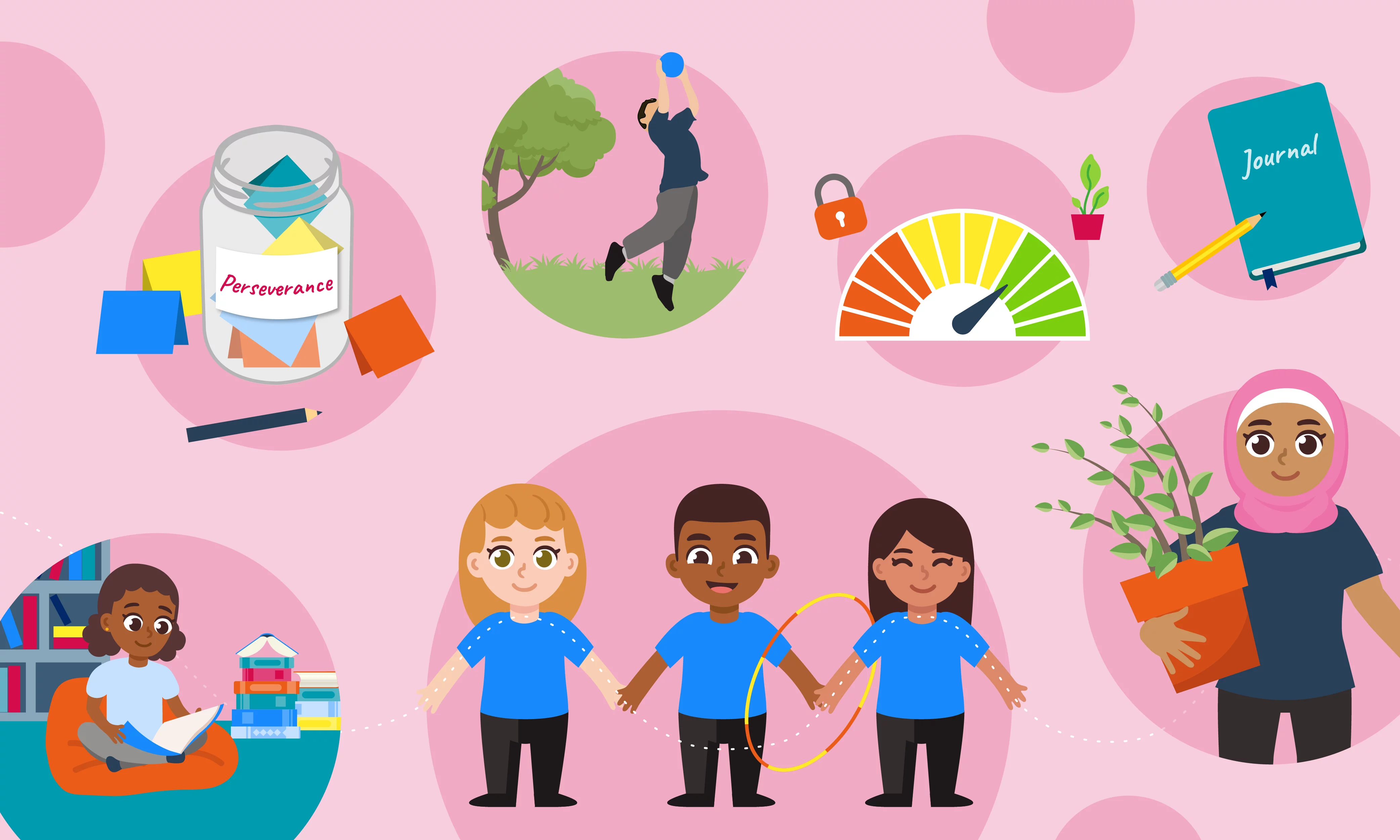
Children’s Mental Health Week is an annual initiative dedicated to highlighting the importance of mental health in children and young people. Schools can use this event to teach about wellbeing by introducing activities and lessons that enhance emotional awareness, build resilience, and strengthen positive relationships.
Below are some suggestions for teaching Wellbeing to primary-age children, not just during Children’s Mental Health Week but all year round.
If you’re short on planning time, try one of these simple activities during Children’s Mental Health Week:
These activities can be completed in 10–20 minutes and help pupils build self-awareness, resilience, positive relationships and emotional wellbeing throughout the week.
Research by Oxford Impact highlights several benefits of developing children’s wellbeing:
The report emphasises the value of whole-school approaches and integrating wellbeing into the curriculum for lasting positive impacts.
Wellbeing lessons are included as part of all Kapow memberships.
Self-awareness is the cornerstone of emotional intelligence. Help pupils reflect on their emotions and strengths with activities such as:
Tip: Incorporate activities into morning routines to help pupils start the day with a positive mindset.
Resilience is the ability to bounce back from challenges, and it’s a skill that can be taught. Incorporate activities that promote perseverance and problem-solving:
For more ideas, read our blog on Building Resilience In Primary School Children.
Tip: Praise effort rather than outcomes to reinforce the value of persistence.
Mindfulness helps children manage stress and stay focused. Use these simple techniques:
These RSE & PSHE lessons focus on mindfulness and relaxation:
Year 1: What helps us to feel calm or excited?
Year 3: What can I do when I experience strong emotions?
Tip: Schedule short mindfulness breaks throughout the day to help pupils reset and refocus.
The ‘Take notice’ lessons in the Kapow Primary Wellbeing scheme of work feature mindfulness and relaxation techniques for children.
Strong peer relationships build a sense of belonging and mutual care. Promote empathy and kindness with:
Explore these RSE & PSHE lessons on friendship and kindness:
Year 2: How can I show my feelings kindly and calmly?
Year 4: How can I build trusting friendships?
The Year 5 lessons on Connecting with others address healthy friendships, challenges in friendships and how to be assertive and respectful.
Tip: Use assemblies to celebrate acts of kindness and highlight the importance of mutual respect.
The ‘Connect’ lessons in our Wellbeing scheme support pupils with friendships and developing relationships.
There’s no doubt that assessment places emotional and psychological strain on pupils. This stress is observable in primary schools even at early stages, such as during the Year 4 Multiplication Tables Check and the SATs in Year 6. These assessments, while designed to measure educational progress, can also lead to anxiety and stress among young learners.
Schools can mitigate these stressors by implementing several strategies:
Parents are key partners in supporting children’s mental health. We’ve created a Wellbeing curriculum guide for parents and carers to encourage parents to:
Tip: Share resources with parents from trusted organisations such as Place2Be, Young Minds, and the NSPCC to empower parents with practical tools.
Children’s Mental Health Week aligns naturally with the British values of democracy, respect, and tolerance:
Try this Wellbeing lesson to teach KS1 pupils about respect: Year 1: Give: Sharing.
Support KS2 children with understanding tolerance: Year 6: Connect: Community.
Tip: Use storytelling and group work to reinforce these values while teaching emotional resilience.
Kapow Primary provides curriculum resources, assemblies and wellbeing lessons that help schools promote positive mental health throughout the year, with practical activities that can also be used during Children’s Mental Health Week.
The RSE & PSHE scheme is fully aligned with the 2025 RSHE Statutory Guidance.
Wellbeing lessons are available with all Kapow memberships. Learn more about our different pricing and membership options.
For more ideas for Children’s Mental Health Week, watch our webinar on Wellbeing in the classroom.
Incorporating wellbeing into daily school life, not just during Children’s Mental Health Week but year-round, has a transformative impact on children’s mental health, relationships, and academic success. By nurturing self-awareness, resilience, mindfulness, and peer support, schools can equip pupils with essential life skills that support their long-term development. Start exploring these practical ideas today and make wellbeing an integral part of your curriculum!
