An introduction to the Kapow Primary Spanish scheme of work, with tips to help you teach languages confidently.
Please note: this teacher video was originally created to provide guidance for the Year 3: Spanish greetings with puppets unit and may refer to this unit.
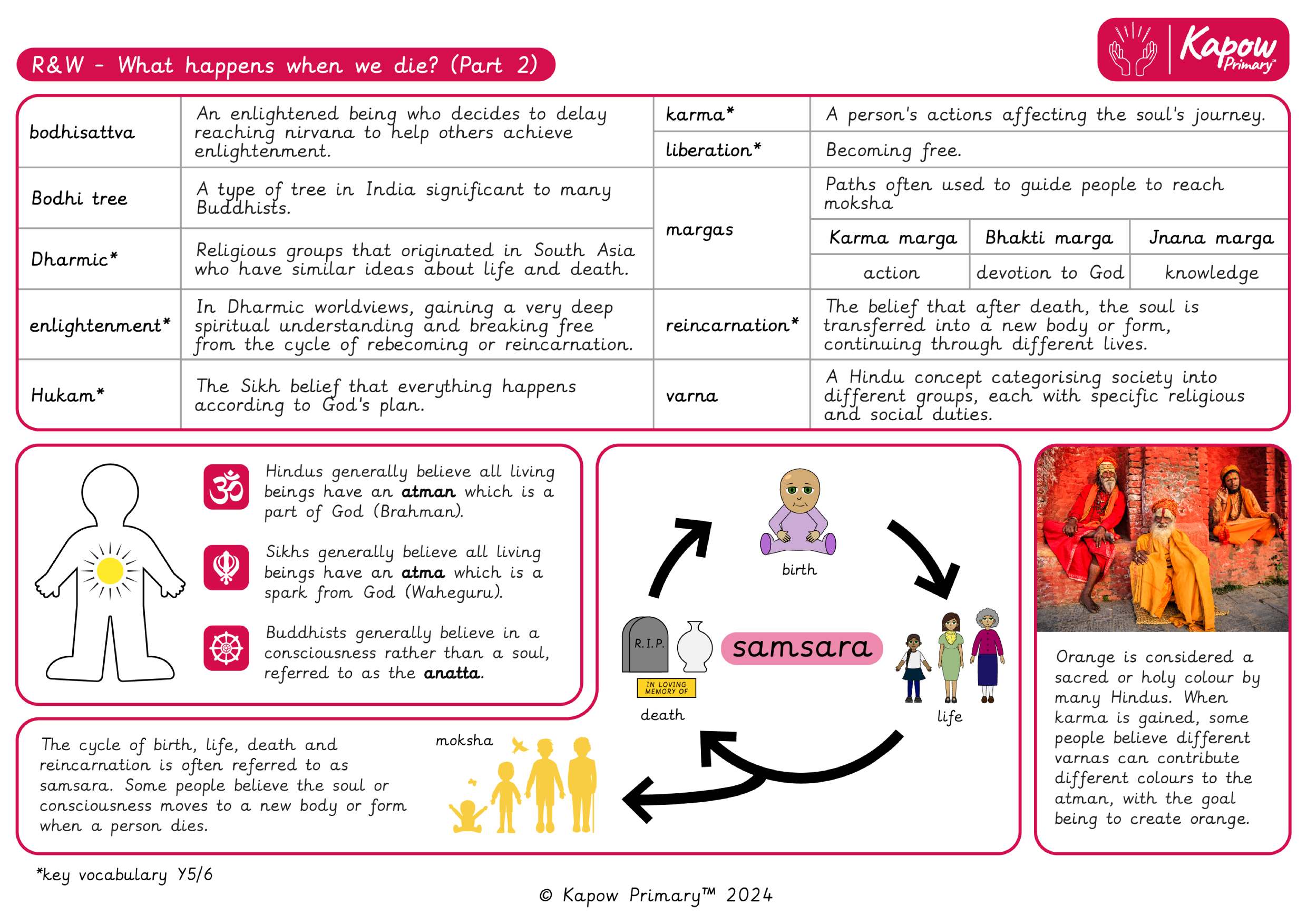
A Knowledge organiser that captures the essential knowledge and skills learnt throughout the mixed-age unit Religion and worldviews, Y5/6 (A), What happens when we die? (Part 2)
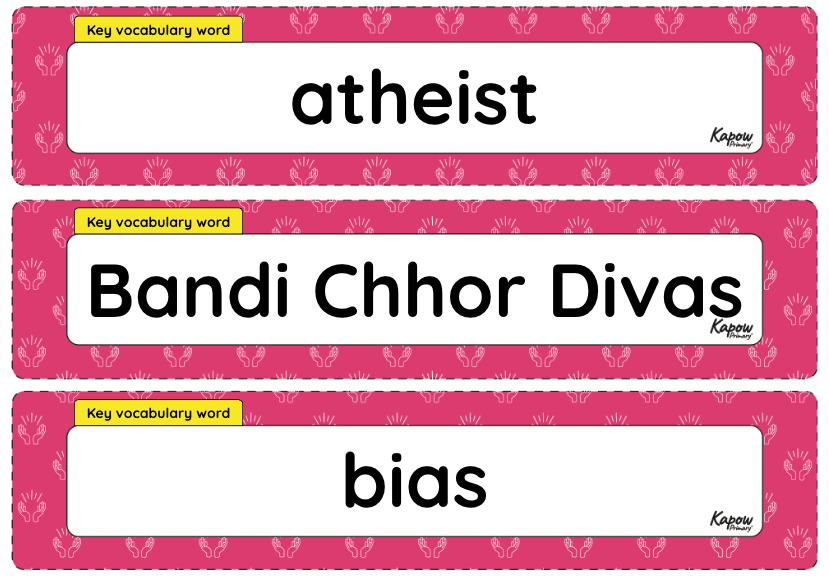
This Religion and worldviews resource is designed to support children as they explore beliefs about death in various religious and cultural practices. It highlights key vocabulary and concepts from Dharmic worldviews, including Hindu, Sikh and Buddhist. It is perfect for consolidating essential knowledge and fostering cross-cultural understanding.
This video supports R&W subject leaders in understanding the Kapow Primary R&W scheme of work, describing the strands and the documentation that can further help you in your role.

This video explains the structure of our Science scheme of work. It describes the strands and documentation that can further support subject leaders in their roles.