




Unit outcomes
Pupils who are secure will be able to:
- Name objects with the same use that are made from different materials.
- Name materials that are used to make objects with different uses.
- Recognise that stretching, twisting, bending and squashing can cause some solid objects to change shape.
- Name properties that make materials suitable for their use.
When working scientifically, pupils who are secure will be able to:
- Measure using non-standard units.
- Recording results in a table.
- Use data to answer a simple question.
- Record results in a block graph.
Please note that Kapow Primary Science lessons are designed to be 1 hour and 30 minutes long to reflect the requirements of a core subject.
Suggested prior learning
Y1/2 (B): Materials: Everyday materials
Get started
Lessons
Y1/2 (B): Lesson 1: Objects and materials
Y1/2 (B): Lesson 2: Which material is suitable?
Y1/2 (B): Lesson 3: Stretch it, twist it, bend it, squash it!
Y1/2 (B): Lesson 4: Testing stretchiness
Y1/2 (B): Lesson 5: Testing strength
Y1/2 (B): Lesson 6: Eco-friendly materials
Key skills
Posing questions
- Recognising there are

This content is for subscribers only. Join for access today.
Key knowledge
To know:
- Objects are
This content is for subscribers only. Join for access today.
Key vocabulary
elastic
fabric (Y1)
This content is for subscribers only. Join for access today.
Equipment list
Equipment needed across all lessons in this unit.
This list does not include equipment which is usually readily available in the classroom (e.g pencils, A4 paper etc)
 Download
Full equipment list for the subject
Quantities marked × will update. Items without quantities are unaffected
- ‘The Smartest Giant in Town’ by Julia Donaldson ×1
- PE hoops 2
- A selection of everyday objects made from wood, metal, glass, plastic and fabric (e.g. bottle, chopping board, plant pot and bag). ×1
- Modelling dough ×30
-
Camera or device for taking photos
×1 - A selection of everyday object to test (e.g. rubber bands, paper clips, rubbers and sponges). ×1
- 30 strips of material for testing strength (e.g. rubber bands, wool, balloons and cotton). ×1
- Connecting cubes Per child: 10
-
Thick books (e.g. dictionaries, atlases or thesauruses)
Per pair: 6
The equipment below is optional
- High visibility jacket, hard hat and clipboard ×1
- Small dog figurine ×1
-
tray containing mud
×1
This content is for subscribers only. Join for access today.
Related content
Unit resources


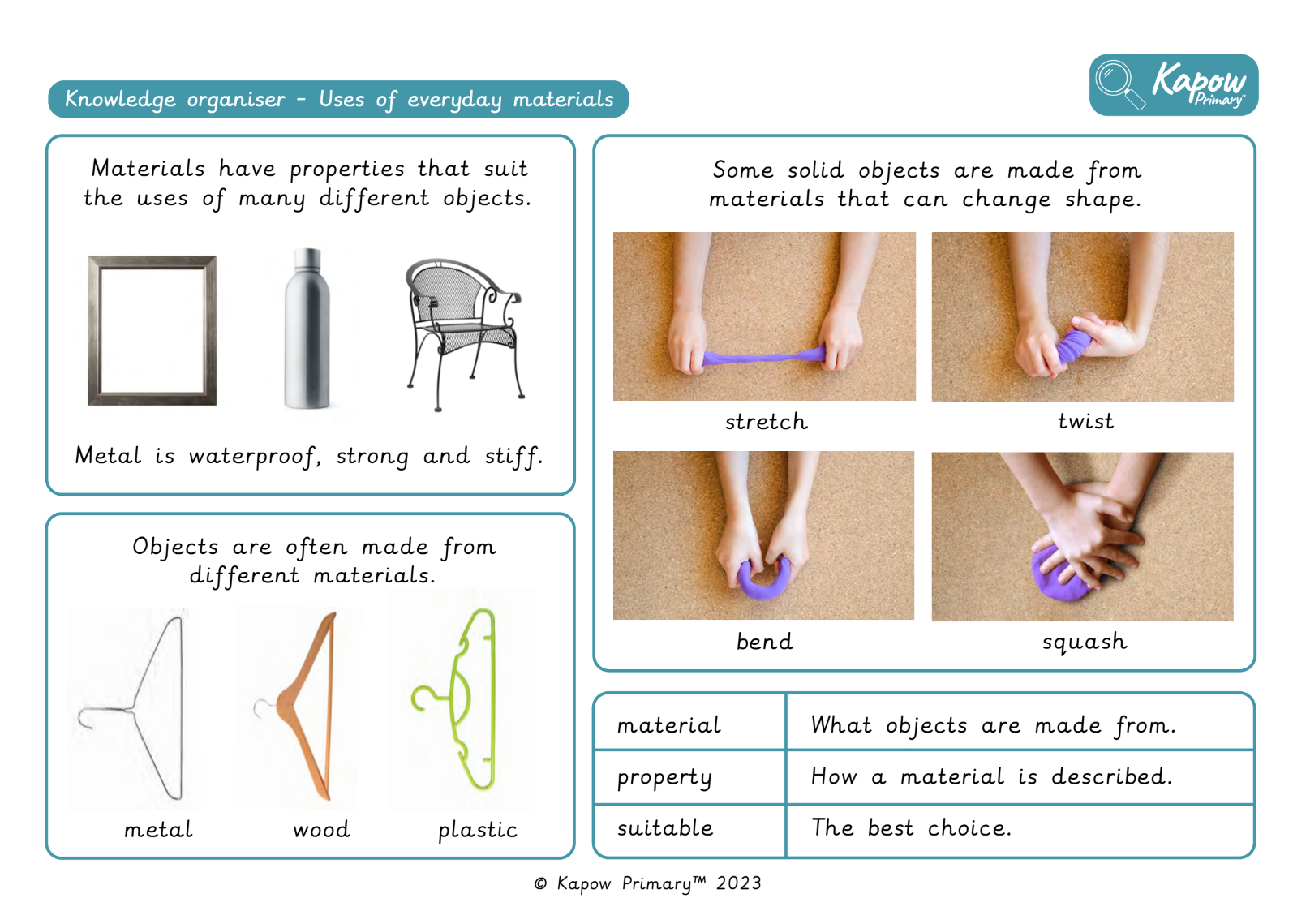
Knowledge organiser – Science Y1/2 (B): Materials: Uses of everyday materials
Aimed at pupils, a single page which gives key facts and definitions from the mixed-age unit ‘Uses of everyday materials’.
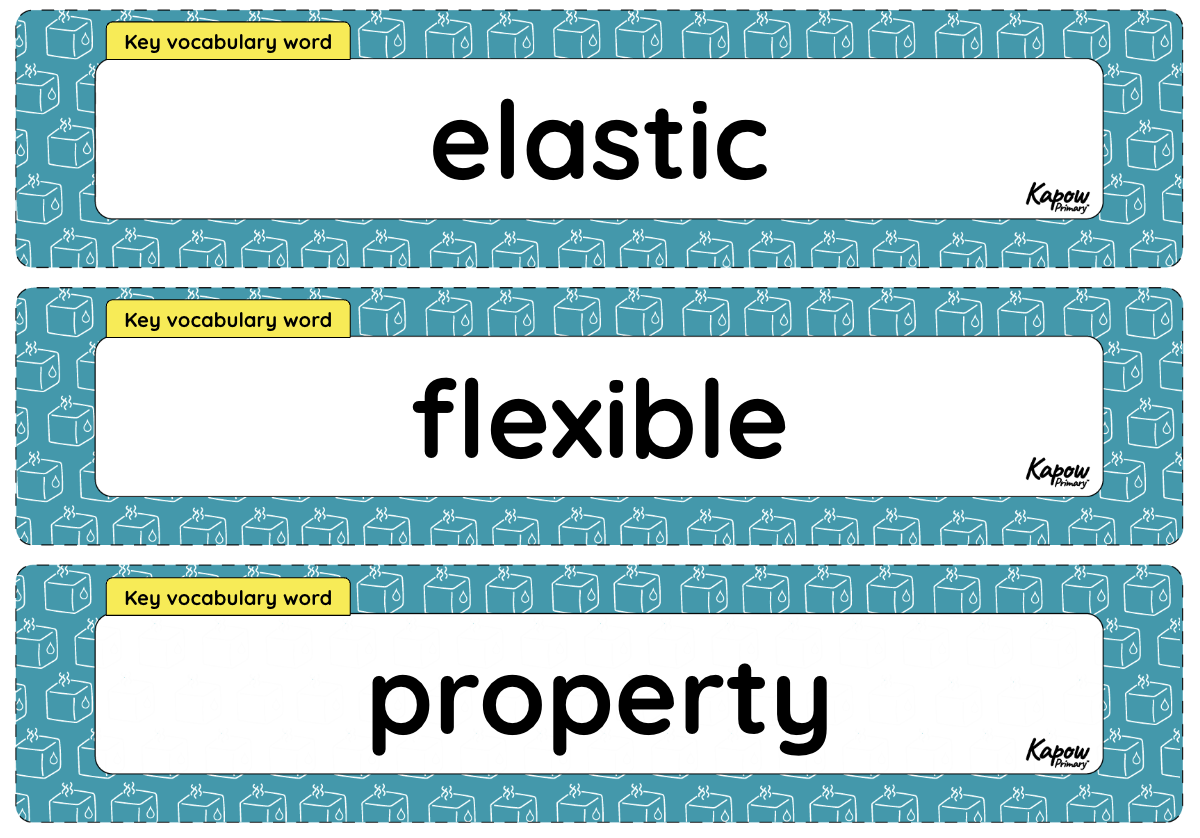
Vocabulary display – Science Y1/2 (B): Materials: Uses of everyday materials
A display version of the vocabulary for the mixed-age unit 'Uses of everyday materials'.
Subject resources
This content is for subscribers only. Join for access today.
Cross-curricular opportunities
Design and technology: Exploring how structures can be made stronger, stiffer and more stable.
English: Writing – vocabulary, grammar and punctuation.
Maths: Measurement; Number – fractions; Multiplication and division.
British values: Accepting responsibility for their behaviour; Contributing positively to society.
Build on the learning
Y5/6 (A): Materials: Properties and changes
Get started
