


Why doesn't Christianity always look the same?
Investigating why Christian worship looks different across the world when key beliefs are the same.
Unit outcomes
Pupils who are secure will be able to:
- Give examples of how Christianity spread as a religion.
- Explain how significant people have led to changes in how Christianity is practised.
- Think about their views on leaders changing the way religion is practised.
- List some reasons why there are different Christian denominations and what it means.
- Recognise that not all Christians interpret passages about the Holy Spirit in the same way.
- Note similarities and differences between practices from different denominations.
- List some ways Christian worship and practices have changed over time.
- Share their personal views.
Suggested prior learning
Y3/4 (A): Who was Jesus really?
Get started
Teacher video: Why doesn't Christianity always look the same?

Lessons
Y5/6 (B): Lesson 1: How did Christianity begin?
Y5/6 (B): Lesson 2: How have some significant people influenced Christian practices?
Y5/6 (B): Lesson 3: Why are there different denominations?
Y5/6 (B): Lesson 4: How is the Bible interpreted differently?
Y5/6 (B): Lesson 5: How do different denominations practise?
Y5/6 (B): Lesson 6: How is Christianity changing?
Key skills
Disciplinary
- Asking challenging questions and

This content is for subscribers only. Join for access today.
Key knowledge
Substantive
To know:
- Some of the
This content is for subscribers only. Join for access today.
Key vocabulary
crucifixion
denomination
This content is for subscribers only. Join for access today.
Equipment list
Equipment needed across all lessons in this unit.
This list does not include equipment which is usually readily available in the classroom (e.g pencils, A4 paper etc)
 Download
Full equipment list for the subject
Quantities marked × will update. Items without quantities are unaffected
- Wonder box ×1
- Sticky notes
- Devices with internet access ×15
This content is for subscribers only. Join for access today.
Related content
Unit resources


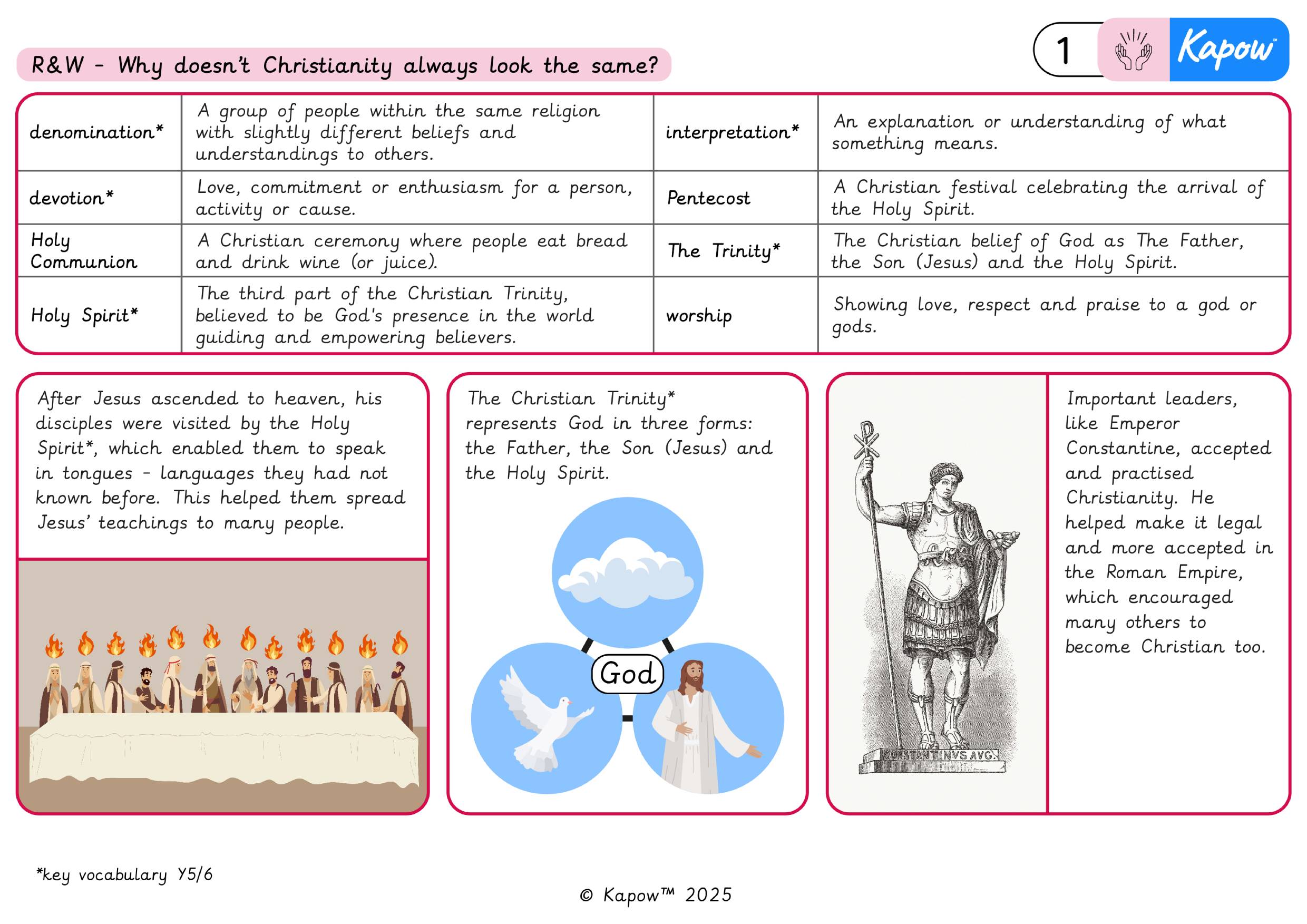
Knowledge organiser – R&W Y5/6 (B): Why doesn’t Christianity always look the same?
Aimed at pupils, two pages providing key facts and definitions from the 'Why doesn't Christianity always look the same?' unit.
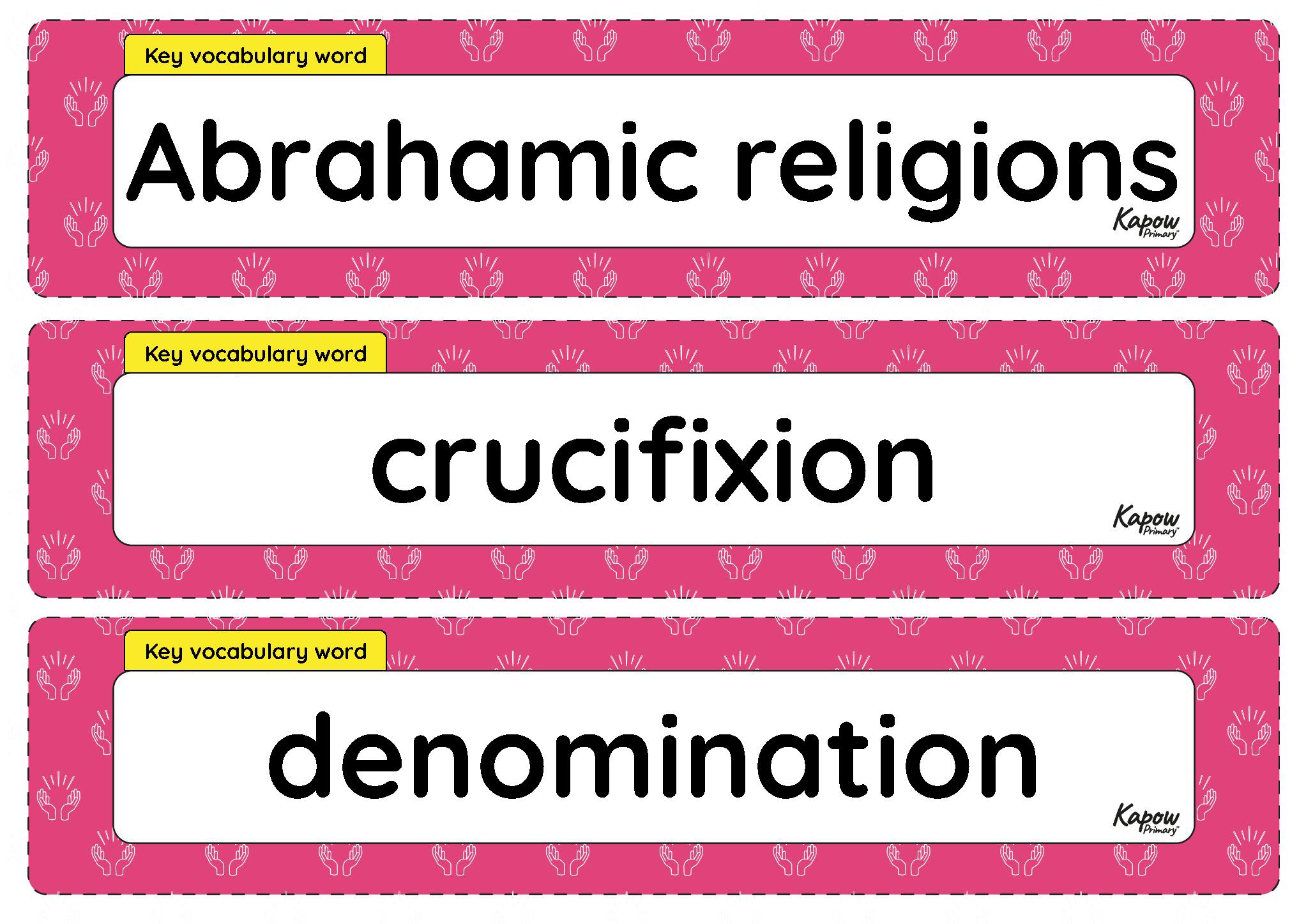
Vocabulary display – R&W Y5/6 (B): Why doesn’t Christianity always look the same?
A display version of the vocabulary from the 'Why doesn't Christianity always look the same?' unit.
Subject resources
This content is for subscribers only. Join for access today.
Cross-curricular opportunities
English: Reading comprehension; Spoken language.
RSE: Respectful relationships.
British Values: Tolerance of different cultures and religions; Mutual respect.
Build on the learning
Y5/6 (B): Why are some places in the world significant to believers?
Get started
