


Y5/6 (A): What happens when we die? (Part 2)
Continuing to investigate concepts relating to death and exploring the concepts of reincarnation and karma.
Unit outcomes
Pupils who are secure will be able to:
- Recognise beliefs about the soul being part of God.
- Identify clues that Hindus and Sikhs generally believe in the soul experiencing more than one life.
- Recognise that the ultimate goal for many Hindus and Sikhs is freedom from reincarnation.
- Use the terms moksha, mukti and nirvana to describe enlightenment and freedom from samsara and reincarnation.
- List ways a person can gather karma through actions and experiences.
- Suggest ways some Sikh practices and funeral rites may comfort someone experiencing death.
- Discuss the meaning of moksha and nirvana, drawing similarities from them.
- Consider ways enlightenment can be represented in art.
Caution:
- This unit explores the concept of death, including various beliefs and practices surrounding it.
- Create a safe space for the children to discuss and consider their ideas about it.
- Consider any recent bereavement or personal issues pupils may have and be ready to consult with the Senior Leadership Team if necessary.
- Modify lessons based on pupil needs and emotional readiness; some lessons offer alternative activities for sensitive topics.
- It is recommended to inform parents and carers before teaching this unit.
Suggested prior learning
Y5/6 (A): What place does religion have in our world today?
Get started
Teacher video: What happens when we die? (Part 2)

If needed, watch the video for Y5/6 (A): What happens when we die? (Part 1) before teaching this unit.
Lessons
Y5/6 (A): Lesson 1: If there is a soul, where does it go?
Y5/6 (A): Lesson 2: What is samsara?
Y5/6 (A): Lesson 3: How might someone reach moksha?
Y5/6 (A): Lesson 4: How can people find comfort after death?
Y5/6 (A): Lesson 5: What is nirvana?
Y5/6 (A): Lesson 6: What does enlightenment look like?
Key skills
Disciplinary
- Asking challenging questions and

This content is for subscribers only. Join for access today.
Key knowledge
Substantive
To know:
- The meaning of
This content is for subscribers only. Join for access today.
Key vocabulary
Dharmic
Eightfold Path
This content is for subscribers only. Join for access today.
Equipment list
Equipment needed across all lessons in this unit.
This list does not include equipment which is usually readily available in the classroom (e.g pencils, A4 paper etc)
 Download
Full equipment list for the subject
Quantities marked × will update. Items without quantities are unaffected
-
Highlighters (three different colours between two)
×15 - A3 paper ×8
- Flipchart ×1
-
A bucket, hoop or chair as a target
×1 -
A beanbag or ball
×1 - Colouring pencils ×8
-
A transparent bowl, vase or jug
×1 -
White, red, yellow and blue dyes
×1 - A4 paper ×30
The equipment below is optional
-
Mixed media and art materials
×1 -
Digital recording devices
×8
This content is for subscribers only. Join for access today.
Related content
Unit resources


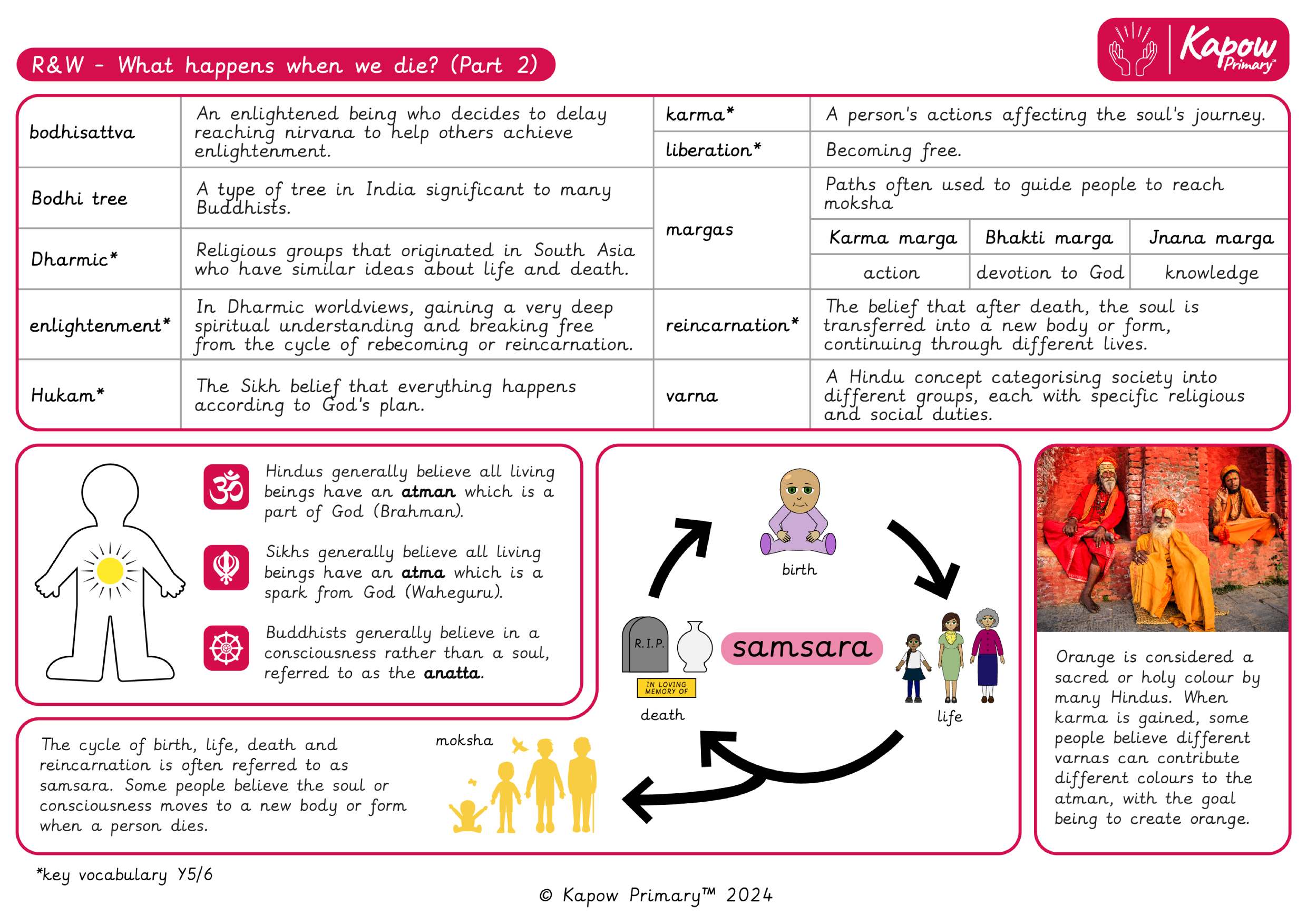
Knowledge organiser – R&W Y5/6 (A): What happens when we die? (Part 2)
Aimed at pupils, two pages providing key facts and definitions from the unit 'What happens when we die? (Part 2).
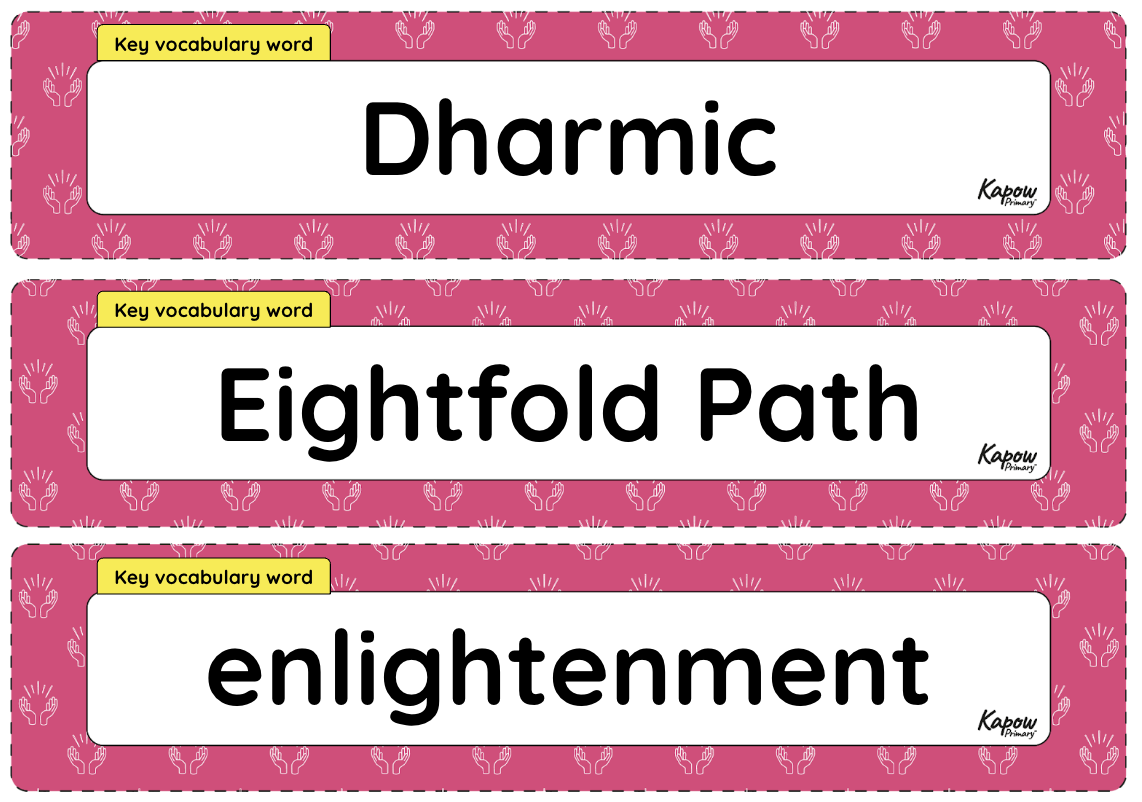
Vocabulary display – R&W Y5/6 (A): What happens when we die? (Part 2)
A display version of the vocabulary from the unit 'What happens when we die? (Part 2)'.
Subject resources
This content is for subscribers only. Join for access today.
Cross-curricular opportunities
English: Spoken language; Reading.
Science: Properties and change of materials.
Art and Design.
RSE: Respectful relationships.
British values: Mutual respect; Tolerance of those with different faiths and beliefs.
Build on the learning
Y5/6 (A): Who should get to be in charge?
Get started
