




Unit outcomes
Pupils who are secure will:
- Describe that prayer is talking to a god or gods.
- Identify some reasons why people might choose to talk to God and what it means to some people.
- Identify similarities and differences in the ways in which people pray.
- Use appropriate vocabulary to describe what prayer looks like.
- Recognise how some people prepare for prayer.
- Identify some of the ways people use their bodies when praying.
- Recognise and name some important objects and items of clothing used by some Jewish, Muslim and Hindu people during prayer.
- Talk about what makes some objects special.
- Discuss the use of prayer read from books or scripture.
- Explain simply why some people might use the same prayers.
- Draw connections between prayer practices within the Hindu, Muslim and Jewish worldviews.
Suggested prior learning
Y1/2 (B): Why is light important to people?
Get started
Teacher video: How do some people talk to God? unit overview

Lessons
Y1/2 (B): Lesson 1: Why do some people talk to God?
Y1/2 (B): Lesson 2: How might prayer make some people feel?
Y1/2 (B): Lesson 3: How do some people use their bodies in prayer?
Y1/2 (B): Lesson 4: What do some people use to help them pray?
Y1/2 (B): Lesson 5: How do some Hindu people pray?
Y1/2 (B): Lesson 6: Where do prayers come from?
Key skills
Disciplinary
- Asking questions about what

This content is for subscribers only. Join for access today.
Key knowledge
Substantive
To know:
- Prayer means communicating
This content is for subscribers only. Join for access today.
Key vocabulary
Allah
avatar
This content is for subscribers only. Join for access today.
Equipment list
Equipment needed across all lessons in this unit.
This list does not include equipment which is usually readily available in the classroom (e.g pencils, A4 paper etc)
 Download
Full equipment list for the subject
Quantities marked × will update. Items without quantities are unaffected
- Wonder box ×1
- PE hoops 3
- Flipchart paper ×1
- Sticky notes
- Permanent markers ×30
- Counters ×30
- A well known prayer of your choice e.g. a copy of the Lord’s Prayer; the first two verses of the Shema; a verse from one of the Hindu Vedas or a prayer from the Qu’ran. ×1
The equipment below is optional
- Audio playback device ×8
- Prayer objects: a hijab, a kippah, a tawla, a sadjada, tasbih/prayer beads, a tallis and a replica mini Torah scroll ×1
-
Objects used during Hindu prayer, such as a murti, a bell, a diya lamp, food and flowers
×1
This content is for subscribers only. Join for access today.
Related content
Unit resources


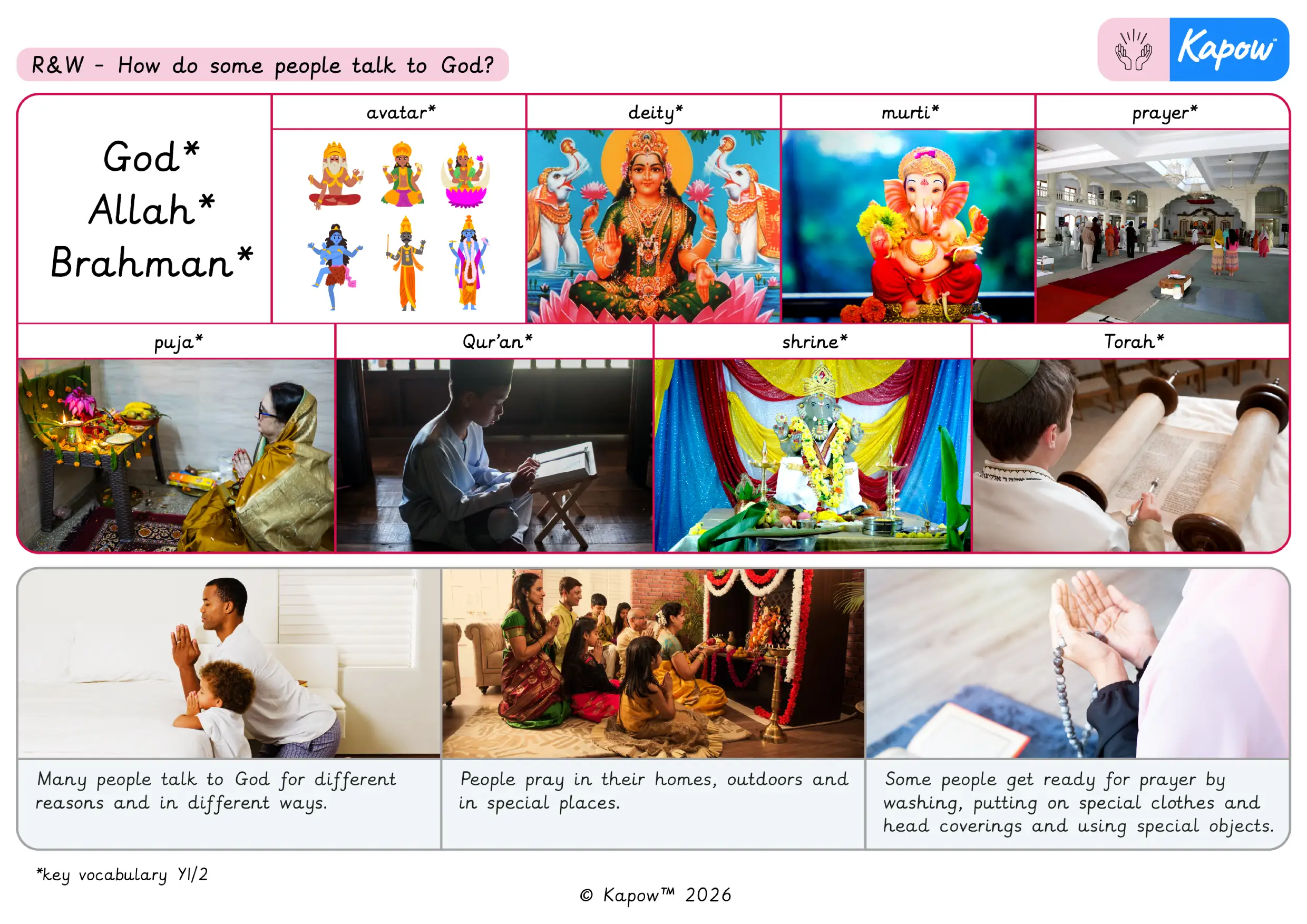
Knowledge organiser – R&W Y1/2 (B): How do some people talk to God?
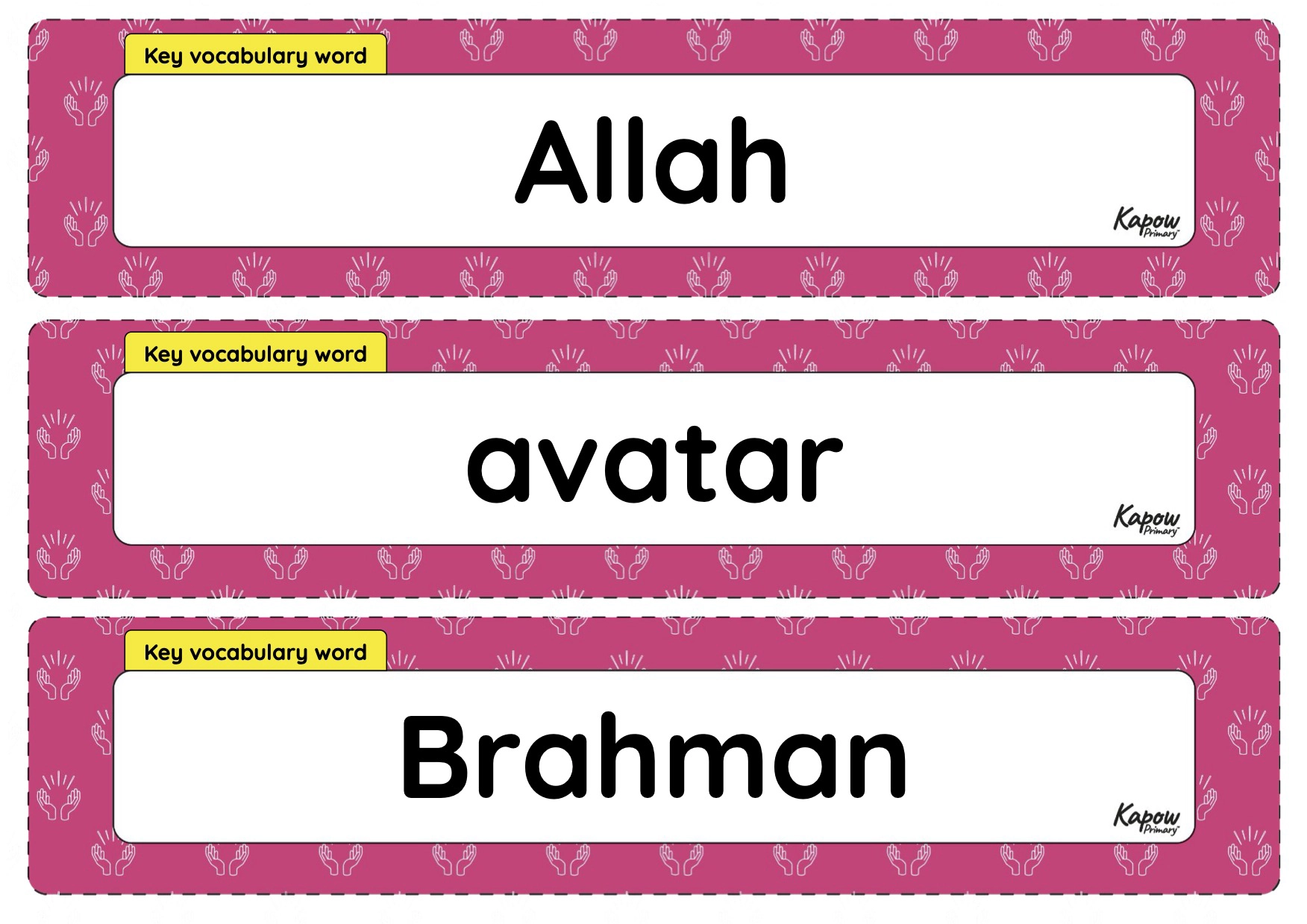
Vocabulary display – R&W Y1/2 (B): How do some people talk to God?
A display version of the key vocabulary from the mixed-age unit 'How do some people talk to God?'
Subject resources
This content is for subscribers only. Join for access today.
Cross-curricular opportunities
RSE: Respectful relationships.
British values: Tolerance of those with different faith and beliefs; Mutual respect.
English: Spoken language.
Build on the learning
Coming soon: Where do some people talk to God?Popular content
- Religion & worldviews: Curriculum portal
- Religion & worldviews: Curriculum information
- R&W: Key skills and knowledge by unit
- Religion & worldviews: Vocabulary progression
- R&W: Transitioning to Kapow
- R&W: Personal development, SMSC and BV
- Webinar: Fieldwork And Your Local Area In Geography
- Webinar: Ace your role as a music subject leader
