




Unit outcomes
Pupils who are secure will be able to:
- Create a personal timeline by ordering three events correctly on a simple timeline.
- Use the vocabulary ‘before’ and ‘after’ when talking about their timeline.
- Recognise what is similar and different between the ‘past’ and ‘now’.
- Talk about three holiday memories.
- Place one holiday memory on a timeline.
- Identify how people spend their holidays differently.
- Describe what photographs tell us about holidays in the past.
- Identify similarities and differences between holidays in the past and now.
- Order photographs on a timeline.
- Ask one question about holidays in the past.
- Find answers to simple questions about the past.
- Identify features of holidays in the past.
- Describe what holidays in the past were like and compare them to now.
- Find similarities and differences.
- Use time vocabulary to talk about their memories.
- Recognise similarities and differences between their lives now and in the past.
Suggested prior learning
Y1/2 (A): How did we learn to fly?
Get started
Lessons
Y1/2 (B): Lesson 1: What is history?
Y1/2 (B): Lesson 2: What is a holiday?
Y1/2 (B): Lesson 3: What were holidays like in the past?
Y1/2 (B): Lesson 4: How can we find out more about holidays in the past?
Y1/2 (B): Lesson 5: How have holidays changed?
Y1/2 (B): Lesson 6: What are my favourite holiday memories?
Key skills
- Sequencing three or four

This content is for subscribers only. Join for access today.
Key knowledge
- To know that a
This content is for subscribers only. Join for access today.
Key vocabulary
change
different
This content is for subscribers only. Join for access today.
Equipment list
Equipment needed across all lessons in this unit.
This list does not include equipment which is usually readily available in the classroom (e.g pencils, A4 paper etc)
 Download
Full equipment list for the subject
Quantities marked × will update. Items without quantities are unaffected
-
A printed photograph of each child (from any point in their life – ask parents/carers before the lesson)
×30 -
A three-metre length of string
×1 - Pegs 11
-
Children’s copies of the Activity: Timeline from Lesson 1: What is history?
×30 - Printed photographs of the children’s holidays and souvenirs (ask parents/carers before the lesson) ×30
- A visitor (e.g. a parent, grandparent or a member of staff) to be interviewed by the children about their childhood holidays ×1
-
Items brought in by the children that can be glued into a scrapbook (photographs, tickets or stickers).
×30 -
A4 coloured paper
×30 - Felt tip pens ×30
- Glue stick ×15
The equipment below is optional
-
Visitor photographs, postcards and souvenirs from childhood holidays
×30 -
A device to take photographs and record video footage
×8 -
An example scrapbook
×1
This content is for subscribers only. Join for access today.
Related content
Unit resources


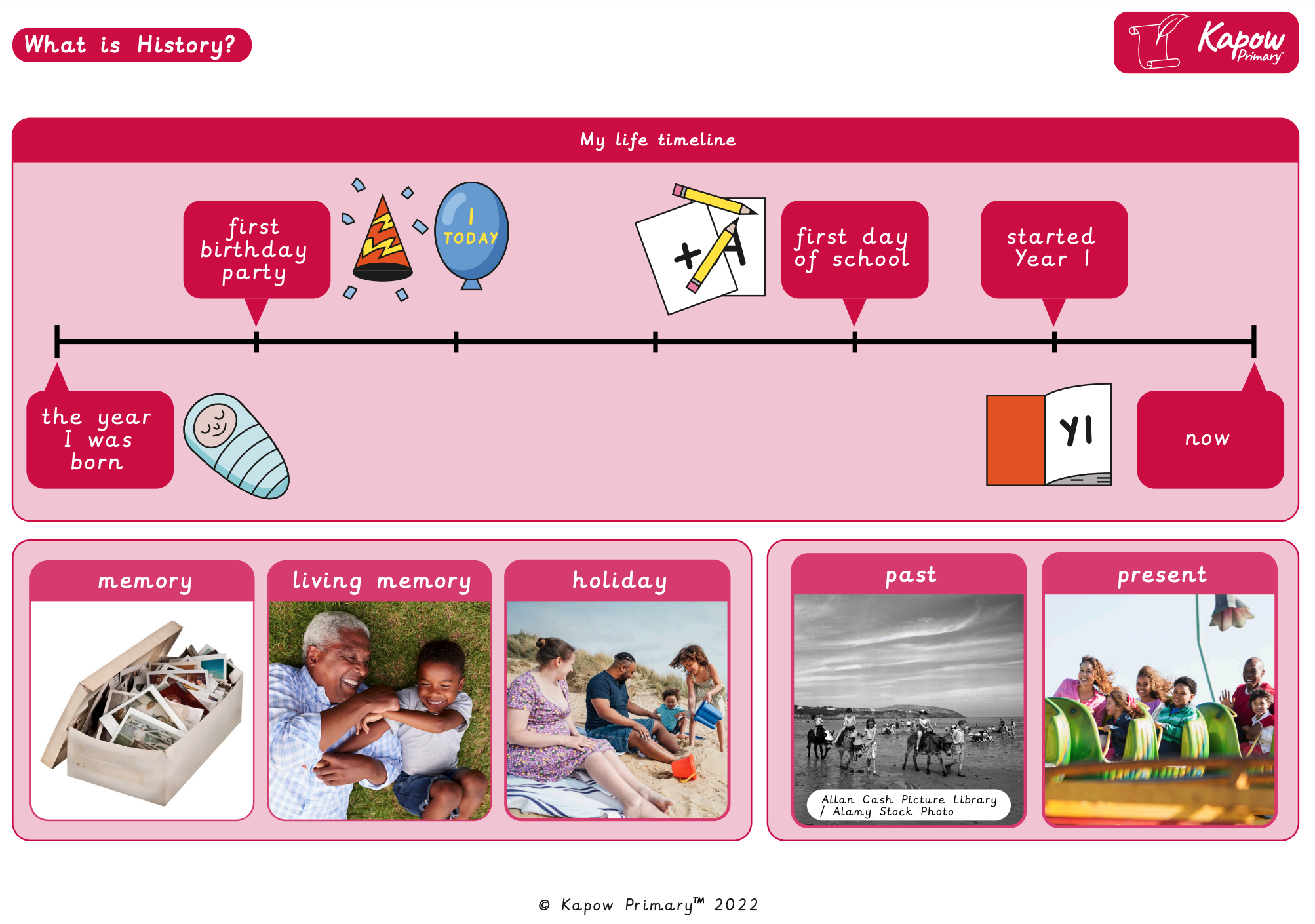
Knowledge organiser – History Y1/2 (B): What is history?
Aimed at pupils, a single page which gives key facts and definitions from the unit "What is history?".
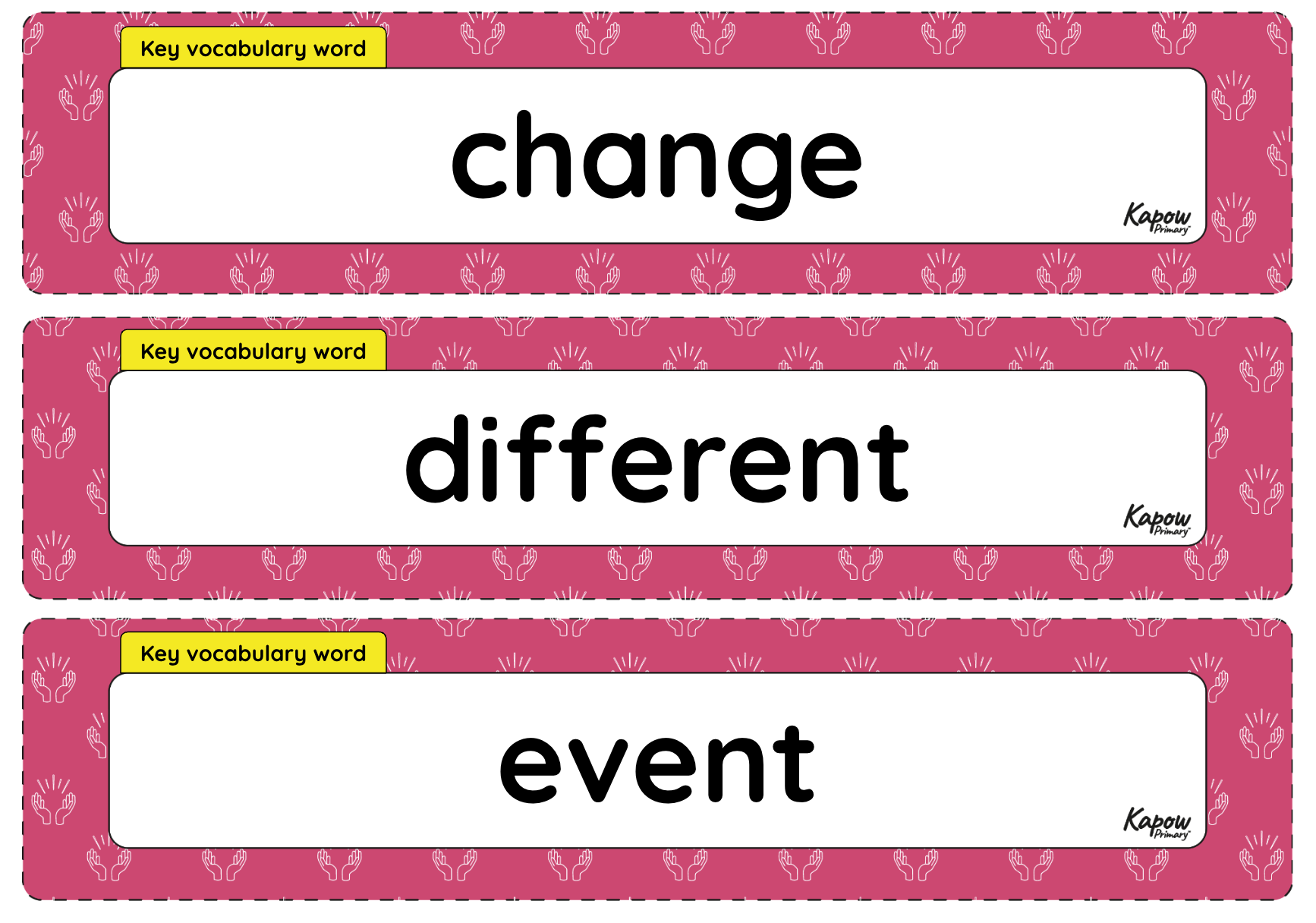
Vocabulary display – History Y1/2 (B): What is history?
A display version of the key vocabulary from the 'What is history?' unit.
Subject resources
This content is for subscribers only. Join for access today.
Cross-curricular opportunities
- Maths: Measurement
- Art and design
- English: Spoken language
Build on the learning
Y1/2 (B): How was school different in the past?
Get started
