




- Subjects >
- RSE & PSHE >
- Key stage 1 >
- Year 1 >
Unit outcomes
Pupils who are secure will be able to:
- Name the six basic emotions and recognise them using face and body clues.
- Explain that people can feel different emotions in the same situation and give simple reasons why.
- Describe emotions as comfortable or uncomfortable.
- Describe how feelings can change and vary in strength, for example, ‘a little bit’ or ‘a lot.’
- Identify what makes them feel calm, relaxed or excited.
- Explain why rest and enjoyable activities are important for wellbeing.
- Identify what might make themselves and others feel worried, annoyed or upset and suggest ways to feel better.
- Say how they feel and identify trusted adults who can help when feelings feel difficult.
Suggested prior learning
Self-regulation: My feelings
Get started
Teacher video: My healthy self overview

Lessons
Lesson 1: What emotions can we recognise?
Lesson 2: When and why do people show different emotions?
Lesson 3: How can emotions change?
Lesson 4: What helps us to feel calm or excited?
Lesson 5: What might make us feel worried, annoyed or upset?
Lesson 6: What can we do when our feelings get tricky?
Key skills
- Beginning to recognise and

This content is for subscribers only. Join for access today.
Key knowledge
To know:
- Basic emotions (happiness,
This content is for subscribers only. Join for access today.
Key vocabulary
anger (Y1/2)
body clues (Y1/2)
This content is for subscribers only. Join for access today.
Equipment list
Equipment needed across all lessons in this unit.
This list does not include equipment which is usually readily available in the classroom (e.g pencils, A4 paper etc)
 Download
Full equipment list for the subject
Quantities marked × will update. Items without quantities are unaffected
- Wonder box ×1
-
Cones, a rope or chalk to form a line on the ground
As needed - Scissors right- and left-handed options recommended. ×30
- Glue stick ×30
-
Items to represent clouds and rainbows on the ground, for example, hoops, rope, chalk or masking tape
- Counters ×10
- Photographs of familiar adults who work in the school ×1
- Large space such as a hall or playground. ×1
- Colouring pencils ×30
This content is for subscribers only. Join for access today.
Related content
Unit resources


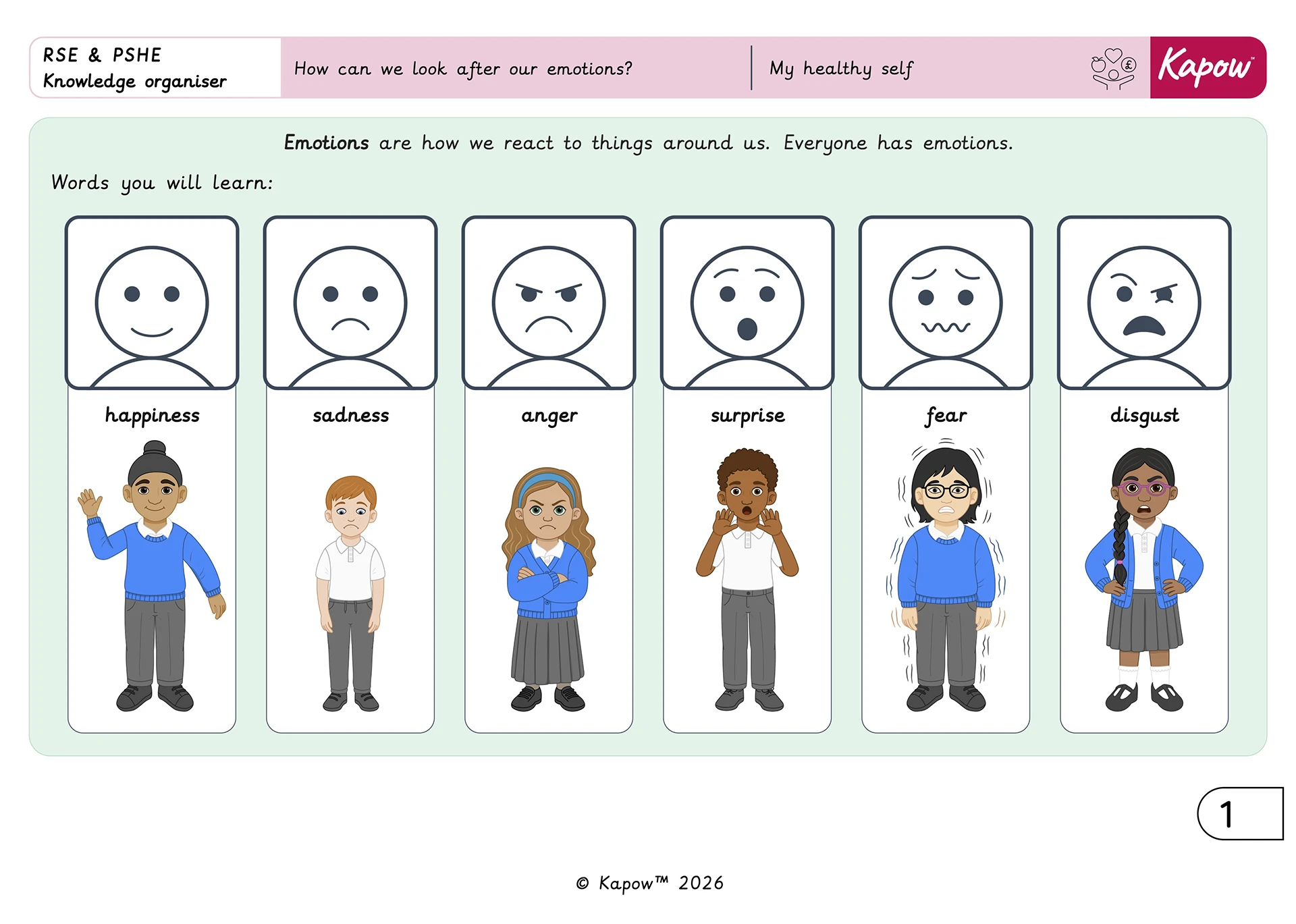
Knowledge organiser – RSE & PHSE Y1: My heathy self: How can we look after our emotions?
Aimed at pupils, two pages providing key facts and definitions from the unit 'How can we look after our emotions?'.
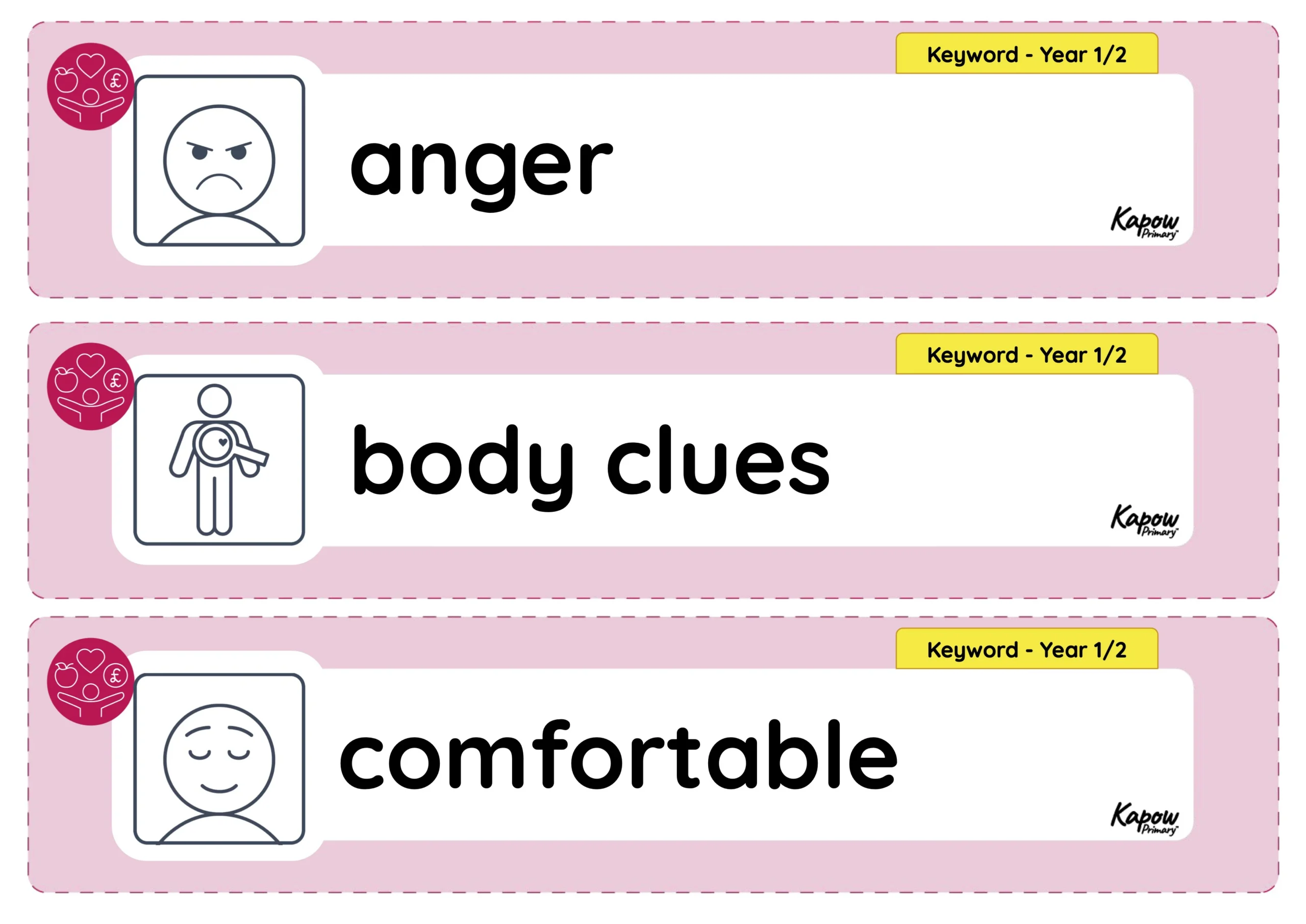
Vocabulary display – RSE & PHSE Y1: My heathy self: How can we look after our emotions?
A display version of the vocabulary for the unit 'How can we look after our emotions?'
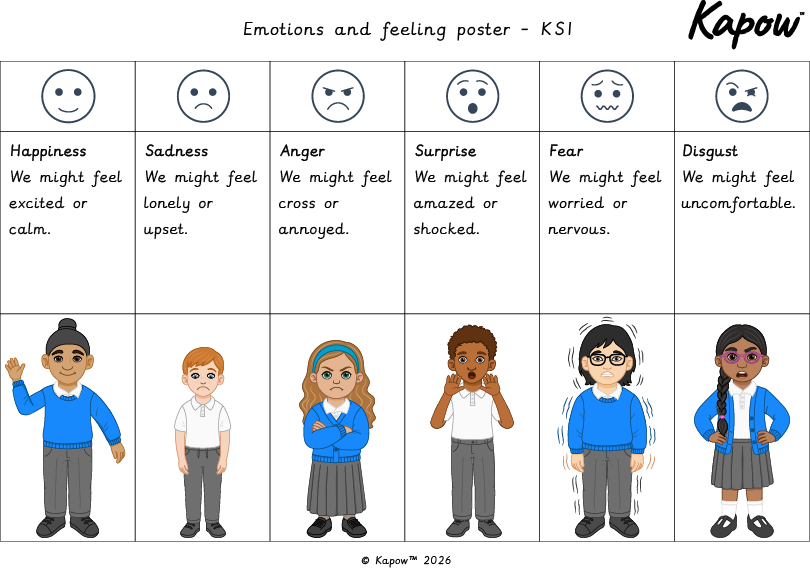
Unit resource: KS1 Emotions and feelings poster
A poster showing the six main emotions and associated feelings.
Cross-curricular opportunities
British values: Individual liberty; Mutual respect.
Build on the learning
My healthy self: How can we look after our bodies?
Get started
