




- Subjects >
- RSE & PSHE >
- Key stage 1 >
- Year 1 >
Unit outcomes
Pupils who are secure will be able to:
- Identify common items in the home that are safe and unsafe for children and explain simply how they could cause harm.
- Name things that are safe or unsafe to put in or on their body.
- Describe and use simple safety rules in familiar places such as the home and school.
- Recognise some basic body clues or warning signs that might show they feel worried, unsafe or uncomfortable.
- Describe how to stay safe near roads.
- Follow the steps ‘Stop, Look, Listen, Think’ to explain how to cross a road safely with a trusted adult.
- Name some trusted adults at home and at school and say who they could go to for help in different places.
- Use simple, clear phrases to ask a trusted adult for help.
Suggest prior learning
Health protection: How can I protect myself and others in daily life?
Get started
Teacher video: Staying safe overview

Lessons
Lesson 1: How can I stay safe at home?
Lesson 2: What is safe for our bodies?
Lesson 3: What rules can keep me safe?
Lesson 4: How can I stay safe near roads?
Lesson 5: How might my body feel when something is unsafe?
Lesson 6: Who can keep me safe?
Key skills
Key skills
- Recognising when

This content is for subscribers only. Join for access today.
Key knowledge
To know:
- Some
This content is for subscribers only. Join for access today.
Key vocabulary
body clues (Y1/2)
comfortable (Y1/2)
This content is for subscribers only. Join for access today.
Equipment list
Equipment needed across all lessons in this unit.
This list does not include equipment which is usually readily available in the classroom (e.g pencils, A4 paper etc)
 Download
Full equipment list for the subject
Quantities marked × will update. Items without quantities are unaffected
-
Red and green colouring pencils
×15 - Wonder box ×1
- PE hoops 2
- Chalk or tape ×1
-
A large space, such as a playground or hall
The equipment below is optional
- Empty, washed bottles or containers of chemical products
- Empty packs or strips of medicine
- Empty food and drink packaging
This content is for subscribers only. Join for access today.
Related content
Unit resources


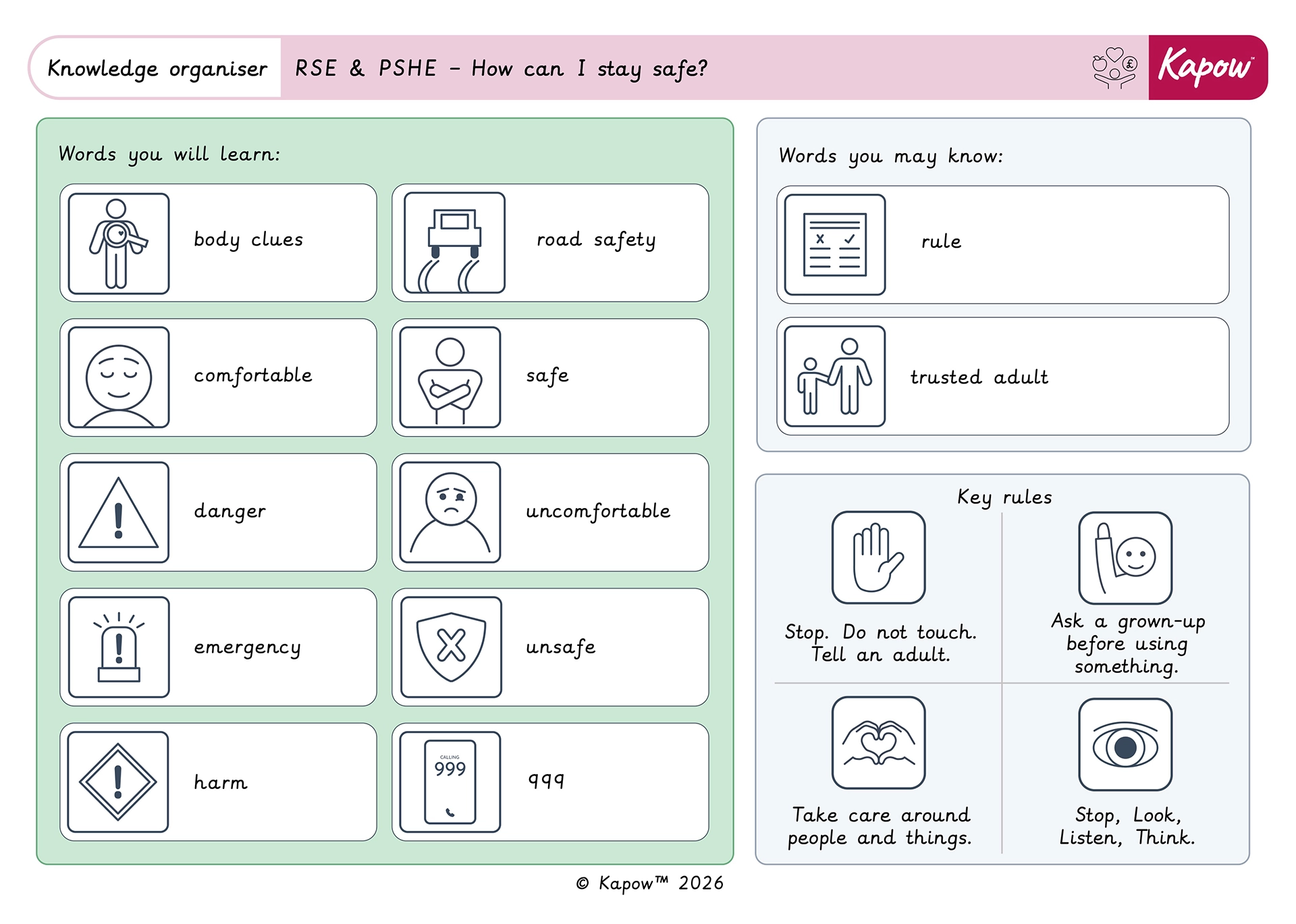
Knowledge organiser – RSE & PSHE Y1: Staying safe: How can I stay safe?
Aimed at pupils, one page providing key facts and definitions from the unit 'How can I stay safe?'.
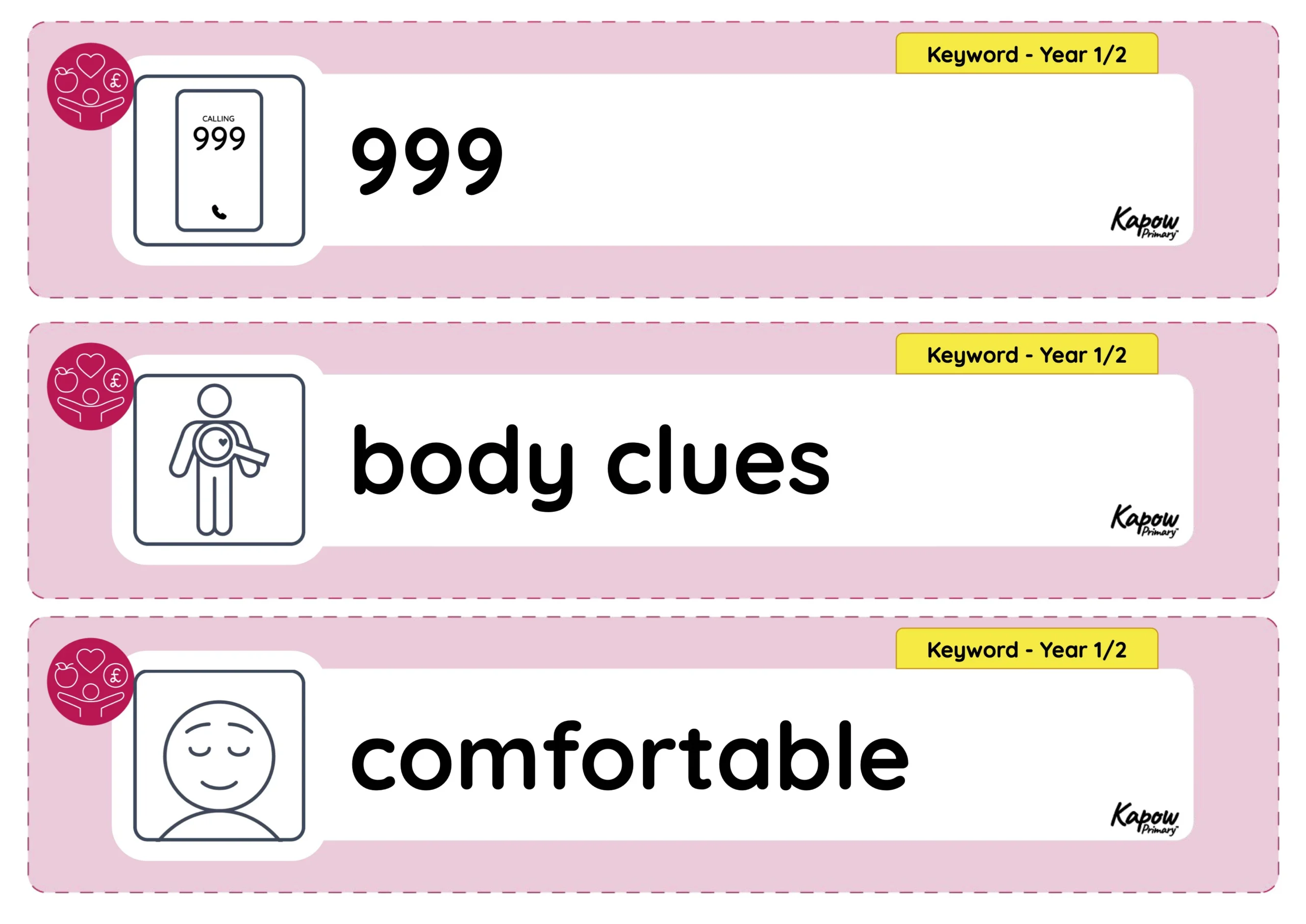
Vocabulary display – RSE & PSHE Y1: Staying safe: How can I stay safe?
A display version of the vocabulary from the unit 'How can I stay safe?'.
Cross-curricular opportunities
English: Spoken language.
British values: The rule of law; Individual liberty; Mutual respect.
Build on the learning
Staying safe: How can I make safe choices in different places?
Get started
