




- Subjects >
- Music >
- Key stage 2 >
- Year 4 >
Important
This unit has been updated to reflect Kapow Primary’s revised Music progression.
Note: if teaching the recommended Instrumental scheme and curriculum time is limited, omit this unit and teach Music, Instrumental lessons, Unit 2: Caribbean instead.
See Music: Instrumental scheme for more information.
Unit outcomes
Pupils who are secure will be able to:
- Describe what a stave is and how to use it.
- Name and play the notes C to G using the stave.
- Recognise and read notes on the stave while playing.
- Follow the notes in the correct order shown on the stave.
- Describe what a motif is.
- Explain the effect different pitches can have on a listener in a motif.
- Match motifs to characters based on the pitches heard.
- Draw notes accurately on the stave.
- Follow the notes on a stave whilst playing a short motif.
- Follow notation on a stave when performing.
- Perform a motif in a small group.
Suggested prior learning
Inspired by India: Musical improvisations
Get started
Teacher video: Musical motifs: Reading the stave unit overview

Lessons
Lesson 1: Notes on the stave
Lesson 2: Reading the stave
Lesson 3: What is a motif?
Lesson 4: Composing a motif
Lesson 5: Performing a motif
Key skills
Listening and evaluating
- Listening with

This content is for subscribers only. Join for access today.
Key knowledge
Listening and evaluating
To know:
-
This content is for subscribers only. Join for access today.
Key vocabulary
compose (Y1/2)
composition
This content is for subscribers only. Join for access today.
Equipment list
Equipment needed across all lessons in this unit.
This list does not include equipment which is usually readily available in the classroom (e.g pencils, A4 paper etc)
 Download
Full equipment list for the subject
Quantities marked × will update. Items without quantities are unaffected
- Tuned percussion instruments ×15
-
A recording device.
×1
This content is for subscribers only. Join for access today.
Related content
Unit resources


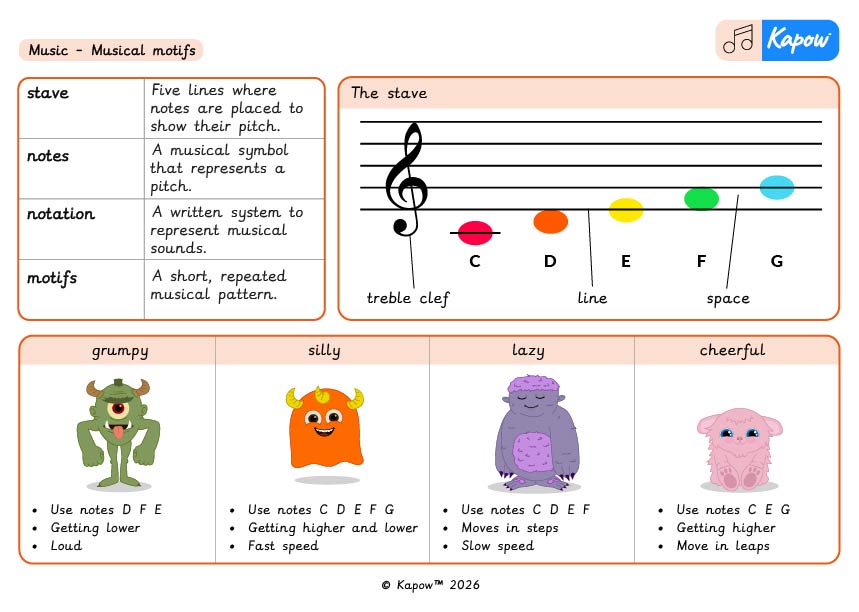
Knowledge organiser: Music – Y4 Musical motifs: Reading the stave
Aimed at pupils, one page providing key facts and definitions from the unit 'Musical motifs: Reading the stave'.
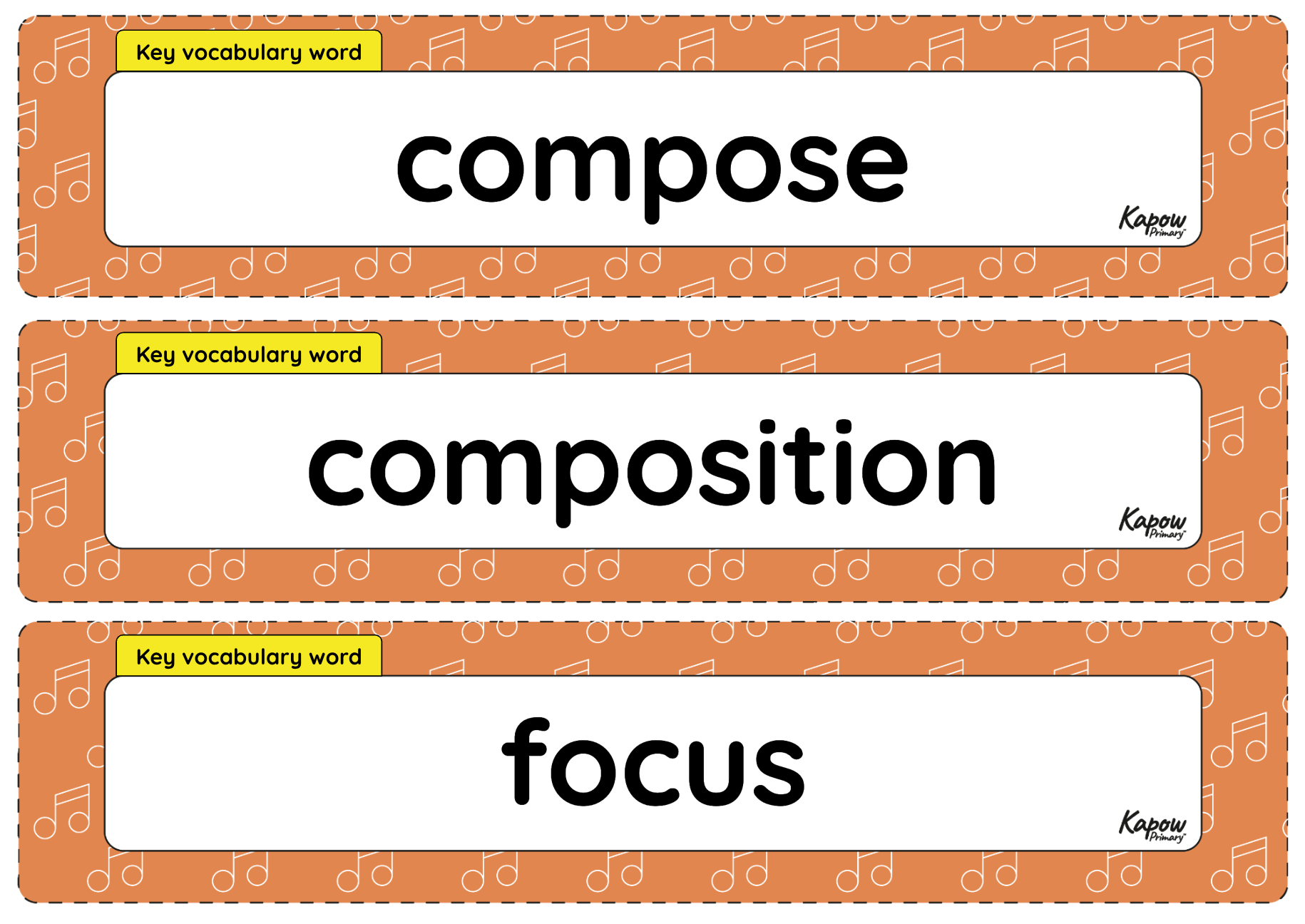
Vocabulary display – Music Y4: Musical motifs: Reading the stave
A display version of the vocabulary from the unit 'Musical motifs: Reading the stave'.
Subject resources
This content is for subscribers only. Join for access today.
Cross-curricular opportunities
English: Spoken language, writing.
Art: Produce creative work, exploring their ideas and recording their experiences.
British values: Mutual respect, Democracy.
