




- Subjects >
- History >
- Key stage 1 >
- Year 1 >
Unit outcomes
Pupils who are secure will be able to:
- Discuss their favourite toy using language related to the past.
- Ask questions about toys in the past.
- Make comparisons between toys in the past and present.
- Sequence artefacts from different periods of time.
- Identify changes between teddy bears today and those from 100 years ago.
- Describe how toys have changed over time.
A selection of modern toys is required for Lesson 1: What is your favourite toy? Ask parents or carers to send in items and prepare a few extra examples for pupils who do not bring one.
Invite an older person (family or staff member) to visit the class for an interview about their favourite toy as part of Lesson 2: Did your parents and grandparents play with the same toys as you? Use the pupil videos provided if a visit is not possible.
This unit could also include an optional visit to a museum or loan of a museum collection so children can explore toys from the past first-hand. Follow school risk assessment policies and procedures if arranging an external visit.
Suggested prior learning
How am I making history?
Get started
Lessons
Lesson 1: What is your favourite toy?
Lesson 2: Did your parents and grandparents play with the same toys as you?
Lesson 3: What were toys like in the past?
Lesson 4: What is similar and different about toys now and in the past?
Lesson 5: How have teddy bears changed over time?
Lesson 6: How have toys changed?
Key skills
- Using common

This content is for subscribers only. Join for access today.
Key knowledge
- To know that throughout
This content is for subscribers only. Join for access today.
Key vocabulary
artefact
change
This content is for subscribers only. Join for access today.
Equipment list
Equipment needed across all lessons in this unit.
This list does not include equipment which is usually readily available in the classroom (e.g pencils, A4 paper etc)
 Download
Full equipment list for the subject
Quantities marked × will update. Items without quantities are unaffected
- Ask parent or carers to arrange for their child to bring in one favourite toy. ×30
- A selection of modern toys (indoor and outdoor) for children to choose from. ×8
- A selection of at least six toys, including a toy from 100 years ago, toys from the 1950s–1980s (loaned from a local museum or sourced from parents) and modern toys ×8
- Large sugar paper ×15
- Six comparable toys (three old toys from the last 100 years and three comparable modern toys, e.g. a wooden train from the 1920s and a modern plastic toy train).
- PE hoops 2
- Sticky notes
-
A range of teddy bears (for children who are unable to bring one in).
-
An older teddy bear (parents or grandparents might be able to bring one in, or they can be loaned from a museum).
×1 - IPads ×15
This content is for subscribers only. Join for access today.
Related content
Unit resources


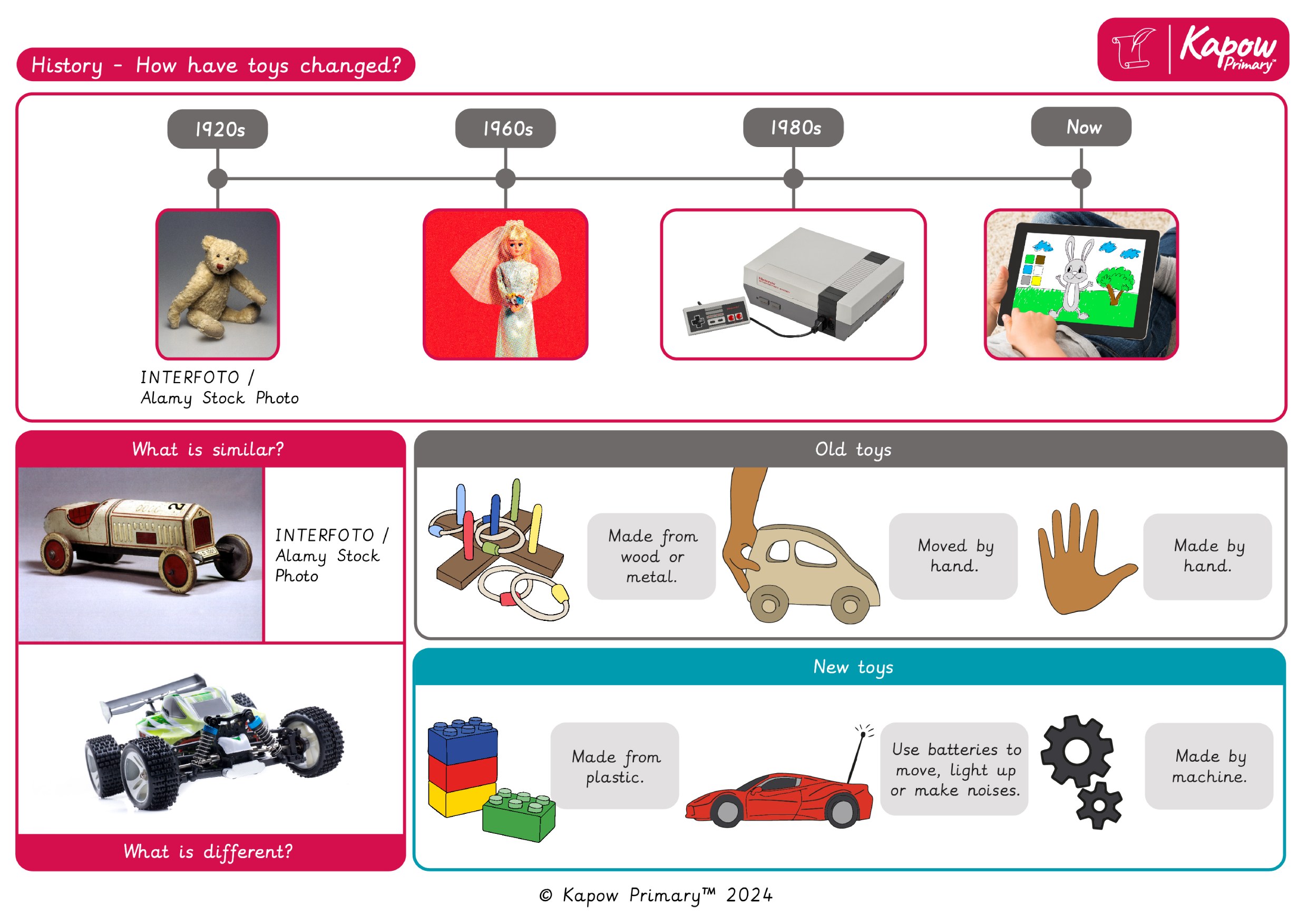
Knowledge organiser – History Y1: How have toys changed?
Aimed at pupils, a single page document that gives key facts and definitions from the unit "How have toys changed?".
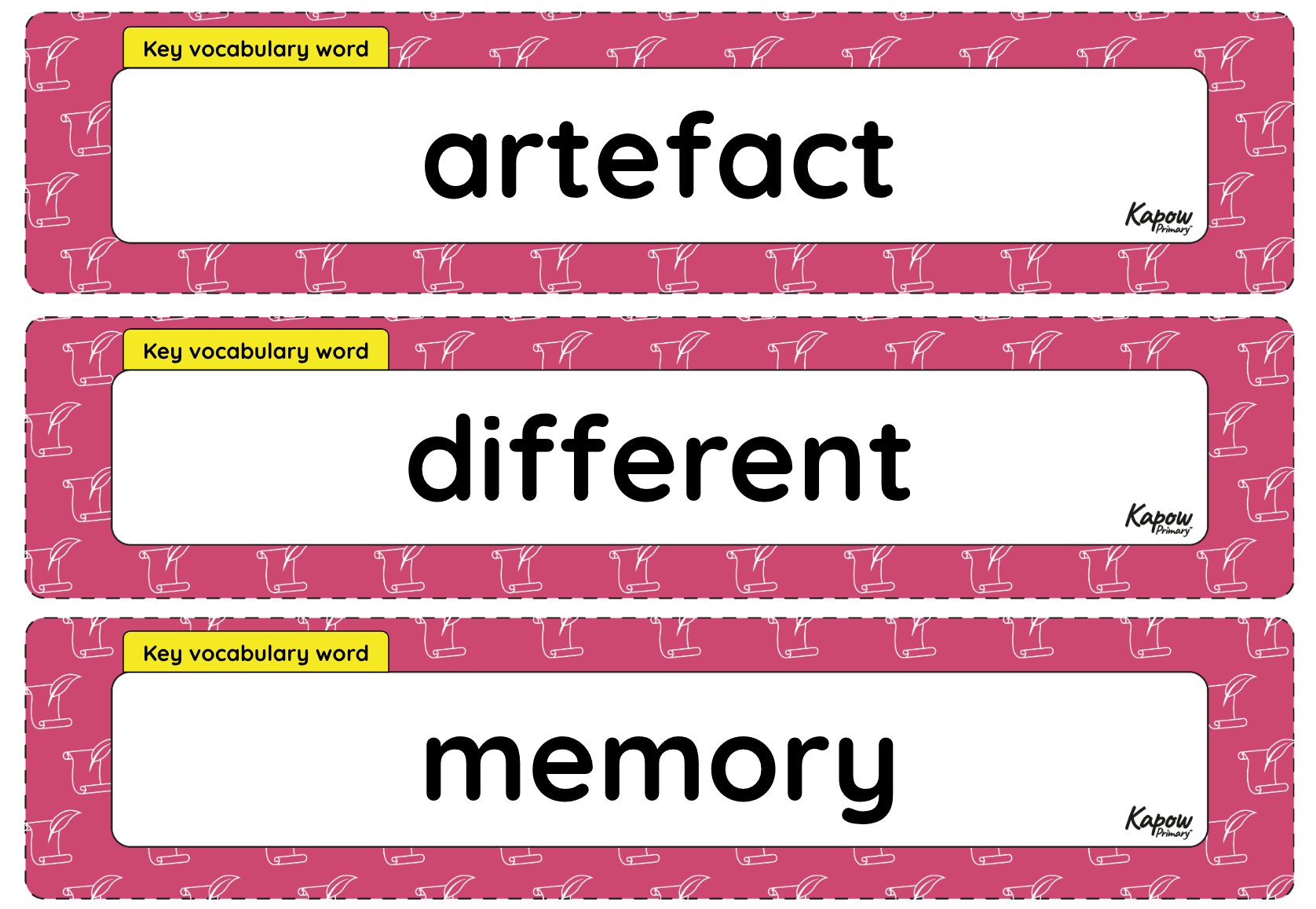
Vocabulary display – History Y1: How have toys changed?
A display version of the key vocabulary from the 'How have toys changed?' unit.
Subject resources
This content is for subscribers only. Join for access today.
Cross-curricular opportunities
English: Spoken language
Maths: Measurement
British values: Mutual respect
Build on the learning
How have explorers changed the world?
Get started
