




This is archived.
Important: archived content not aligned with current statutory guidance
This unit was created before the updated RSE statutory guidance, which came into effect in September 2026, and has not been revised to reflect its requirements.
We do not recommend using this content to plan or deliver RSE lessons under the current statutory guidance.
It is retained for historical reference only and is no longer updated or included in Kapow Primary’s current curriculum progression and planning.
For updated resources aligned with current statutory guidance, visit the RSE & PSHE subject page.
Unit outcomes
Pupils who are secure will be able to:
- Understand that everyone can expect a level of respect but this can be lost.
- Understand what respect is and how they should be respected.
- Understand how stereotypes influence our ideas and opinions.
- Understand a range of stereotypes and share this information effectively.
- Create a resolution guide that includes strategies to manage conflicts and describes situations where conflict is likely to arise.
- Understand the term grief and describe some of the associated emotions.
Suggested prior learning
Lessons
Lesson 1: Respect

Lesson 2: Respectful relationships
Lesson 3: Stereotypes: Attitudes
Lesson 4: Challenging stereotypes
Lesson 5: Resolving conflict
Lesson 6: Change and loss
Key skills
- Identifying ways to resolve conflict through negotiation and compromise.
- Discussing how and why respect is an important part of relationships.

This content is for subscribers only. Join for access today.
Key knowledge
- To know that a conflict is a disagreement or argument and can occur in friendships.
- To understand the concepts of negotiation and compromise.
This content is for subscribers only. Join for access today.
Key vocabulary
authority
conflict
This content is for subscribers only. Join for access today.
Related content
Unit resources

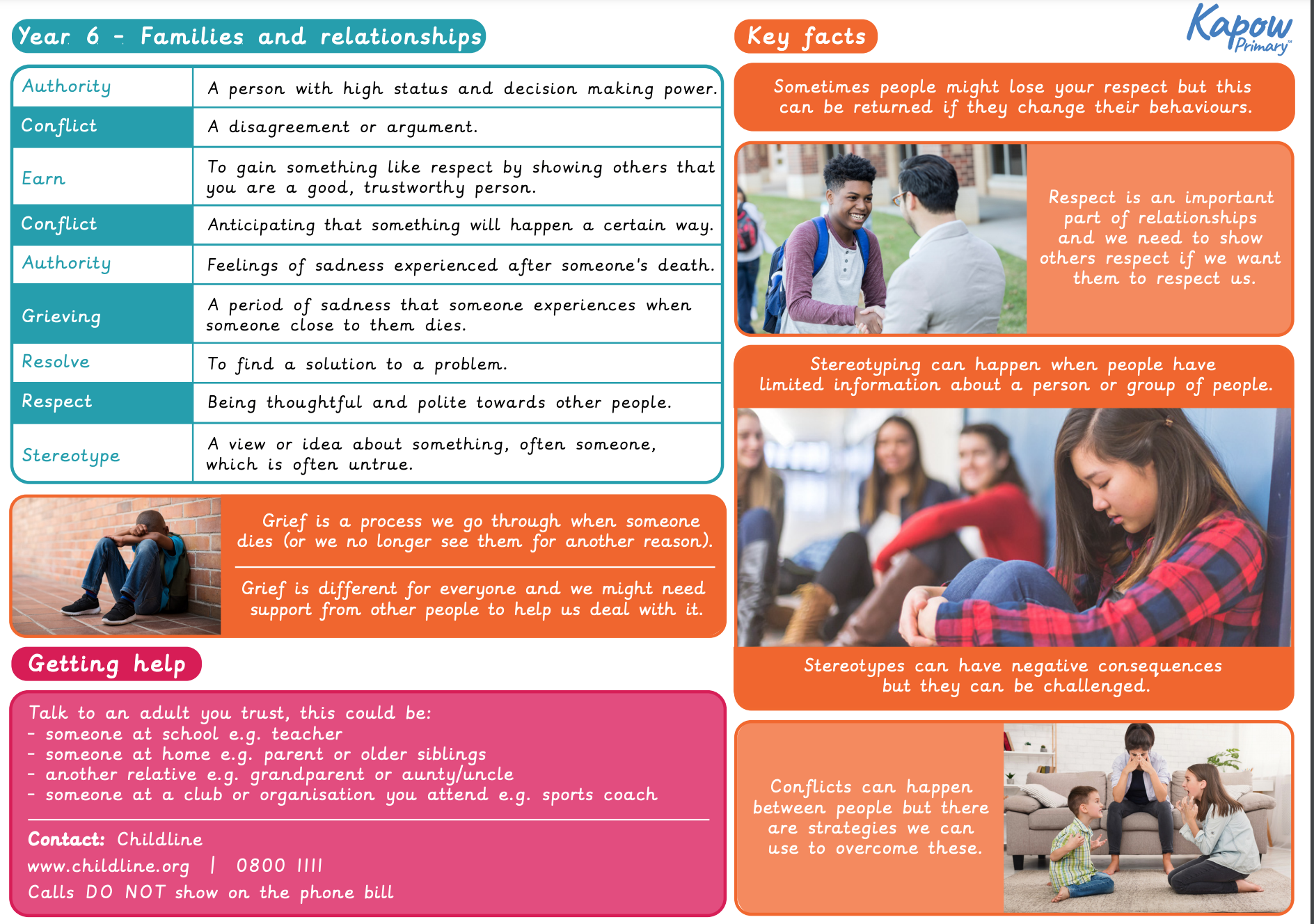
Knowledge organiser: RSE & PSHE – Y6 Families and relationships
Aimed at pupils, a single page which gives key facts and definitions from the unit "Year 6 Families and relationships".
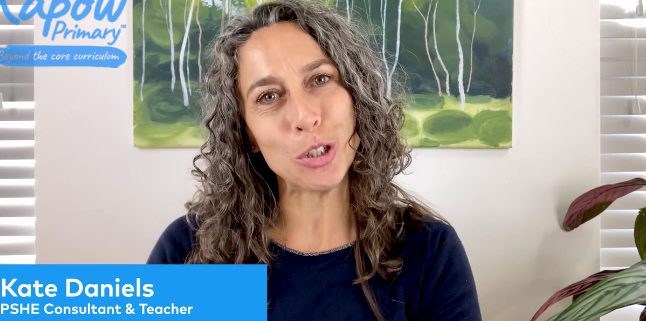
Videos: Families and relationships
A collection of unit-specific Q&A videos with RSE & PSHE Consultants to support the teaching of the families and relationships…
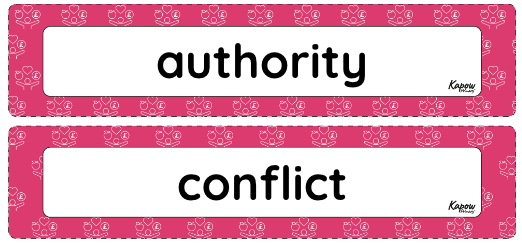
Vocabulary display – RSE & PSHE Y6: Families and relationships
A display version of the key vocabulary from the unit 'Families and relationships'.
Subject resources
This content is for subscribers only. Join for access today.
Cross-curricular opportunities
English
‘Pupils should be taught to:
- participate in discussions, presentations, performances, role play, improvisations and debates
- plan their writing by:
- identifying the audience for and purpose of the writing, selecting the appropriate form and using other similar writing as models for their own
- draft and write by:
- using further organisational and presentational devices to structure text and to guide the reader
- maintain positive attitudes to reading and understanding of what they read by:
- continuing to read and discuss an increasingly wide range of fiction, poetry, plays, non-fiction and reference books or textbooks’.
See National curriculum - English key stages 1 to 2.
British values: Mutual respect.