




This is archived.
Important: archived content not aligned with current statutory guidance
This unit was created before the updated RSE statutory guidance, which came into effect in September 2026, and has not been revised to reflect its requirements.
We do not recommend using this content to plan or deliver RSE lessons under the current statutory guidance.
It is retained for historical reference only and is no longer updated or included in Kapow Primary’s current curriculum progression and planning.
For updated resources aligned with current statutory guidance, visit the RSE & PSHE subject page.
Unit outcomes
Pupils who are secure will be able to:
- Know a number of adults in school.
- Know that they should speak to an adult if they are ever worried or feel uncomfortable about another adult.
- Understand ways to keep safe and not get lost and know the steps to take if they do get lost.
- Know the number for the emergency services and their own address.
- Understand that some types of physical contact are never acceptable.
- Know what can go into or onto the body and when they should check with an adult.
- Understand that there are hazards in houses and know how to avoid them.
- Understand and name jobs that people do to help keep us safe.
Lessons
Lesson 1: Adults in school

Lesson 2: Adults outside school
Lesson 3: Getting lost
Lesson 4: Making an emergency phone call
Lesson 5: Appropriate contact
Lesson 6: Safety with substances
Lesson 7: Safety at home
Lesson 8: People who help to keep us safe
Key skills
- Practising what to do if I get lost.
- Identifying hazards that may be found at home.

This content is for subscribers only. Join for access today.
Key knowledge
- To know that some types of physical contact are never appropriate.
- To know what to do if I get lost.
This content is for subscribers only. Join for access today.
Key vocabulary
accident
drug
This content is for subscribers only. Join for access today.
Related content
Unit resources

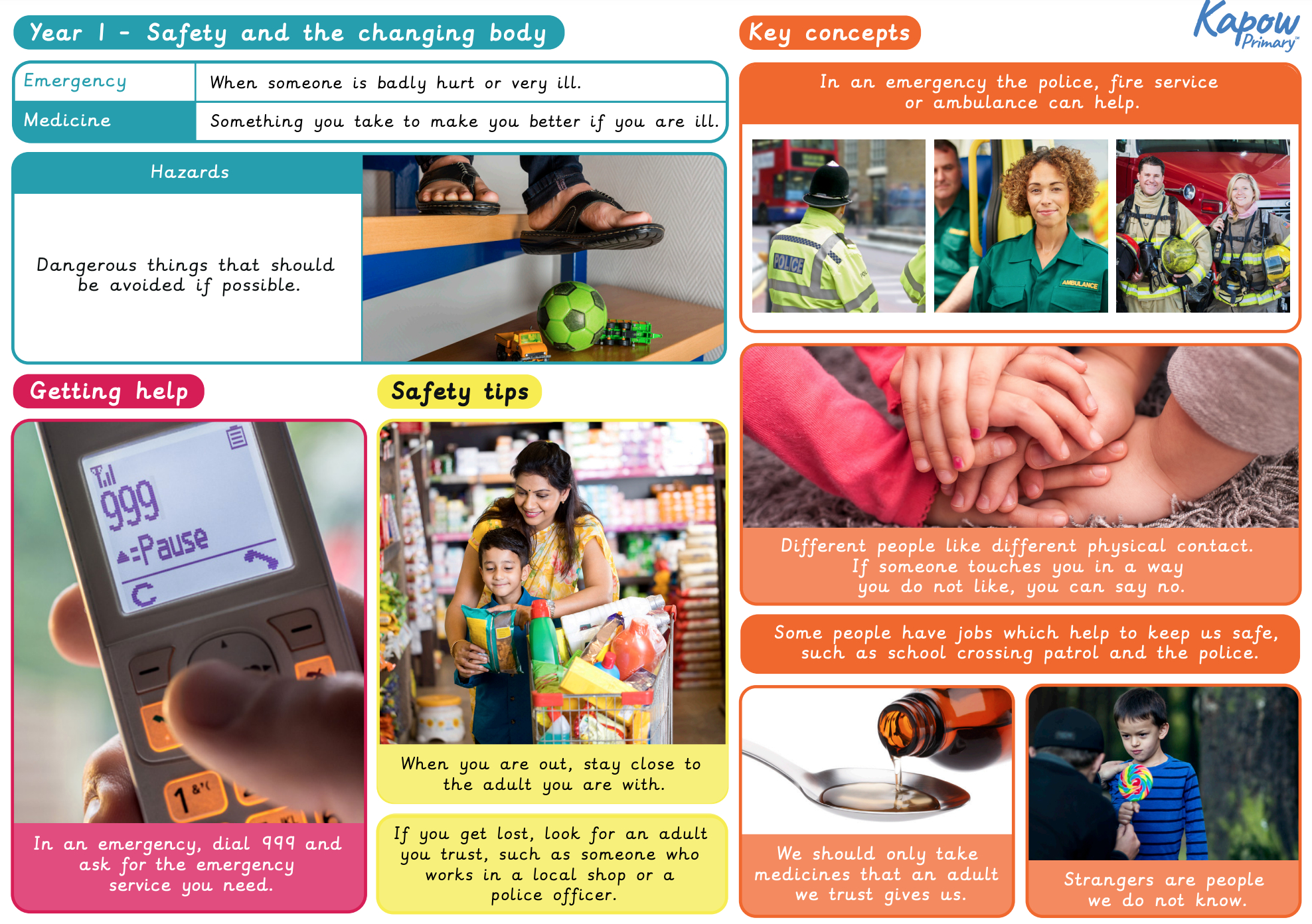
Knowledge organiser: RSE & PSHE – ARCHIVED Y1 Safety and the changing body
Aimed at pupils, a single page which gives key facts and definitions from the unit "Y1 Safety and the changing…
Vocabulary display – RSE & PSHE: ARCHIVED Year 1 Safety and the changing body
A display version of the key vocabulary from the Year 1: Safety and the changing body unit.
Subject resources
This content is for subscribers only. Join for access today.
Cross-curricular opportunities
English
‘Pupils should be taught to:
- listen and respond appropriately to adults and their peers
- participate in discussions, presentations, performances, role play, improvisations and debates
- write sentences by: saying out loud what they are going to write about [and] composing a sentence orally before writing it’
See National curriculum - English key stages 1 to 2.
Science
‘Pupils should be taught to:
- describe the importance for humans of exercise, eating the right amounts of different types of food, and hygiene’
See National curriculum - Science key stages 1 to 2.
British values: Mutual respect, Individual liberty.