




This is archived.
Important: archived content not aligned with current statutory guidance
This unit was created before the updated RSE statutory guidance, which came into effect in September 2026, and has not been revised to reflect its requirements.
We do not recommend using this content to plan or deliver RSE lessons under the current statutory guidance.
It is retained for historical reference only and is no longer updated or included in Kapow Primary’s current curriculum progression and planning.
For updated resources aligned with current statutory guidance, visit the RSE & PSHE subject page.
Unit outcomes
Pupils who are secure will be able to:
- Understand that families offer love and support and that different families may be made up of different people.
- Consider what friends may be thinking and feeling in different situations.
- Recognise some issues that may occur in friendships and which of these may need adult help to resolve.
- Understand that expectations of manners may change according to the situation.
- Know that remembering people who were important to them but are no longer here can cause a mixture of emotions.
- Explain what gender stereotypes are in relation to careers.
Suggested prior learning
Lessons
Lesson 1: Families offer stability and love
Lesson 2: Families are all different
Lesson 3: Other peoples’ feelings
Lesson 4: Unhappy friendships
Lesson 5: Introduction to manners and courtesy
Lesson 6: Change and loss
Lesson 7: Gender stereotypes – Careers and jobs
Key skills
- Understanding ways to show respect for different families.
- Understanding that families offer love, care and support.

This content is for subscribers only. Join for access today.
Key knowledge
- To know that families can be made up of different people.
- To know that families may be different to my family.
This content is for subscribers only. Join for access today.
Key vocabulary
friendship
love
This content is for subscribers only. Join for access today.
Related content
Unit resources

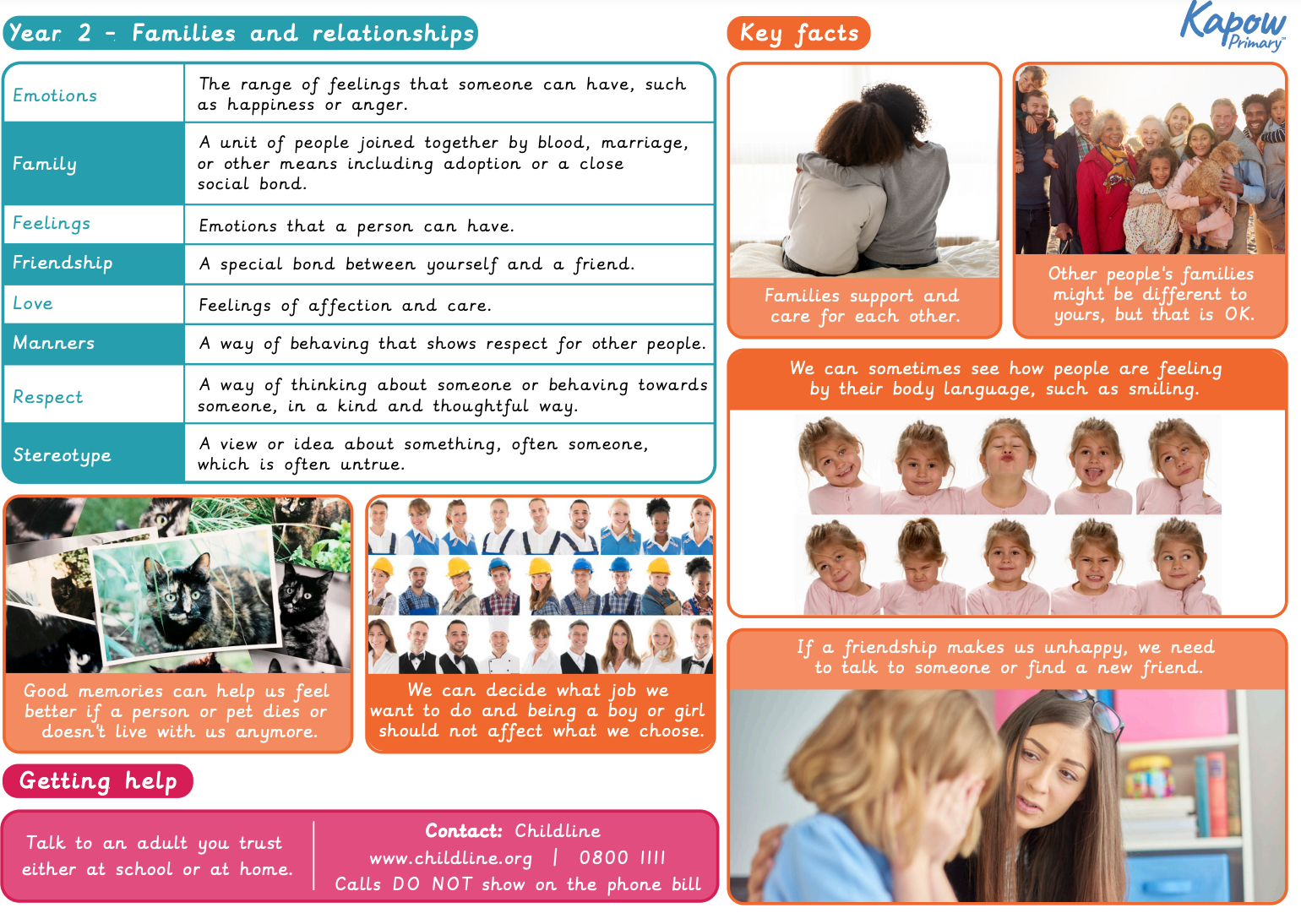
Knowledge organiser: RSE & PSHE – Y2 Families and relationships
Aimed at pupils, a single page which gives key facts and definitions from the unit "Families and relationships".
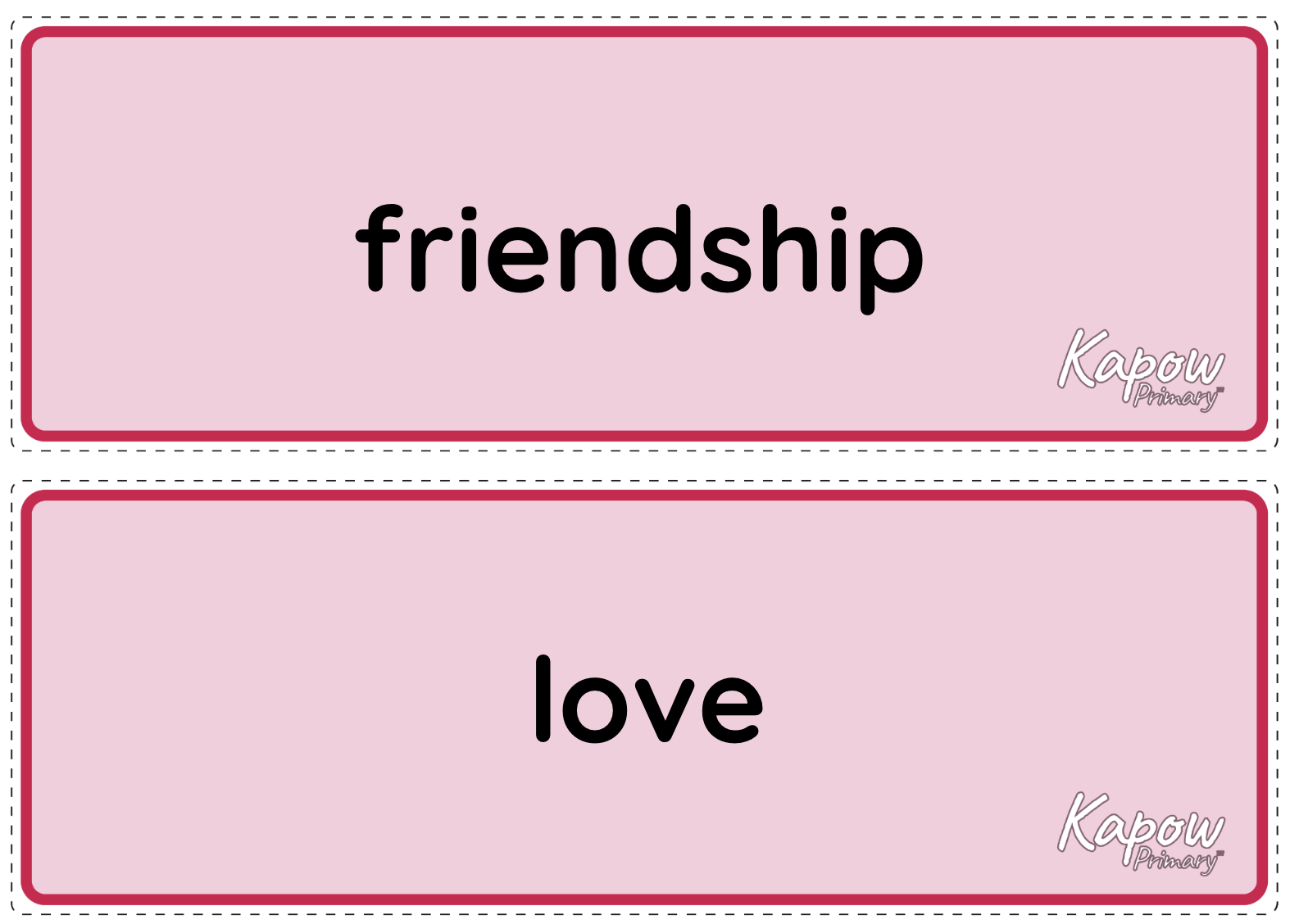
Vocabulary display – RSE & PSHE Y2: Families and relationships
A display version of the key vocabulary from the unit 'Families and relationships'.
Subject resources
This content is for subscribers only. Join for access today.
Cross-curricular opportunities
English
‘Pupils should be taught to:
- develop pleasure in reading […] by: being encouraged to link what they read or hear read to their own experiences
- develop pleasure in reading […] by: listening to and discussing a wide range of poems, stories and non-fiction at a level beyond that at which they can read independently
- understand [books they read and listen to] by: drawing on what they already know or on background information and vocabulary provided by the teacher
- understand [books they read and listen to] by: making inferences on the basis of what is being said and done
- maintain attention and participate actively in collaborative conversations, staying on topic and initiating and responding to comments
- listen and respond appropriately to adults and their peers
- participate in discussion about books, poems and other works that are read to them and those that they can read for themselves, taking turns and listening to what others say’
See National curriculum - English key stages 1 to 2.
British values: Mutual respect.
Build on the learning
ARCHIVED Y3 Families and relationships
Get started